

Power plants using natural gas to generate electricity are considered serious point sources of hydrocarbons (HC), carbon monoxide (CO), nitrogen oxides (NOx), and particulate matter. Plant operators are being challenged to meet strict emission standards.
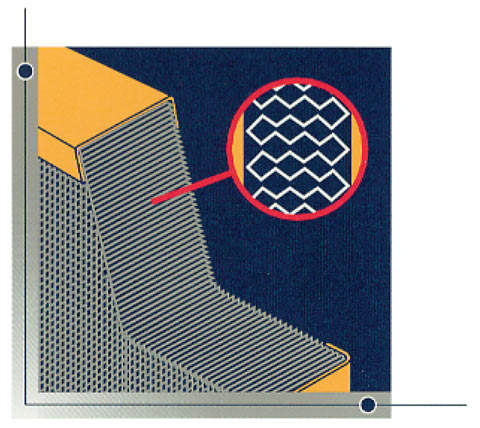
For superior treatment of carbon monoxide emissions from these generators, BASF Catalysts Camet® metal foil catalyst systems destroy CO and VOCs from natural gas and oil fired turbines and boilers (see figure 1). In addition, BASF Catalysts’ CatCO™ CO catalyst technology may be applied for process streams with higher particulate content such as wood fired boilers.
Emissions control technologies for industrial engines
As a world leader in emissions control technologies, BASF Catalysts has extensive experience in reducing oxides of nitrogen (NOx) as well as carbon monoxide (CO), hydrocarbons (HC) and particulate matter (PM) produced in equipment used for material handling, mining and construction, and power generation.
Selective catalytic reduction (SCR) technology
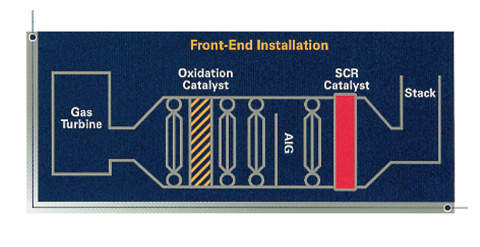
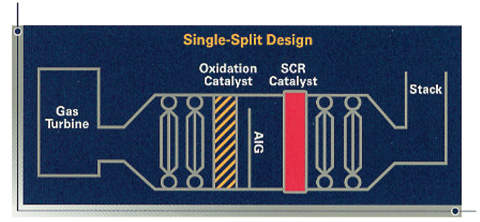
For power-generating equipment BASF Catalysts offers selective catalytic reduction (SCR) technology to meet the stringent NOx requirements. Our SCR systems can also destroy carbon monoxide and hydrocarbons with oxidation catalysts (see figures 2 and 3). An integrated particulate trap can be applied to capture fine particulate matter.
Mercury control technology for coal-fired power plants
BASF Mercury Sorbents ZX™ effectively reduce mercury emissions from coal-fired power plants, utilizing a unique, brominated zeolite. It is a cost-effective product that is designed as a replacement for powdered activated carbon – no re-engineering of injection equipment needed. In third-party independent testing, BASF Mercury Sorbent ZX consistently delivers 90%+ mercury removal from coal-fired power plant exhaust stacks to help meet current and future state and federal regulations. It also enables the utility to sell the fly ash for concrete applications, generating income and avoiding disposal costs.
Ammonia destruction catalyst technology
For natural gas turbines and stationary engines, NOxCAT AD Series 300 ammonia destruction catalyst consistently achieves high levels of ammonia conversion. These catalysts have the potential to reduce ammonia and NOx, and also control CO emissions. NOxCAT AD Series 100 ammonia destruction catalysts, installed at the exit of the selective catalytic reduction (SCR) catalyst bed, may extend the SCR catalyst’s working life by curbing the peak ammonia slip emissions that dictate the practical lifespan of an SCR catalyst bed.
For coal-fired power plants, NOxCAT AD Series 200 catalyst has been tested on a bituminous coal-fired power plant slip stream. The data reveals high levels of ammonia conversion to N2 and H2O with the conversion of SO2 to SO3 within the error of measurement. It is also able to control NOx emissions.
VOC catalysts for process industries
BASF Catalysts has long been a leader in the development of highly active, robust and selective catalysts and related technologies for the destruction of volatile organic compounds (VOC). While there are a number of methods to abate VOC emissions, catalytic incineration has become a leading choice because it can be more versatile and economical than other approaches.
Our VOCat® catalysts control emissions of hydrocarbons (HCs) and other VOC from a wide variety of industrial processes, including chemical processes, paint systems, food processing, printing, electronics, and soil and groundwater cleanup systems. They help customers meet increasingly stringent emissions standards reliably and cost-effectively.
Environmental and process catalysts
BASF’s Catalysts division is the world’s leading supplier of environmental and process catalysts. The group offers exceptional expertise in the development of technologies that protect the air we breathe, produce the fuels that power our world and ensure efficient production of a wide variety of chemicals, plastics, adsorbents and other products. Our emission control technologies include cost-effective regulatory compliance solutions for power plants, light-duty gasoline and diesel engines, heavy-duty diesel engines, motorcycles, small engines, and more.