

Cranfield University
Training and Research in Power and Propulsion

Subscribed
You have successfully submitted your enquiry. Someone from our company will respond ASAP
About Us
Over a period of more than 60 years, the department of power and propulsion at Cranfield University in the UK has established very strong international links with the world’s gas turbine user and manufacturing industries, through both education provision and applied research.
Power and propulsion education and applied research
The power and propulsion education and applied research programme is structured to meet the training and research needs of both manufacturer and user industries, and includes the following components:
- Master of science (MSc) degree: full-time taught MSc in thermal power/design of rotating machines
- Continuing professional development courses
- Research degrees – full time and part-time MPhil and PhD
- Post-Doctoral research
- Industrial-scale research in gas turbine and related technologies
MSc in gas turbine technology
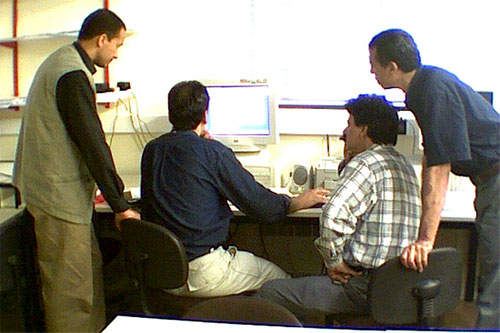
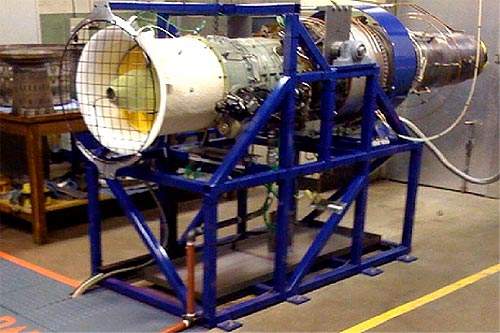
With a suitable first-class degree or equivalent as a background, each MSc in gas turbine technology attendee is prepared for an immediate contribution in a technologically challenging workplace. This MSc programme provides a sound theoretical background, supported by modern, readily accessible computing facilities.
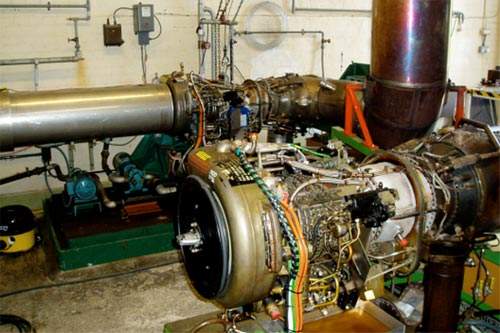
This is complemented by major experimental facilities capable of simulating the operation of complete engines and many engine components at fully representative operating conditions.
The taught Master’s degree programme is available with the following options:
- Rotating machinery engineering and management
- Gas turbine technology
- Aerospace propulsion
- Power, propulsion and the environment
MSc design of rotating machines
During the programme students typically attend 12 specialist lectures. In addition, a design or research project of direct relevance to the student and/or his/her sponsoring organisation is undertaken under expert supervision.
Industrially relevant gas turbine short courses
The department of power and propulsion offers a substantial portfolio of industrially relevant gas turbine and related short courses. Course presenters include senior industrial personnel and highly experienced academic staff. Most courses are of one-week duration and include the following Cranfield-based courses:
- Specification and performance of mechanical and electrical rotating equipment
- Combined-cycle gas turbines
- Combined heat and power
- Gas turbine technology for operations and maintenance engineers
- Gas turbine appreciation
- Gas turbine design and performance (two weeks)
- Gas turbine performance
- Gas turbine combustion
- Mechanical integrity of gas turbines
- Fatigue and fracture analysis
Bespoke gas turbine short courses
The department has a long history in the provision of bespoke in-company short courses for staff at all levels of seniority. These courses are run both in the UK and overseas, including in Belgium, Brazil, China, Greece, Singapore, Spain and South Korea.
Research degrees in gas turbine technologies
Research degrees at Master’s and Doctorate level can be undertaken as either full-time or part-time courses. These generally involve individual study in the areas of interest relevant to the department’s current research programme or to that of the student’s sponsor.
The research activities are supported with experimental facilities capable of simulating the operation of many key engine components at fully representative conditions.
Post-Doctoral research in gas turbine technologies
Wide opportunities for post-Doctoral research in gas turbine and related technologies are available and are closely involved in the department’s on-going research activities.
The high reputation of gas turbine research activities at Cranfield has led to substantial national and international relationships in a number of important areas including:
- Gas turbine performance (including a university technology centre for Rolls-Royce)
- Low emissions combustion
- Non-invasive laser-based diagnostics
- Gas turbine health monitoring and lifecycle studies
- Engine performance simulation and diagnostics
- Computational flows – combustion and heat transfer in engineering applications
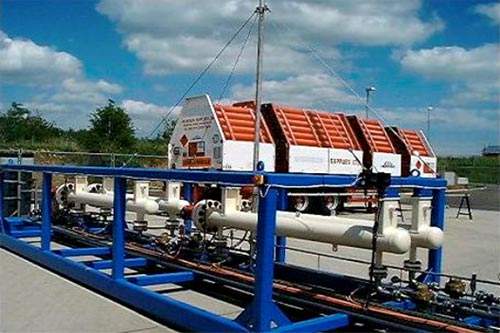
The above research activities are supported with research facilities that are of a scale unique within the university sector.
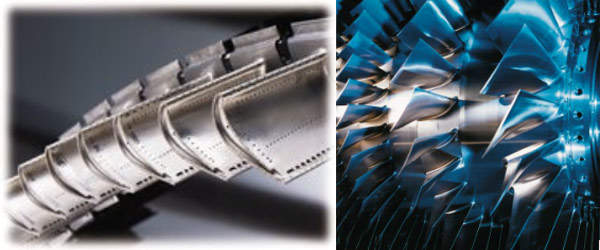
The gas turbine engine as a prime mover is a very competitive option when power plant and propulsion systems are being selected. This is mainly because of their extremely high power to weight ratios. Today gas turbines are employed for an increasing variety of applications, such as in power generation, in oil and gas production and refining, in process engineering and in aircraft and marine propulsion.
At present, the demand for gas turbine power in all of these sectors continues to increase at an unprecedented rate throughout the world. Use our courses to stay up-to-date with this growing technology.
Contact Details
Website
Email Address
Address
Cranfield University,
Bedford,
Cranfield,
MK43 OAL,
Other,
United Kingdom