
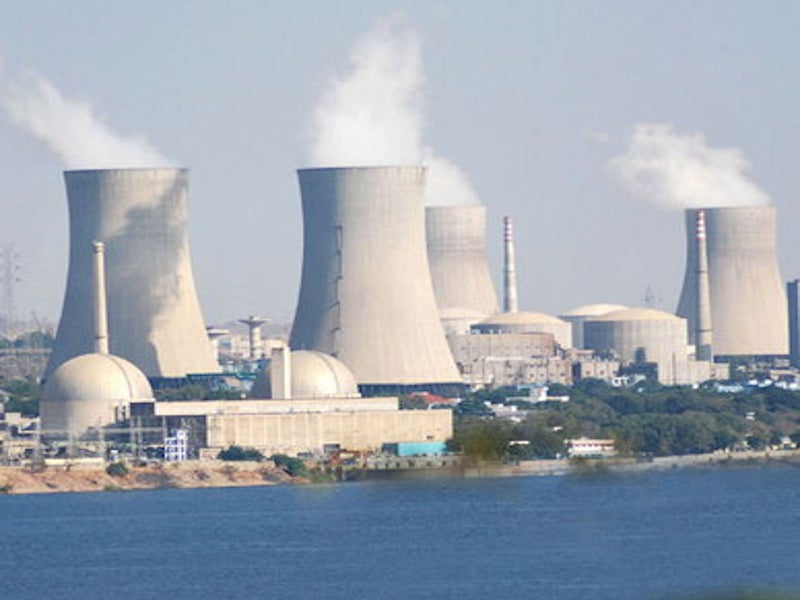
The Rajasthan Atomic Power Project (RAPP), located in Rawatbhata in the north Indian state of Rajasthan, currently has six pressurised heavy water reactor (PHWR) units, operating with a total installed capacity of 1,180MW.
The Nuclear Power Corporation of India (NPCIL), the owner and operator of the plant, is increasing the existing capacity of the plant by constructing two more reactors Units 7 and 8.
Recommended Buyers Guides

NPCIL signed a joint venture agreement with the Indian Oil Corporation (IOC) in November 2010 to sell 26% to 49% of the equity interest in the project to the latter.
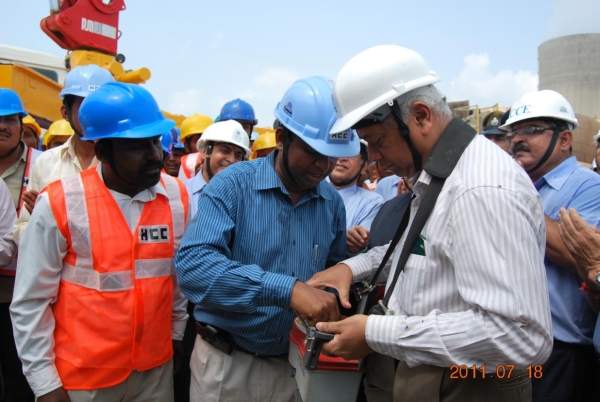
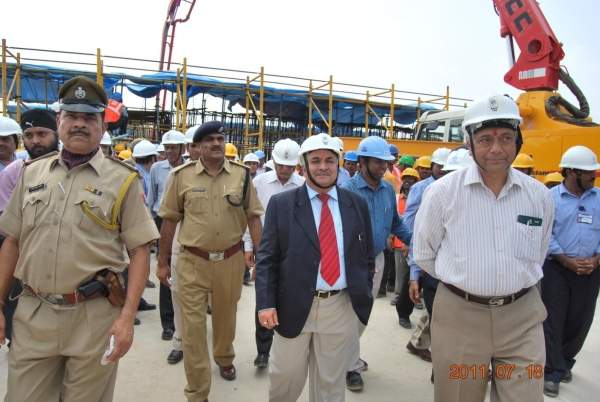
The first pour of concrete (FPC) for the seventh reactor of 700MW capacity was achieved in July 2011. The reactor is scheduled to be completed in December 2020. The start-up transformer (SUT) of the unit was also commissioned.
The eighth reactor, which is also of 700MW capacity, is expected to be completed by December 2021. The civil works in both units are currently underway.
The two PHWR reactors will increase the current capacity of the plant by 1,400MW, of which 700MW be allocated to the state of Rajasthan.
Rajasthan atomic power plant history
The first reactor was commissioned in December 1973 with an installed capacity of 100MW. The second reactor of 200MW capacity was synchronised to the grid in April 1981. The third and fourth reactors, each of 220MW capacity, began commercial operations in June 2000 and December 2000 respectively.
The fifth reactor achieved first criticality in November 2009 and commenced commercial operations in February 2010. It also has an installed capacity of 220MW.
The sixth unit of 220MW capacity attained the first criticality in January 2010 and began commercial operations a month later in March 2010.
Development of Units 7 and 8
RAPP Units 7 and 8 were approved by the Government of India in October 2009. Excavation works for both units began in August 2010.
The engineering, procurement and construction (EPC) contract of the units was awarded to Hindustan Construction Company (HCC) in May 2010. The total value of the contract is INR88.79m (approximately $1.85m ). The company was also involved in the construction of the previous units of RAPP.
HCC’s work includes excavation, grouting and construction of the main reactor buildings, control buildings, station auxiliary buildings and fuel storage building.
The contract also calls for the construction of a ventilation stack, stack monitoring room, heavy water upgrading plant and other associated buildings.
A massive dome of the Unit 7 reactor building was erected, using 1,350t LIEBHERR LR 11350 Crawler Crane in February 2018. The dome is a single-piece torispherical dish-shaped 8m-tall structure, 49m in diameter and weighing 346 metric tonnes.
Punj Lloyd Group is the EPC contractor for the equipment installation and internal piping. Valued INR67.8m (approximately $1.4m ), the comprehensive contract was awarded in July 2011. The work included equipment commissioning and piping for NPCIL’s Kakrapara Atomic Power Project (KAPP Unit 3 and Unit 4).
The electronics division of BGR Energy won the turnkey supply contract for the electrical systems of the main plant in August 2011.
NPCIL chose Electronics Corporation of India (ECIL) as the technology partner in a memorandum of understanding (MoU) signed in December 2010.
Technology incorporated into the RAPP
The new 700MW PHWR designed by NPCIL uses the latest, state-of-the-art technology. It is the scaled-up version of the 540MW PHWR, which has been operating at the Tarapur Nuclear Plant in Maharashtra since 2005.
The new reactor has an advanced safety feature and does not require human or machine intervention to ensure safety. It works on the passive safety system that is based on the principles of gravity and natural convection, which ensure safety under any operational state.
The reactor also features two independent and diverse shutdown systems. One is the passive decay heat removal system, which is capable of cooling the reactor core even in case of a complete power cut.
The other is the steel-lined inner containment, which can hold back the entire radioactivity within the reactor core in case of an accident.
Construction of the north Indian atomic power plant
The concrete for Unit 7 was poured at a rate of 90m³ an hour at 19°C. Ice was mixed in the concrete to maintain the required temperature level.
