

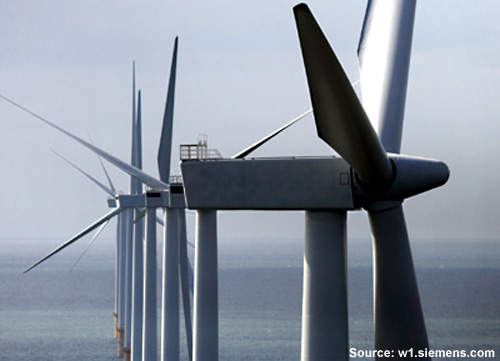
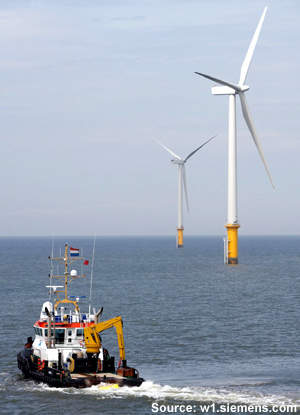
A total of 25 3.6MW wind turbines have been installed at the 90MW Burbo Offshore Wind Farm in Liverpool Bay, Wales, UK. The £90m wind farm is owned and operated by SeaScape Energy, a company owned by the Danish utility Dong Energy.
Siemens Power Generation (PG) erected the turbines in less than 1.5 months, well ahead of schedule. Following commissioning and connection to the power grid, the turbines started commercial operation at the end of 2007.
Recommended White Papers

Recommended Buyers Guides

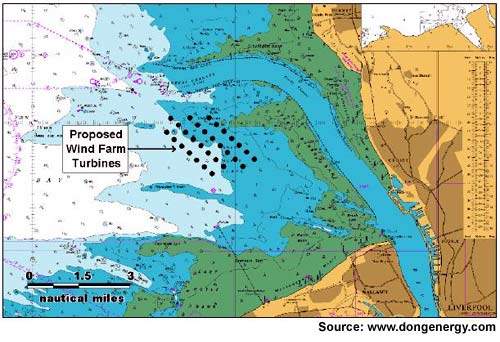
The wind farm is located on the Burbo Flats in Liverpool Bay at the entrance to the River Mersey, approximately 6.5km from the Sefton coastline. The total power output is enough for approximately 80,000 households, which is 12% of Merseyside’s electricity demand.
It is expected to reduce CO₂ emissions by more than 300,000t (300 million kilograms) a year, translating over the 20-year operating life to savings of 6.4 million tonnes. There will also be smaller, but still significant, SO₂ and NOx savings.
A 258MW extension of the wind farm has been approved.
Construction of Burbo Offshore Wind Farm
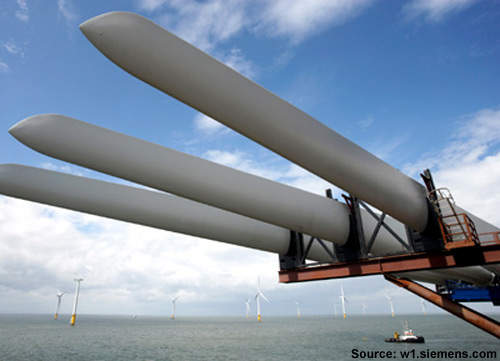
Siemens leased a 45,000m² area in the port of Mostyn, North Wales, for onshore operations. The 65m-high steel towers were assembled upright, and all internal and electrical systems were tested before they were loaded onto the installation vessel. The purpose-built vessel carried towers, nacelles, hubs and blades for three turbines on each trip to the site area, which is located 12km from the shore.
At the site, each turbine was erected in five heavy lifts, with a maximum weight of approximately 185t each. The average erection time for a turbine (which weighs almost 500t) was less than half a day.
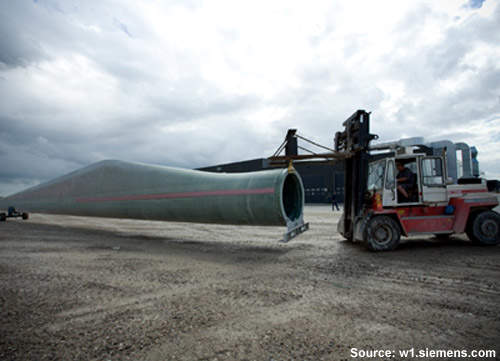
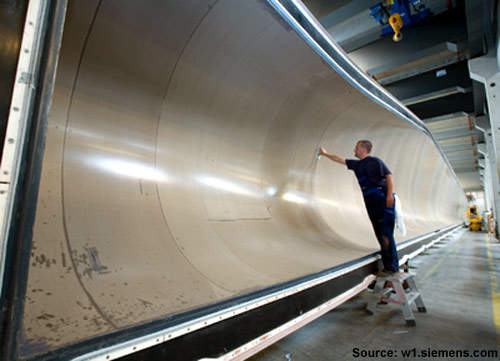
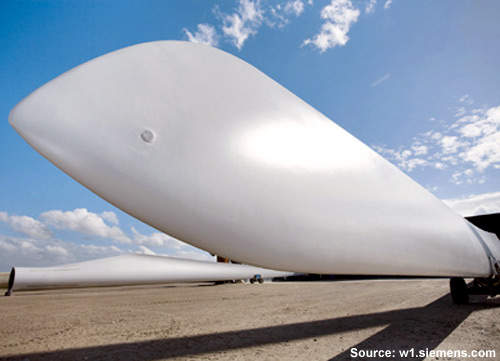
Each turbine, designed to run for approximately 6,000 hours annually for more than 20 years, has a maximum blade tip height of 130m from sea level, with the hub being around 80m high and turbine rotor blades 50m long. They are manufactured in Aalborg, Denmark. The integral blades require no adhesives, with the blade produced in a single casting and therefore increasing the blade strength due to the lack of seams.
Tourist attraction in Liverpool Bay
The sea bed is relatively shallow at the site, between less than 1m at low tide. It is one of a number of sites around the British coast that has been leased to developers by the Crown Estate. The wind farm takes up 10km² of the seabed, although the area of the turbines themselves is below 400m².
Turbine spacing is above 500m, so recreational users can still use the wind site; boats can sail between them as long as they avoid the turbine foundations and don’t anchor on them. Scour protection material has been added, which could increase the marine habitat around the turbine base and allow fishing, for example. It is thought the wind farm will actually become a visitor attraction, possibly with boat trips.
SeaScape Energy assessed the potential effects of the wind farm on radar installations. The company outlined a range of possible measures if it is found to be a problem, including radar-absorbing paints, software upgrades to remove false signals, an additional radar station, or a radar repeater station on a turbine platform.
The windfarm needed subsea cables between turbines as well as from the turbines to the shore. Seascape’s Burbo Environmental Statement remarked that these would not interfere with any existing cables or pipelines.
First offshore project for Siemens SWT-3.6-107
The Burbo Wind Farm is the first offshore project to use the Siemens SWT-3.6-107 turbines and the first in a series of offshore projects being built by Siemens. Also in 2007, Siemens erected 48 SWT-2.3-93 type turbines at Lillgrund near Malmö, the largest offshore wind farm in Sweden.
Siemens sees offshore wind farms as a key future market and is currently the leading manufacturer of offshore turbines. Erected by Siemens in the Baltic Sea offshore of Denmark in 2003, the 165MW Nysted wind farm was the world’s largest at that time.
In 2008, Siemens started erection work of the Lynn and Inner Dowsing offshore wind farms, off the UK east coast, to replace it as the largest. The Lynn and Inner Dowsing project has 54 SWT-3.6-107 wind turbines and a maximum capacity of 194MW. The project was commissioned in March 2009.
Burbo Bank extension project
A major expansion plan to increase the capacity of the wind farm by 258MW has been conceptualised in 2010. The Burbo Bank Extension Project covers an area of 40km² to the west of the current windfarm. It includes 32 MHI Vestas 8.0MW turbines.
In 2010, the Crown Estate agreed to grant a lease for the construction of the extension project. The offshore and onshore surveys for the project have since been completed. The project achieved statutory consents from concerned authorities in April 2014.
The Burbo Bank Extension was developed by a joint venture between DONG Energy (50%), PKA (25%) and KIRKBI (25%). The first power from the extension project was generated in November 2016.
The wind farm was officially opened in May 2017. It generates enough electricity to power nearly 230,000 homes, further contributing to the UK’s renewable energy targets.
Contractors involved
Jan De Nul Group was awarded two contracts by Dong Energy for the installation of export cables and infield cables for the Burbo Bank Extension Offshore Windfarm.
Van Oord was awarded a contract for the installation of foundations at the Burbo Bank Extension offshore wind farm.
A2SEA was responsible for the installation of turbines at the Burbo Bank Extension wind farm.
