

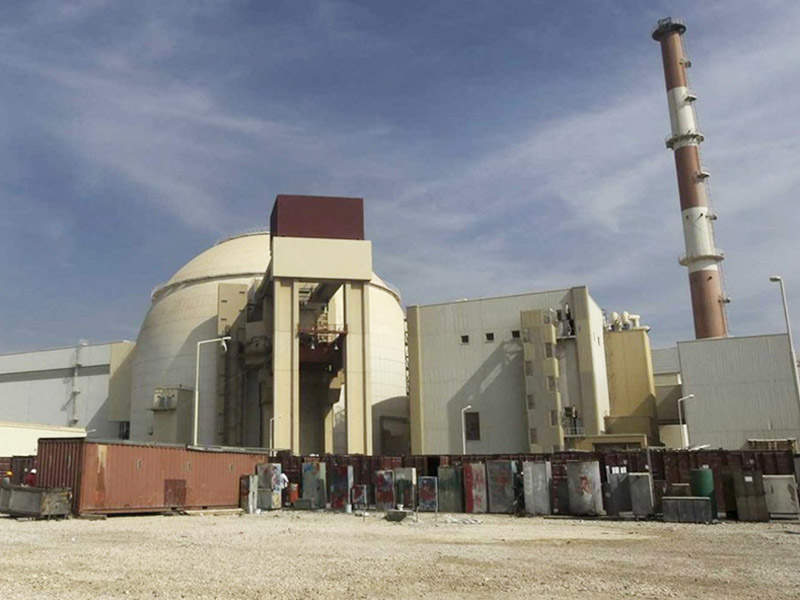
The Bushehr nuclear power plant (NPP) is being developed as part of a joint nuclear cooperation agreement between Russia and Iran, which includes a provision to build up to eight new reactors in Iran.
The first phase of the project, named Bushehr-1, has been operational since May 2011, while phase two (Bushehr-2) is being constructed next to the first phase.
Recommended White Papers

Recommended Buyers Guides

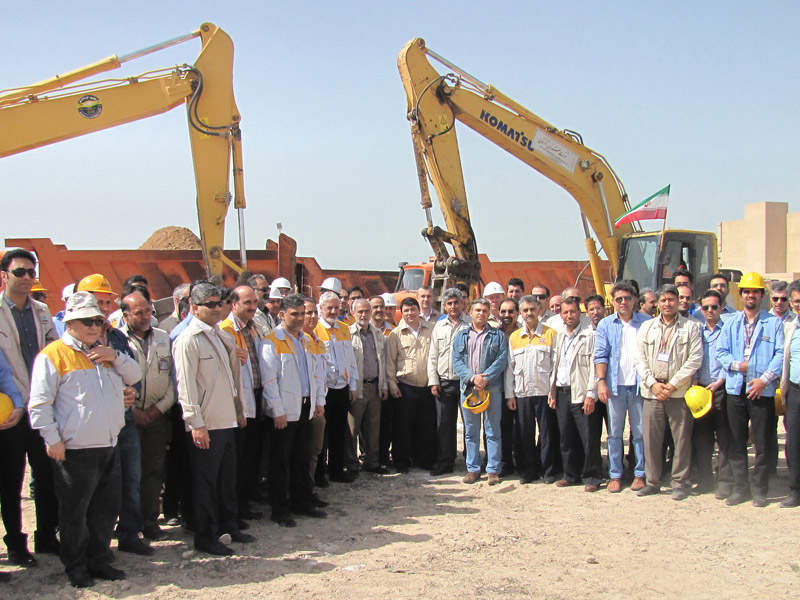
Foundation stone for the $10bn Bushehr-2 was laid in September 2016, while an official ceremony marking the start of construction was held in October 2017. The new phase will consist of two units designated 2 and 3, which will have a cumulative output capacity of 2,100MW. The construction is expected to be completed by 2026.
The nuclear power plant will provide for 8-10% of the country’s electricity needs, according to the Atomic Energy Organization of Iran (AEOI).
Bushehr nuclear power plant phase two details
Bushehr-2 will be equipped with two Generation III+ design reactors, which is an evolution of the VVER-1000 pressurised-water reactors. Designed for a service life of 60 years, the reactors are capable of meeting the most stringent post-Fukushima safety requirements.
The VVER is a thermal neutron reactor featuring a two-circuit steam generating system that uses pressurised water both as a coolant and moderator. It consists of four coolant loops, a spent fuel pool, main circulating pump, and inter-containment space ventilation filters.
It also includes relief and emergency valves, core catcher and accumulator tanks featuring emergency core cooling system (ECCS). The ECCS is a state-of-the-art extreme degree safety feature, which includes pressurised cold boric acid held in special tanks that can be used to stop the chain reaction in the reactor.
Bushehr NPP phase two construction
Pre-construction works on phase two were carried out following the groundbreaking ceremony in September 2016. Excavation of man-induced soils, dismantling of the existing structures and vertical levelling of the plant structures on the first three plots of the site are currently ongoing.
A pit for unit three is planned to be built in 2018, to be followed by the pouring of concrete for unit two in 2019. Construction is anticipated to be completed within ten years and will follow the rules of IAEA safeguard standards.
Contractors involved
Bushehr-2 was designed by AtomEnergoProekt, a division of Rosatom.
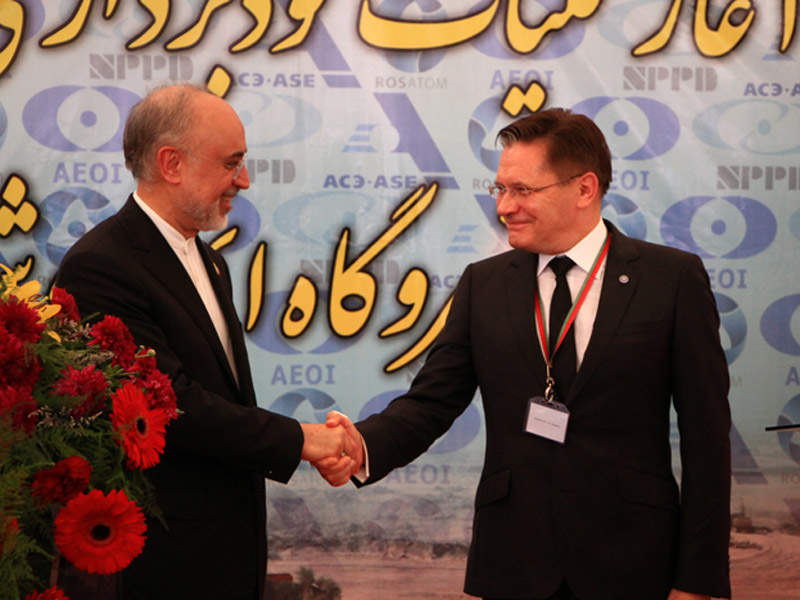
ASE (AtomStroyExport), also a part of Rosatom, was awarded the engineering, procurement and construction (EPC) contract for phase two by the Nuclear Power Production and Development Company of Iran in November 2014.
Orgenergostroy was subcontracted by Rosatom to design the mounting base of the Bushehr-2 power plant.
Details of Bushehr nuclear power plant phase one
Plans to build a nuclear power plant at Bushehr were first announced in 1974 and Siemens (previously KraftWerk) was contracted to build two reactors. The project was, however, abandoned due to extreme diplomatic pressure from the US, and the onset of the 1979 Iranian revolution and the Iran-Iraq war.
In 1994, Iran and Russia signed an agreement to develop the VVER 1,000MW light-water reactor, giving way to Iran’s first commercial nuclear reactor. Construction of the Bushehr NPP was started in the same year.
The plant has a unique design as the VVER technology was integrated into the unfinished German infrastructure. The power plant commenced operating at low capacity in May 2011.
Bushehr 1 was connected to the national grid in February 2012 and generated approximately 700MW of electricity. The plant began operating at full capacity a month later and has since generated approximately 25 billion kWh of electricity.
