
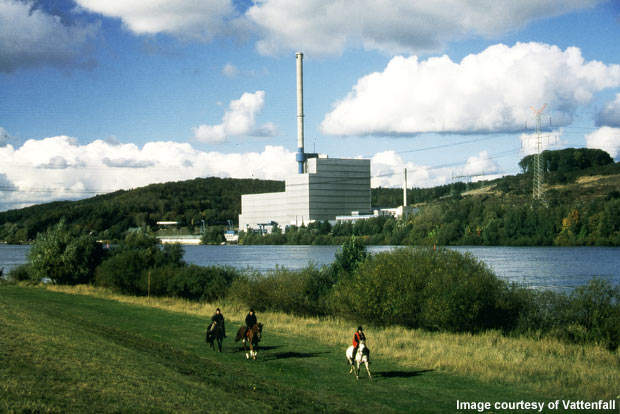
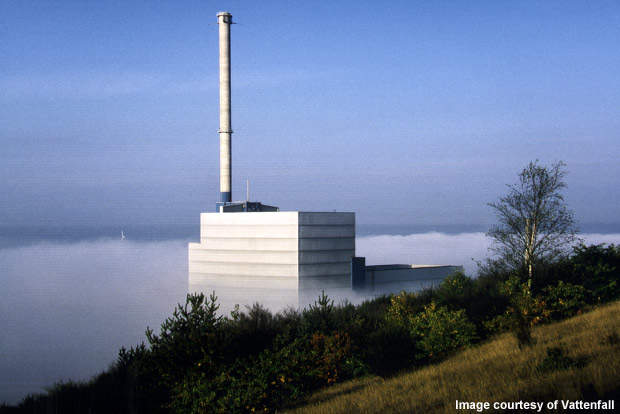
Krummel Nuclear Power Plant is located on the banks of the Elbe River in Geesthacht, 30km from Hamburg, Germany. It has ten billion kilowatt-hours of annual electricity producing capacity. The plant, owned jointly by Vattenfall and E.ON, was launched for operations in 1984.
A short circuit in the transformer caused a fire in June 2007, resulting in the plant remained shut for two years. The plant resumed operations on 21 June 2009. Within a month a similar short circuit recurred and the plant was closed again on 4 July 2009.
Recommended White Papers
Recommended Buyers Guides

The plant, which produced nearly 30% of electricity generated in Schleswig-Holstein, was scheduled to be restarted with new transformers and new transformer buildings in 2011. The transformers were to be delivered in the first quarter of 2010.
The plans were however dropped after the German Government’s decision in 2011 to shut all 17 nuclear power plants by 2022. The decision, which came into effect from August 2011, implies closure of eight nuclear power plants including the Brunsbüttel and Krummel plants owned by Vattenfall.
The Krummel plant will be closed permanently abiding to the closure decision.
On 15 December 2010, Vattenfall and E.ON agreed to explore all options for restarting the facility. The companies were to perform a thorough review focusing on the plant’s technical and operating process in order to estimate the investments that would be required for its overhaul and update. The announcement came in the wake of Germany’s energy plan and change in the regulatory system for operating nuclear power stations.
The companies intended to complete the necessary analysis and finalise the concept-design by the first quarter of 2011. In addition, the review was also to determine whether E.ON would become the operator of the plant.
Make-up of the Krummel nuclear power plant
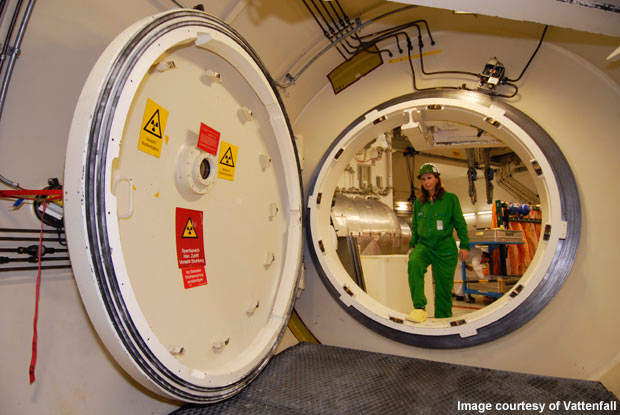
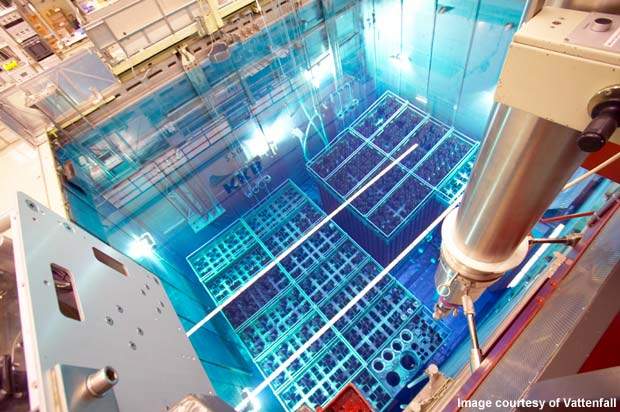
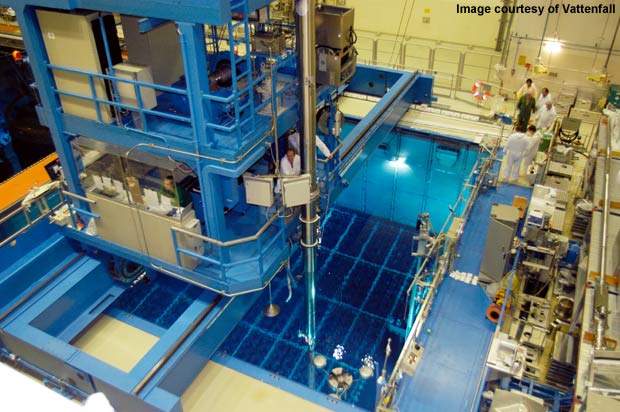
The plant is primarily made up of two buildings – the reactor building and the turbine building. The reactor building, constructed of thick reinforced concrete walls, accommodates a reactor pressure vessel, reactor core, pressure suppression system, control rod drives, spent fuel storage pool, reactor building crane and upper containment pool.
Nuclear fuel and uranium are contained in 840 fuel assemblies making up the reactor core. Adjacent to the reactor building, the 100m-long turbine building houses high and low-pressure turbine sections, moisture separator / re-heater, condensers, generator and main cooling water pipes.
Both buildings are designed to have a multilevel barrier system. To ensure protection from direct radiation and to prevent leakage of radioactive materials, radioactive fission products are firmly enclosed in crystal lattice of nuclear fuel and uranium. Tubes in the fuel assemblies are covered with gas-tight fuel rods.
A reactor pressure vessel made up of superior-quality steel encircles the reactor core containing the fuel assemblies. An additional gas and pressure-tight enclosure was provided by a thick, round and double-walled concrete shield which surrounds the reactor pressure vessel.
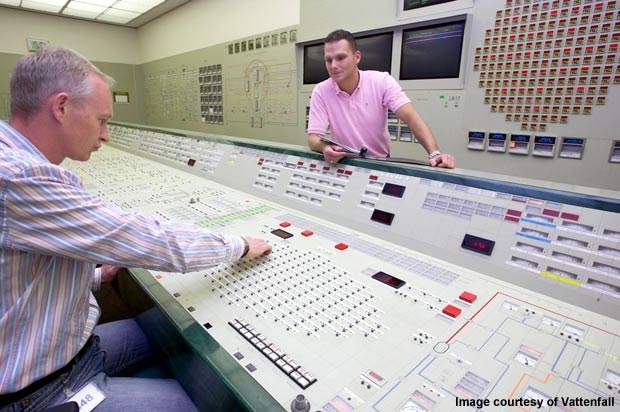
The plant is equipped to remain at full functional capacity all the time. A control room located on the site monitors and records every process of the reactor. Six emergency diesel generators with an individual capacity of 3.5MW to 4.5MW provide emergency power in case the plant’s normal power supply fails.
In the event of a complete power failure, the plant’s systems and components are supported by an emergency control room located underground.
The emergency control room contains two of the plant’s six emergency diesel generators.
The plant also has a two-phase disposal chain for radioactive waste. Used fuel assemblies removed from the reactor core are stored in a spent fuel storage pool for some time. Once their radioactivity decreases, they are loaded into special casks and stored in an adjacent interim storage facility. The interim storage facility has a capacity to accommodate up to 80 castor casks.
Technology used at the German nuclear power facility in Geesthacht
The plant generates electricity through nuclear fission, a process that takes place inside the reactor. During the process, fuel rods in the fuel assemblies heat up. The heat generated in the fuel rods is absorbed by water that acts as a moderator in nuclear fission.
Water pumped from the Elbe River boils and evaporates into steam. At 286°C and 70 bar pressure, the steam is passed to a turbine that drives the generator to produce electricity. In a condenser, the steam is then condensed and the resultant water is sent back to the reactor.
Local environmental impact from Vattenfall and E.ON’s Krummel plant
The plant, like other nuclear plants, reduces carbon dioxide emissions.
In comparison to power plants run on fossil fuels, nuclear power plants in Germany reduce carbon emissions by nearly 150mt a year. This is roughly equal to the carbon dioxide emitted by road traffic during a year.