

The Tzafit power station is an 835MW combined-cycle natural gas-fired plant in Israel. It is located 40km south-east of Tel Aviv, and is the largest privately-held power plant in the country. Its capacity is equivalent to 7% of the total installed power generation capacity of Israel.
The plant was built by Dalia Power Energies, a company owned by Energy Economy (43.3%), Hiram Epsilon (43.3%), Sigma Epsilon (3.3%) and the Israel Infrastructure Fund (10%).
Recommended White Papers

Recommended Buyers Guides

The Tzafit power station received national infrastructure project status from the Israeli Government in May 2009. The project benefits the consumers by offering cheaper electricity.
The power plant began commercial operations in July 2015. It has a life of ten years.
Tzafit power station history
The plan to set up a gas-fired power plant took shape with the establishment of Dalia Power Energies in July 2005. The company initially considered the estuary of the River Dalia between Zichron Yaakov and the coast to host the plant.
The site was, however, altered later to the Tel Tzaft region after an in-depth examination of various environmental aspects in consultation with the National Infrastructures Committee.
Construction of the Israeli station
The €500m ($720m) engineering, procurement and construction (EPC) contract to build the plant was awarded to Alstom (now GE Power) in June 2011.
Alstom constructed two 450MW combined-cycle units. It also supplied balance of plant (including the substation), distributed control system and switchyard equipment.
The company was also awarded a 20-year operations and maintenance contract for the plant in July 2011. The €330m ($468m) contract makes the company responsible for day-to-day operations and maintenance of the plant.
SPX received a $35m contract to provide an air-cooled condenser (ACC) for the power plant in March 2013.
Power purchase agreement
A memorandum of understanding (MOU) was signed for a long-term purchase agreement of natural gas from the Tamar gas field. The Noble Energy-led Tethys Consortium owns and operates the field. It will supply 200 billion cubic feet of natural gas worth $1bn over 17 years if the agreement is executed.
Plant details
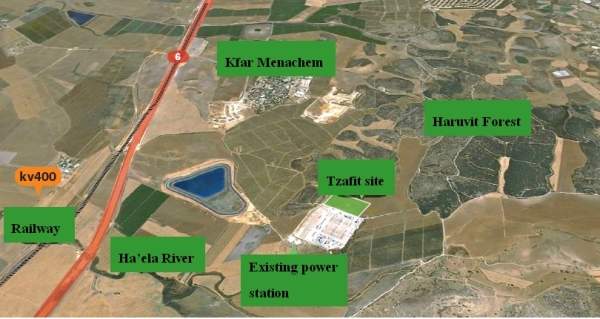
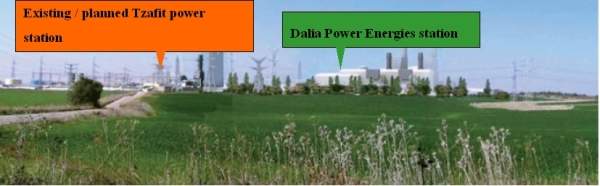
The plant was built on agricultural land located at Tzafit North, in a village named Mavo Beitar. A power and switching station of Israel Electric Corporation (IEC) is situated adjacent to the site. The land measures 6.4ha.
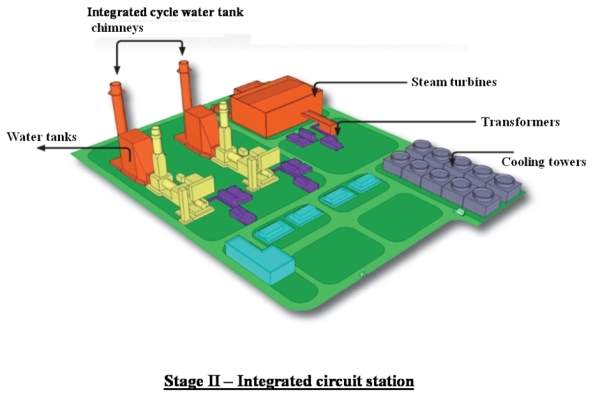
The combined-cycle units are based on a single-shaft configuration. Each unit contains a combined-cycle gas turbine (GT26 of Alstom make), steam turbine, generator and heat recovery steam generator.
Grid network and distribution
The produced electricity can be fed to both the northern and southern sections of the national power grid, as the site is located just at the intersection of the grid.
The power is distributed to IEC and business customers, upon reaching the national grid.
Local environmental impact
The plant uses a clean development mechanism to reduce greenhouse gas emissions. It produces 859,415 Certified Emissions Reductions (CER) per annum.
The energy efficiency is higher (58%) when compared to conventional power plants (35%) that use single-cycle technology.
Israel power market
Israel is facing a shortage of electricity due to higher than expected power consumption and slower growth of production capacity.
The state-owned power producer IEC has a low production reserve in comparison with other western countries.
The government enacted the electricity utilities law to open up the domestic power market to the private sector. This move is expected to result in private companies contributing to approximately 20% of power production in the country by 2020.
