

Foret Domaniale wind farm is an onshore wind power project being developed in Quebec, Canada.
The project is being developed by a 50:50 joint venture between renewable energy projects developer EDF Solutions Electriques and Alliance de l’Énergie de l’Est, an alliance comprising 209 communities focused on the development of wind projects in eastern Quebec.
Recommended White Papers

Recommended Buyers Guides

The Foret Domaniale wind farm is estimated to require an investment of C$600m ($433.85m).
A government decree authorising construction of the project was issued in February 2026, with financial close following two months later in April.
Construction is expected to start in winter 2026, with commercial operation targeted for December 2027. The wind farm project is set to operate for 30 years.
Project location and background
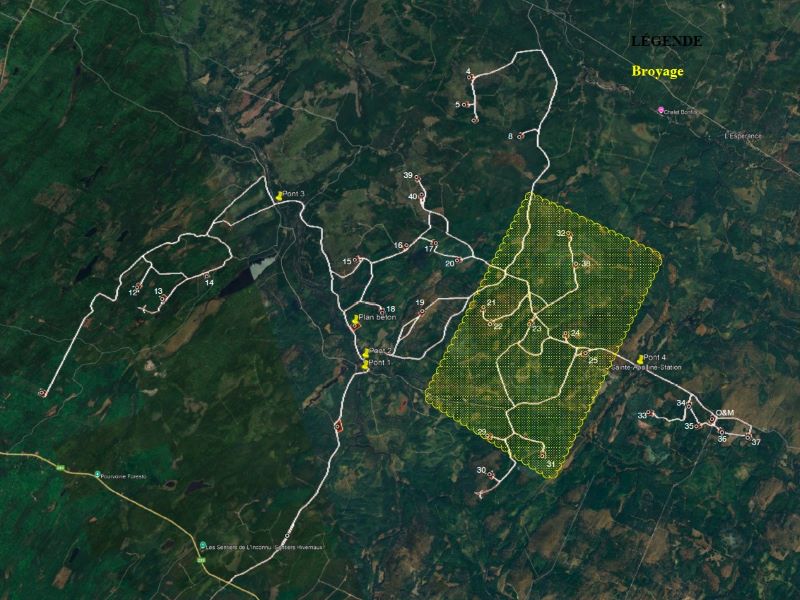
The Foret Domaniale wind farm project will be developed on 247.4 hectares (612 acres) of private and public land in forested areas within the municipalities of Cap-Saint-Ignace, Montmagny, Notre-Dame-du-Rosaire and Sainte-Apolline-de-Patton, in the Montmagny regional county municipality.
The project is one of three wind projects being developed by EDF Solutions Electriques in Quebec, totalling 570MW, which were selected by Hydro‑Quebec for wind power supply agreements awarded through two tender rounds initiated in December 2021. The other two projects include the 270MW Madawaska wind project and the 120MW Haute-Chaudiere wind project.
The projects are in line with Hydro‑Quebec’s 2035 action plan, which sets out an expansion of around 10GW of wind capacity by 2035. The plan aims to support Quebec’s pathway to carbon neutrality, which is expected to be driven mainly by improved energy efficiency and the wider electrification of transport and industry.
Foret Domaniale wind farm details
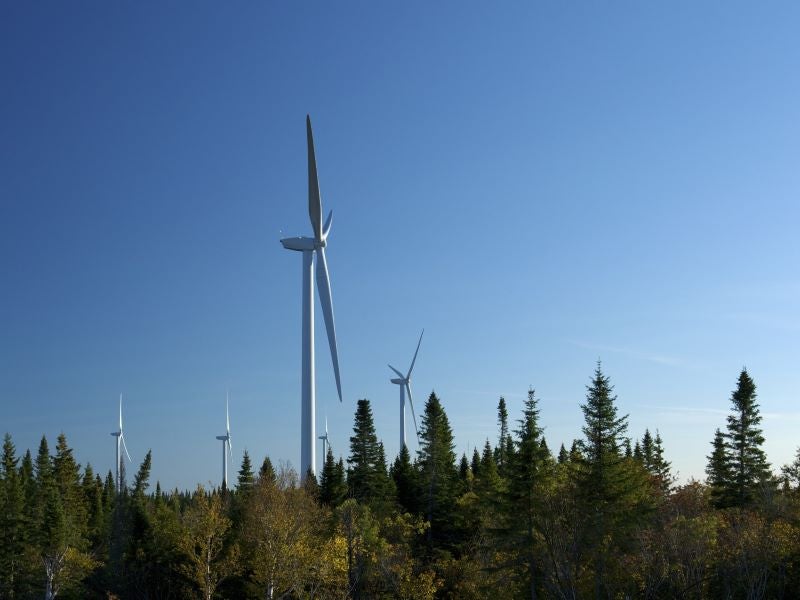
The Foret Domaniale wind farm will be installed with 30 Vestas wind turbines, comprising 28 EnVentus V162-6.2MW units and two EnVentus V162-6.0MW units.
The EnVentus V162 platform is designed for low-to-medium-wind sites and can be configured across a range of rated outputs. The turbines will have 79m long blades and a rotor diameter of 162m. They will be installed on approximately 119m high towers built on reinforced concrete foundations. Two permanent meteorological masts will also be installed.
During construction, each wind turbine is expected to require approximately 2.5 acres, primarily due to the need for a temporary storage area of roughly 100m × 100m at each location to manage deliveries. Once operational, the permanent footprint is expected to fall to around 0.11 acres per turbine.
The wind farm will also include an operations building to serve as the main base for the wind farm’s operations and maintenance personnel.
Electricity generated at the site will be exported to the Hydro-Quebec grid via overhead and underground cables, with the substation located in Montmagny. A 30-year offtake agreement has been established with Hydro-Quebec.
Project financing
Project debt was arranged by Desjardins Group, the Imperial Bank of Canada, National Bank of Canada, KfW IPEX-Bank and MUFG, with Desjardins acting as administrative agent.
The financing was aligned with the Green Lending Principles coordinated by Desjardins, the Imperial Bank of Canada, National Bank of Canada and MUFG.
Contractors involved
Denmark-based wind turbine Vestas was awarded the contract for the supply of the wind turbines in April 2026. The contract includes a ten-year Active Output Management 5000 service arrangement.
Wind tower manufacturer Marmen Energie was selected to manufacture the 30 wind turbine towers. The company will work with Vestas and EDF Solutions Electriques on the project.
Environmental consulting services provider Pesca Environment prepared the environmental impact assessment for the project.
Stikeman Elliott, a law firm, supported the project company as legal counsel during the financing, while Blake, Cassels and Graydon advised the lenders.
Project benefits
The project is expected to provide annual payments to local authorities set at C$5,700/MW, indexed to Quebec’s average consumer price index and paid over the life of the facility.
Based on the stated capacity of 185.6MW, this would amount to approximately C$1.11m in the first year and more than C$44m over 30 years. A separate indexed annual payment of C$50,000 is planned for the City of Montmagny in relation to hosting the substation.
During construction, the developer expects the project to support around 250 jobs, with additional roles required during operations.
Furthermore, profits attributable to Alliance de l’Énergie de l’Est are expected to be reinvested through its membership, which includes 16 regional county municipalities and the Wolastoqiyik First Nation, to fund community-focused projects and programmes.
