

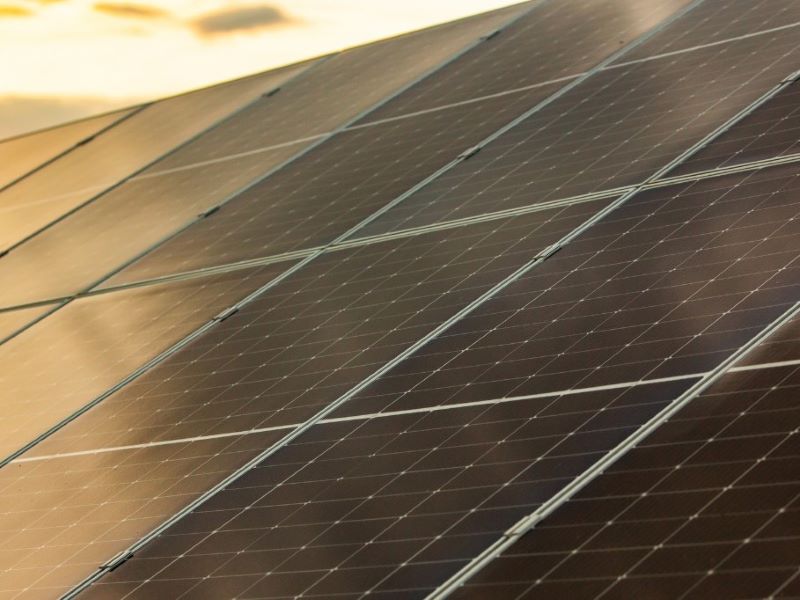
The Nefer Benban Project is an integrated renewable energy scheme in Aswan, Egypt, that combines 200MW of solar photovoltaic (PV) capacity with a 120MW-hour (MWh) battery energy storage system (BESS).
The project is being developed by Nefer Benban for Renewable Energy, a special purpose vehicle jointly owned by Infinity Power Holding (IPH) (51%) and HAU Energy (49%).
Recommended Buyers Guides

HAU Energy is a joint venture (JV) between Hassan Allam Utilities, the European Bank for Reconstruction and Development (EBRD), and Meridiam, while IPH is a JV between Masdar (49%) and Infinity Energy (51%).
The hybrid power plant is designed to support Egypt’s National Energy Strategy by increasing the contribution of clean power generation, enhancing long-term energy security, and aligning with national targets to raise the share of renewables in the electricity mix to 42% by 2030 and 65% by 2040.
Scheduled for completion in the fourth quarter of 2026 (Q4 2026), the project is expected to supply electricity to more than 300,000 households and reduce carbon dioxide emissions by roughly 349,000 tonnes per year.
Location
The Nefer Benban solar PV project is located within the Benban Solar Park (BSP) in Egypt’s Aswan Governorate.
Positioned in one of the world’s more challenging solar environments, Benban necessitates technologies and systems capable of maintaining reliable output under high temperatures and elevated dust levels.
Other solar PV developments in the region include ACWA Power’s 200MW Kom Ombo power project and the 26MW NREA solar PV project.
Nefer Benban solar plant make-up
The Nefer Benban solar project will use AIKO’s All-Back-Contact (ABC) PV modules, each measuring 2,382mm × 1,134mm × 30mm. The modules are specified for operation in ambient temperatures from ‑40°C to +85°C.
With a module efficiency of 25.2% and a power output of 650–655W-peak (Wp), these modules are said to provide an additional 20W of output compared with leading TOPCon products of similar dimensions, without raising the cost per watt. This enables an increase in energy production without expanding the site footprint or adding mounting structures.
The solar PV modules will be mounted on GameChange Solar Genius Tracker™ systems. The project design is based on the company’s 1R × 4 string tracker configuration, tailored to the site’s terrain and civil engineering requirements.
The combination of high‑efficiency modules and a high‑density mounting design is intended to maximise energy yield per square metre, improving overall project value.
The BESS system will provide two hours of load shifting support to Egypt’s power grid.
Grid connection
Electricity generated by the Nefer Benban solar project will be delivered to the national grid through four major high‑voltage pooling substations within the BSP complex.
The associated grid infrastructure includes 175MV-ampere transformers and gas‑insulated switchgear cells operating at 22/220/550kV.
The project will also comprise 27 units of 8.8MW medium-voltage turnkey stations and two units of 4.4MW medium-voltage turnkey stations. Each turnkey station integrates a central inverter, power transformer and medium-voltage switchgear within a compact configuration.
Financing
The EBRD announced a $65m (E£3.38bn) construction bridging loan to HAU Energy in April 2026 towards financing the construction and installation of the project.
Power purchase agreement
The Ministry of Electricity and Renewable Energy and the Egyptian Electricity Transmission Company signed a power purchase agreement to buy electricity generated by the solar power plant in November 2025.
Contractors involved in Nefer Benban solar project
Hassan Allam Construction is acting as the engineering, procurement and construction contractor, with responsibility for delivering the plant, its grid connection and associated systems.
Renewable energy company AIKO was contracted in May 2026 to supply its ABC modules for the project.
GameChange Solar has been contracted to provide its Genius Tracker system for the project. HiTHIUM Energy Storage is supplying the BESS and China-based Sineng Electric is supplying the central inverters for the Nefer Benban solar project.
