
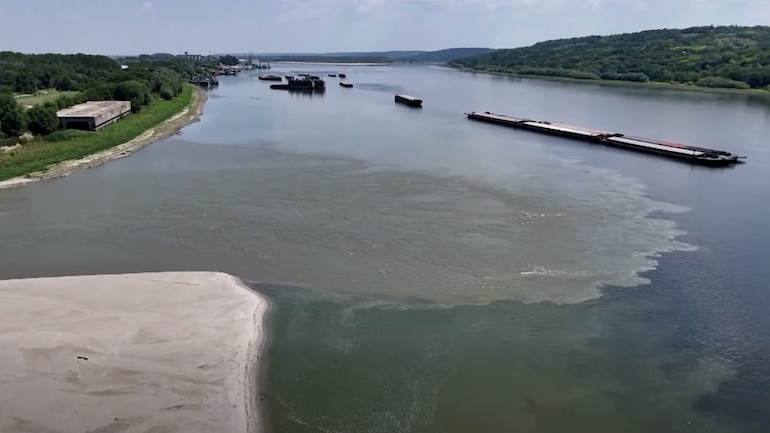
At least ten nuclear reactors have been temporarily shut down or had their power output curtailed across Europe due to severe heatwaves and critically low river levels during June and July.
While no plants have been directly closed by wildfires, the Sizewell B nuclear power station in the UK has been placed on “high alert” due to a major 100-acre wildfire burning just four miles away.

Discover B2B Marketing That Performs
Combine business intelligence and editorial excellence to reach engaged professionals across 36 leading media platforms.
The vast majority of disruptions have occurred in France, where state-owned EDF is legally bound to close reactors or reduce power to prevent discharged cooling water from pushing river temperatures past environmental thresholds. A record-breaking drought has caused the Danube River to drop to historic lows, affecting nuclear power plants (NPPs) in Hungary, Romania and Bulgaria. Switzerland’s Beznau NPP has also been impacted.
As of 30–31 July 2026, there are six NPPs across Europe that are closed or facing power reductions, affecting around 15 reactors. In France, unit two at the Golfech NPP was fully shut down on 30 July 2026 as Garonne River temperatures surged. Units 3.4 and five at the Bugey NPP are under forced output curbs. EDF has ramped down both reactors at the Nogent-sur-Seine NPP to prevent overheating the Seine. Saint Alban units one and two (Rhône River) and Blayais units one and three (Gironde Estuary) have faced rolling curtailments over the past two weeks.
In Hungary, unit three at the Paks NPP is completely offline, unit one is heavily throttled and the entire 2GW-electrical plant is in a 72-hour countdown to a complete shutdown because the Danube has dropped below intake pump levels. In Romania, unit one at the Cernavoda NPP has been completely disconnected from the grid, and unit two is fluctuating under critical, hour-by-hour output restrictions.
Bulgaria is currently on the verge of a severe grid emergency, with the government warning that it may be forced to initiate a complete shutdown of its entire nuclear sector within days. Bulgarian Energy Minister Iva Petrova warned on 29 July 2026 that the country may be forced to temporarily shut down both of its operational units – units five and six at the Kozloduy NPP.
To prevent Kozloduy’s cooling systems from failing, the Bulgarian Energy Minister established direct contact with the Serbian Ministry of Mining and Energy. They are actively coordinating with the Djerdap 1 (Iron Gates) hydropower complex located upstream. Serbia is strategically releasing water through its dam system to help maintain the Danube’s level just above the critical operating thresholds required by Kozloduy.
Bulgaria has classified the current crisis as a force majeure event, noting that the river is continuing to drop by up to 2cms every day. In response, the Kozloduy plant has deployed emergency “special measures”, including riverbed dredging and the preparation of secondary pumps to try and keep the intake channels clear enough to avert an immediate blackout.
Switzerland’s Beznau NPP on the Aare River has been heavily disrupted, cycling between full emergency shutdowns and massive 50% power cuts over the past month. Both reactors were taken completely off the grid on 26 June when the Aare River first spiked to the 25°C threshold, and remained offline for several weeks. They are currently capped at roughly 50% of normal generation capacity to limit environmental thermal pollution.
Grid operators are replacing the missing nuclear electricity using a mix of fossil fuel generation, rapid energy imports, solar surges and mandated demand-reduction tactics.


