
ZincFive has established itself as a notable player in mission‑critical power by using patented nickel-zinc (NiZn) chemistry and intelligent Immediate Power Solutions (IPS) to address emerging challenges facing data centers and other critical infrastructure. The company has been recognized with the Innovation, Product Launch, Safety, and Environmental awards in the 2025 Power Technology Excellence Awards, reflecting achievements in power‑dense storage, AI‑ready battery cabinets, runaway free battery design, and circular materials.
Together, these distinctions highlight a consistent approach: delivering high power in a compact footprint, managing AI’s fast-changing loads at the cabinet level, addressing thermal runaway concerns at the chemistry level, and relying on abundant, recyclable materials rather than more constrained minerals.
Go deeper with GlobalData


Discover B2B Marketing That Performs
Combine business intelligence and editorial excellence to reach engaged professionals across 36 leading media platforms.
Power-dense storage redefining critical back-up
ZincFive’s innovative approach centers on a shift in emphasis from energy capacity to power delivery. Traditional backup systems were typically optimized to provide longer-duration runtime. By contrast, ZincFive’s NiZn-based Immediate Power Solutions are designed to deliver substantial power in short bursts, matching the rapid and often steep load variations seen in AI-intensive data centers and other digital or industrial infrastructure. This focus on sub‑second responsiveness allows facilities to address power transients locally, which can reduce the need to oversize upstream distribution, transformers, or UPS systems solely to manage infrequent but sharp peaks.
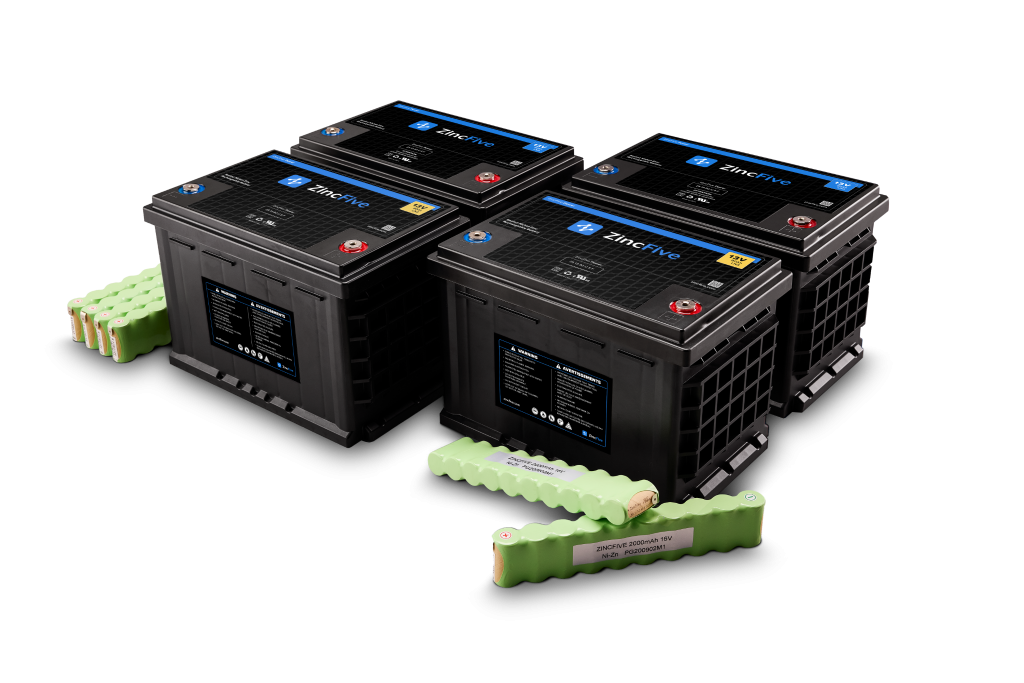
Power density is a core differentiator. NiZn technology can deliver up to three times the power density of some legacy chemistries at a smaller footprint and lower weight. In practice, that enables operators to protect the same or greater megawatts of critical load with fewer, more compact cabinets. For facilities where floor space is closely tied to revenue generation, such as colocation and hyperscale data centers, freeing up white space can have a direct commercial impact, as it can be repurposed for additional IT or GPU racks.

Though, ZincFive’s advancements are not limited to chemistry. ZincFive positions its intelligent Immediate Power Solutions as a distinct category focused on short-duration, high‑power response. In this model, the same platform can manage fast load transients and provide backup runtime, reducing reliance on multiple layers of equipment such as separate flywheels or supercapacitors combined with conventional batteries. The company’s NiZn technology is being deployed at scale across multiple sectors and regions, with nearly 2 gigawatts of power delivered and contracted across global installations.
ZincFive also emphasizes continuous improvement based on field experience. Data from diverse deployments is used to refine cabinet configurations, control algorithms, and advance battery management systems to improve efficiency, reliability, and operational intelligence over time. Underpinning this approach is a portfolio of patents around NiZn electrochemistry and immediate power architectures, which the company positions as an alternative to established lithium‑ion and lead‑acid systems.
BC 2 AI: Battery cabinets built for AI-driven data centers
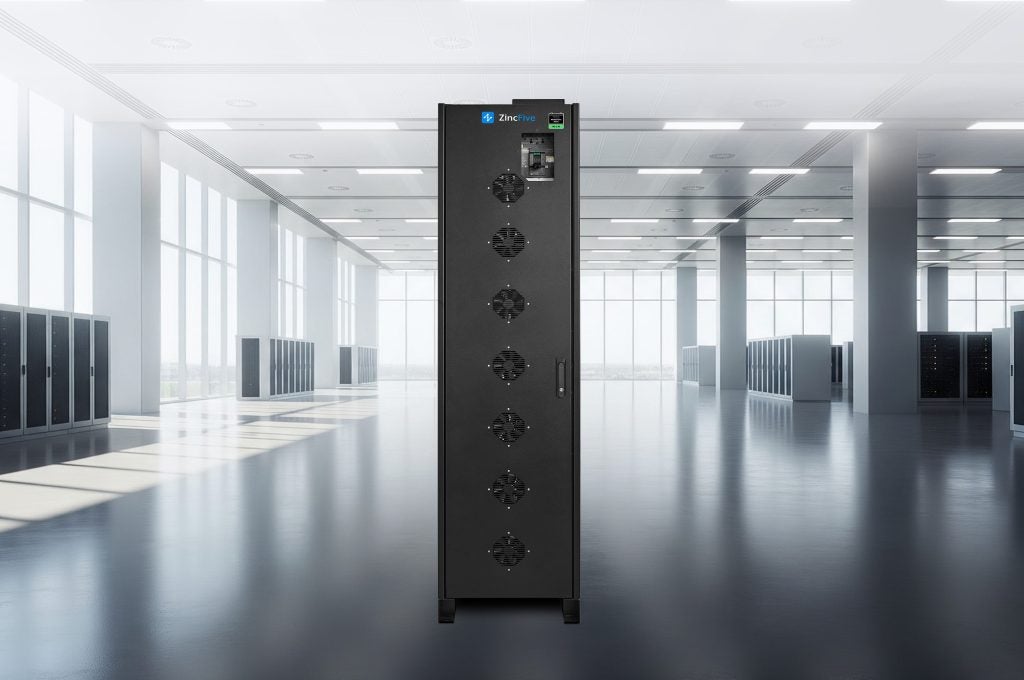
The BC 2 AI UPS Battery Cabinet illustrates how ZincFive is applying Immediate Power Solutions to the specific requirements of AI-driven data centers. AI training and inference workloads can spike up to 15 times their idle power, with rapid, repeated fluctuations driven by GPU-intensive operations. Designed for rapid, unpredictable, AI dynamic load swings, BC 2 AI delivers millisecond-level response, over repeated cycles. The cabinet’s rapid discharge and recharge capabilities help stabilize system power before disturbances propagate throughout the grid. This cabinet-level response reduces the need to oversize UPS units and distribution equipment simply to accommodate short-duration surges.
BC 2 AI combines two historically separate functions in one NiZn battery cabinet: it supports fast-load response for AI workloads while also providing backup power for outage protection. This dual-mode operation simplifies AI data center power architectures, reducing integration effort and limiting the space needed for power quality as AI loads grow, decreasing capital expenditure in comparison to alternative solutions. Additionally, drawing on NiZn’s power density, BC 2 AI can support high rack and GPU densities in roughly the same footprint that traditional IT applications occupy, whereas competing approaches to AI surge coverage may require two to four times more space to deliver equivalent pulse capability.
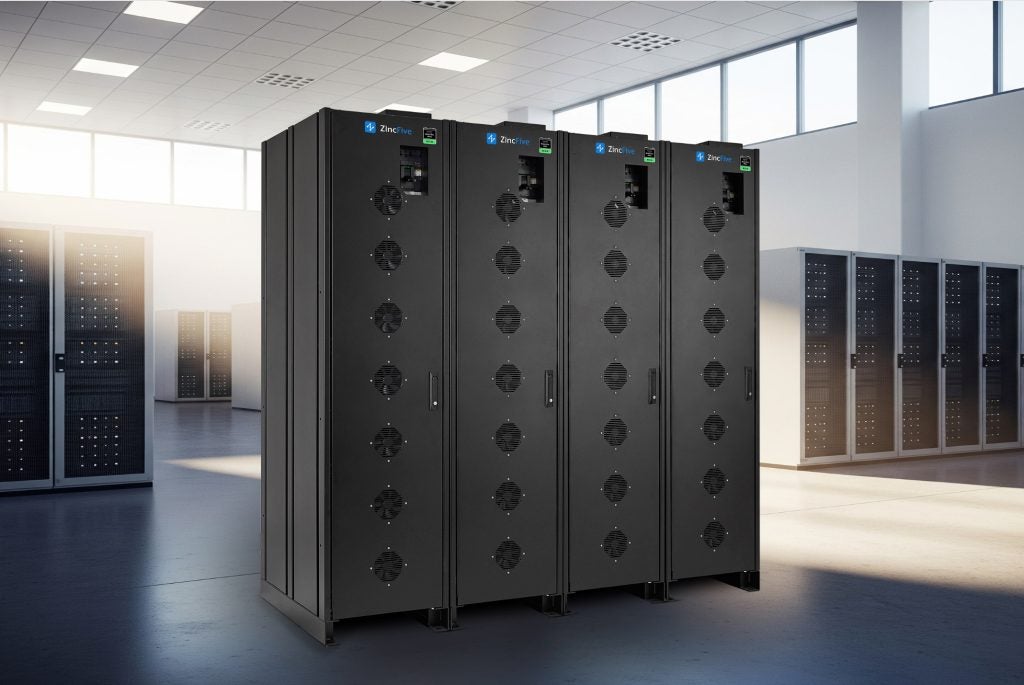
BC 2 AI contains an upgraded Battery Management System (BMS) that provides Advanced Telemetry and Analytics for AI workloads with streamlined hardware, enhanced UI, and a suite of AI-specific features that provide deeper insights with real-time monitoring. ZincFive also highlights that BC 2 AI can be integrated with existing UPS architectures via a largely chemistry‑agnostic interface, giving UPS OEMs and operators a way to enhance AI readiness at the battery-cabinet level without complete system redesigns.
From a system perspective, the company positions AI-ready battery cabinets such as BC 2 AI, as resources that can be used not only for backup but also to enhance power quality. By managing AI‑related transients at the UPS boundary, these cabinets aim to ease stress on upstream infrastructure and reduce the impact of rapid load swings on the grid.
Safety by chemistry: Stable batteries for mission-critical sites
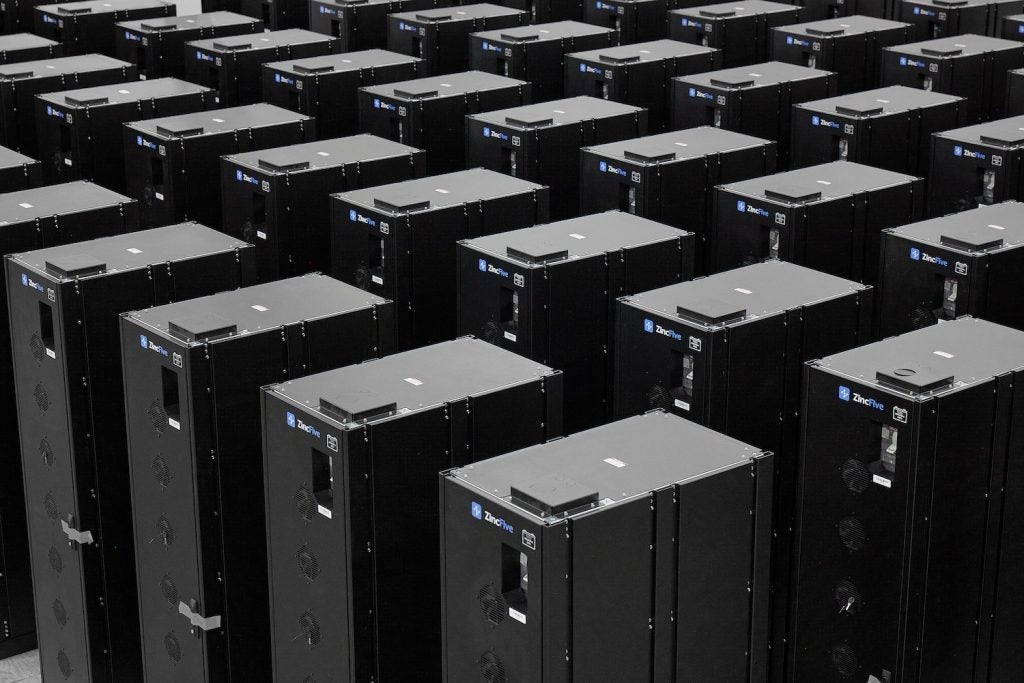
Safety is a central theme in ZincFive’s use of NiZn chemistry. Unlike some incumbent chemistries that require extensive containment, gas detection, and complex protection logic to address the risk of cell‑level thermal runaway, NiZn cells are inherently stable and are not prone to the same thermal runaway behaviors observed in legacy chemistries. This intrinsic stability reduces the dependence on elaborate secondary safety systems and can simplify both system design and compliance with safety codes.
Operating temperature tolerance is another key aspect of safety and reliability. ZincFive’s NiZn systems are designed to function at elevated temperatures, up to around 50°C, without the same level of risk escalation that can be associated with legacy chemistries like lead-acid or lithium-ion. This can lower cooling requirements and reduce the operational constraints that often drive safety‑related derates or the creation of isolation zones within a facility. In practical terms, nickel-zinc’s flexible operating range supports higher usable capacity from the installed battery system while maintaining safety margins.
The way NiZn-based systems behave under partial fault conditions is also relevant for uptime. ZincFive’s battery systems are designed to degrade in a controlled manner if individual cells become weak or depleted, decreasing the trigger for full system shutdowns. In mission-critical environments such as data centers, intelligent transportation, and industrial operations, this ability to maintain service while managing internal issues is important for overall resilience.
ZincFive’s battery systems have undergone testing and certification under UL safety standards, providing third-party verification of key aspects of the chemistry’s performance and safety characteristics. From an environmental, health, and safety (EHS) perspective, the absence of flammable electrolyte and the lower volatility of NiZn reduce exposure for onsite personnel and emergency responders and can contribute to a more favorable risk and insurance profile compared with more reactive chemistries.
Designing battery systems for circularity and lower emissions
On the environmental side, ZincFive’s approach is characterized by the use of abundant, recyclable materials and a lower environmental impact across the product lifecycle when compared to legacy solutions. Nickel and zinc are significantly more prevalent in the Earth’s crust than lithium and lead, and they benefit from established recycling pathways. NiZn cells are non‑hazardous and free of rare earth elements, which supports a more circular materials model than chemistries that depend on scarcer or more environmentally sensitive inputs.
Independent lifecycle analyses indicate 25–50% lower greenhouse gas emissions for NiZn systems compared with lead-acid or lithium-ion alternatives. Combined with a longer expected service life—up to roughly three times longer—this translates into lower embodied carbon per megawatt of protected capacity over the full system lifecycle. A more compact form factor further reduces the quantity of materials required for enclosures and auxiliary infrastructure.
Because NiZn systems do not require the same level of fire mitigation or heavy containment hardware often used with more volatile chemistries, embedded carbon associated with those additional components is also lower. ZincFive’s focus on regional manufacturing, assembly, and logistics, including the establishment of a warehouse and service hub in Europe, aims to shorten supply chains, reduce shipping-related emissions, and support efficient serviceability. These measures are directly relevant to operators tracking Scope 3 emissions from purchased goods and transportation.
End-of-life management is also a key focus for ZincFive. NiZn batteries are highly recyclable, and ZincFive highlights robust recovery processes designed to minimize hazardous waste and return material value to the supply chain. For hyperscale operators and enterprises with detailed decarbonization and reporting requirements, the fact that these environmental attributes can be tied to procurement parameters and system performance metrics helps incorporate NiZn solutions into broader sustainability strategies and disclosure frameworks.

“This recognition is a testament to the power of focused innovation and the unwavering commitment our team brings to building safer, more sustainable, and more resilient power solutions. Meeting the demands of a rapidly changing infrastructure landscape requires a mindset of continuous improvement, and our team brings that mindset to every advancement we make. This award is a meaningful affirmation of that approach and an encouragement to keep raising the bar for our customers, our industry, and the planet.”
– Tod Higinbotham, CEO of ZincFive
Company Profile
ZincFive is the world leader in innovation and delivery of nickel-zinc batteries and immediate power solutions. Supported by an impressive portfolio of international patents, ZincFive technology harnesses The Power of Good Chemistry® to propel the world forward. ZincFive technology leverages the safety and sustainability of nickel-zinc chemistry to provide unparalleled high-power density and performance for mission critical applications. ZincFive is a privately held company based in Tualatin, Oregon. For more information, visit https://www.zincfive.com.
ZincFive and The Power of Good Chemistry are registered trademarks of ZincFive, Inc. and the ZincFive logo is a trademark of ZincFive, Inc.
Contact Details
Media Contact: media@zincfive.com
Links
Website: https://zincfive.com/


