
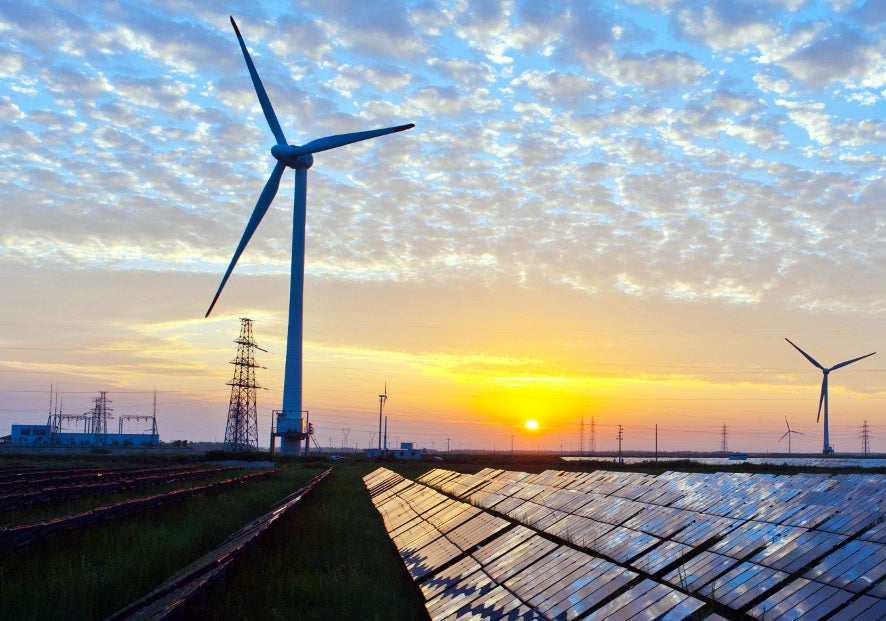
Renewable sources of energy have for the first time generated more electricity in Germany than coal and nuclear power combined, according to new figures.
Renewable sources generated 47.3% of Germany’s electricity in the first half of 2019, while 43.4% came from coal and nuclear energy in this period, according to a report published by the Fraunhofer Institute for Solar Energy Systems (ISE) in July.
Go deeper with GlobalData


Discover B2B Marketing That Performs
Combine business intelligence and editorial excellence to reach engaged professionals across 36 leading media platforms.
Solar, wind, biomass and hydroelectric power surpassed coal-fired and nuclear plants for the first time with 127.4TWh of the country’s electricity coming from renewable sources, an increase of 6.7% from the first half of 2018.
Wind production increased by 20% to become the biggest source in the first half of this year. Onshore and offshore wind supplied 67.1TWh, with a maximum share of 56.9% in daily power generation in mid-January.
Solar energy surged ahead in June, generating 7.71TWh to become the strongest source for the month. The percentage of hydropower fed into the public grid dropped by 4.1TWh, while biomass remained constant.
The figures reveal a substantial move away from coal, but nuclear power showed little change since 2018. Lignite, produced 20.7% less power than the previous year, similar to the 20.2% decrease in hard coal.
The transition towards renewable energy has seen a decrease in carbon dioxide emissions. The German power sector produced 20 million fewer tonnes of CO₂ in the first half of 2019 than the previous year.
Energy from renewable energy sources is increasing, in part, because of the German Renewable Energy Act (EEG) of 2000 to encourage the generation of renewable electricity.
However, Germany currently accounts for half of all coal production in the European Union and still relies heavily on coal and gas for its energy needs. The country aims to phase out coal by 2038 through its international commitments to the fight against climate change.
Germany retains a reliance on coal because of the gradual closure of nuclear power plants. It plans to phase out nuclear power plants by 2022, and following the Fukushima disaster of 2011, has seen the closure of 12 out of 19 plants.



