

The Atucha nuclear power plant site includes two units – Atucha-1 and Atucha-2. They are located in Lima, about 100 miles from Buenos Aries. Atucha-1 unit has a capacity of 335MW. Construction of the long delayed 700MW Atucha-2 is complete and currently in the trial operation phase.
Both units were designed to take a Siemens heavy water cooled, moderated pressurised heavy water reactor (PHWR).
Recommended Buyers Guides

Siemens main contractor for Atucha-1
Atucha-1 was opened in 1974, nearly two years late. It was Latin America’s first nuclear power plant. Siemens was the main contractor, but much of the work was done by domestic Argentine companies.
Atucha-1 used the original Siemens pressurised HWR line. Atucha-1 operated well until a major shutdown to make internal reactor repairs in 1989. The fuel channels were then completely replaced, but there have been more shutdowns since then. Improvements since then have included reducing the tritium content and incorporating hydraulically driven control rods.
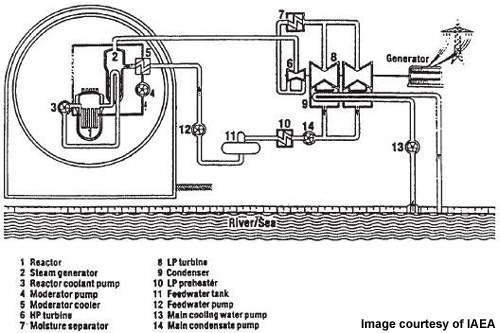
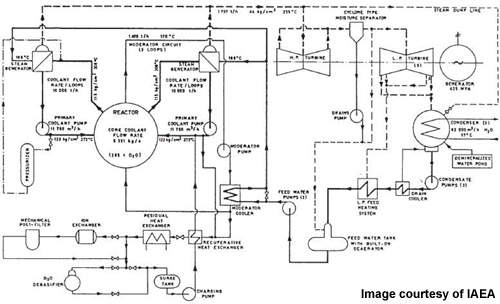
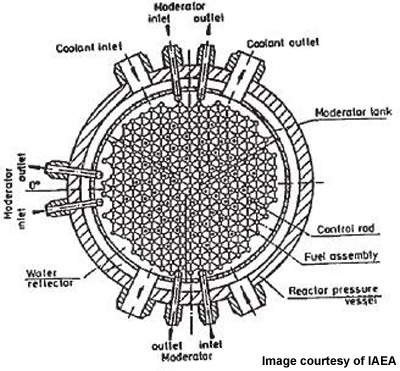
Atucha-1 has a reinforced concrete reactor building with spherical stainless-steel housing for containment. It uses a mix of natural and enriched uranium (0.85%), with heavy water for moderation and cooling. The single pressure vessel holds the whole reactor core. Neutron economy is good, so allowing once-through natural uranium fuel cycle. The circular reactor core has vertical fuel assemblies, each in a fuel channel. Coolant channels pass through a circular tank with moderator water inside the pressure vessel. The heat from this moderator tank preheats the feedwater. Electricity is delivered at 220kV to the grid.
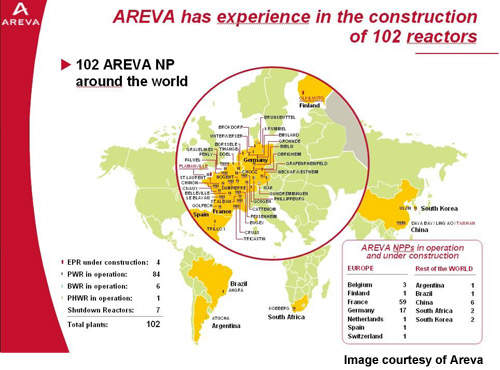
In 1994, the Autoridad Regulatoria Nuclear (ARN) Agency took over regulatory responsibilities from the CNEA nuclear energy agency. Operation of Atucha-1 was given to Nucleoeléctrica Argentina SA (NASA). This was done in preparation for an unsuccessful privatisation. When Siemens left the nuclear energy business, it transferred Atucha-1 to Framatome, now Areva NP. Siemens instead transferred Atucha-2 to NASA so that the project could be completed. Siemens also supplied electrical equipment and services for the project.
Atucha-2 not yet complete
Atucha-2 was proposed in 1979, with Siemens and CNEA having formed ENACE to act as architect / engineer. In 1981, ENACE started construction of the 700MW Siemens reactor next to Atucha-1.
The original cost was to be around $1.5bn, and Atucha-2 was initially scheduled to be finished in 1987. The pressure vessel was eventually installed at the end of 1999, but building stopped when about 80% complete because of lack of funding and technological obsolescence of the original design, with a new set of companies involved.
The IAEA reported several main items to complete including the electro-mechanical, I&C mounting, heavy-water inventory and first core fuel deliveries.
In 2006, the project was restarted as part of the Argentinian Government’s $3.5bn strategic plan. The government discussed updated designs for Atucha-2 with Atomic Energy of Canada in 2007. The plant is being built with an investment of $2.4bn.
Pre-start testing phase of the plant commenced in September 2011. The plant is expected to begin operations in early 2012.
Argentina still has nuclear plans
Argentina has been looking at nuclear power to fill its energy gap and reduce gas usage. It does have (inactive) uranium mines in the country, and is able to enrich uranium and process fuel rods. As part of the $3.5bn strategic plan, the government is planning to extend the life of the Embalse Candu plant by 30 years and build a fourth reactor Atucha-3. The government has started a feasibility study for the $2bn fourth reactor.
Argentina, however, still has no solution to getting rid of radioactive waste from its plants.
