

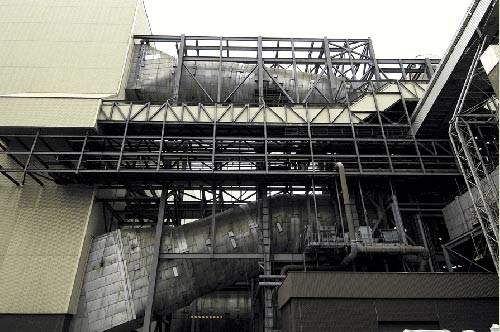
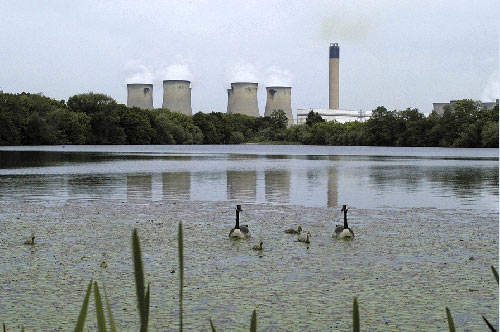
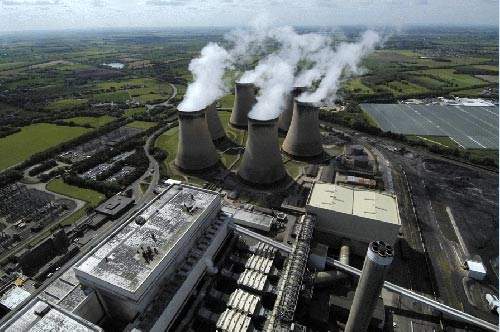
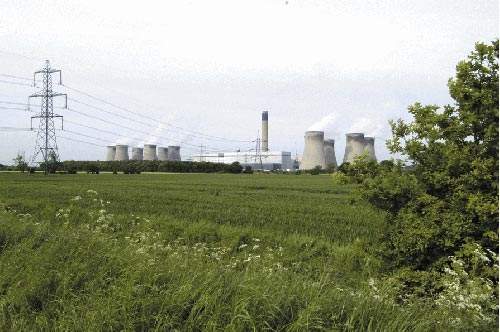
Labelled as the largest, cleanest and most efficient coal-fired power station in the UK, the 4,000MW Drax plant supplies 7% of the country’s electricity needs. Drax is located in Selby, Yorkshire, UK, and owned by the operating subsidiary of Drax Group, Drax Power.
In 2008, Drax Power began a £100m co-firing upgrade project that reduces the company’s CO₂ usage by one million tonnes a year. The existing co-firing facility of the plant provides 500MW of renewable electricity by operating alongside the new 400MW facility.
Recommended White Papers

Recommended Buyers Guides

The upgrade project was completed in June 2012 and increased the plant’s efficiency by 40%.
Siemens won a multimillion order from Drax Power in March 2013 for the supply and installation of three intermediate pressure (IP) steam turbine modules at the station. The IP modules were produced at Siemens’ factory located at Mülheim an der Ruhr in Germany.
Each IP module weighs 63.5t and has 26 rows of blades. The first module was installed in 2014, and the installation was completed in 2015.
Reduced emissions
Emissions from the Drax plant are controlled. The generators are fitted with flue gas desulphurisation (FGD) equipment that removes 90% of sulphur dioxide (SO₂) from emissions. Drax also uses retrofitting boosted over fire air (BOFA) technology for its boilers to reduce emissions of oxides of nitrogen (NOx).
By-products of the coal combustion and FGD processes are recycled for the construction industry. Any ash from the combustion process that is not sold is deposited in an ash disposal site. Previously derelict land, the disposal site has been reclaimed and restored for agricultural use and woodland planting.
Clyde Bergemann Doncaster (CBD) installed its turnkey solution at the Drax Power station, as part of a contract signed in January 2014, to separate biomass ash storage silo in the vicinity of the current storage bunkers to receive and store ash from current pneumatic ash systems.
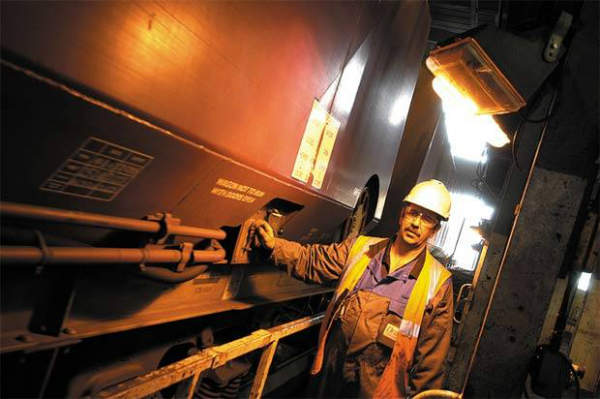
Drax employs 560 people and supports many other local jobs indirectly. It is also a major customer for the UK’s remaining coal mines.
Six generators
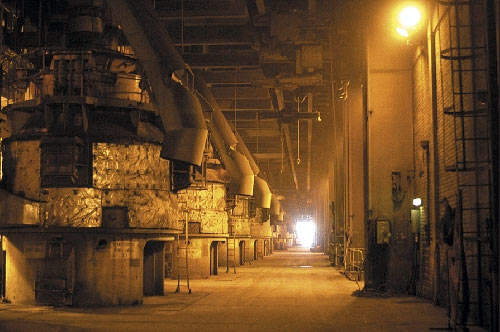
Coal is transported to the station by 1,000t coal trains, with shuttle conveyors distributing the coal between the bunkers. The coal is stored here before it goes to the pulverising mills. These crush the coal into a fine powder using ten large metal balls.
Each boiler has two forced draught fans that draw warm air from the top of the boiler house through large air heaters. The ‘primary’ air used to blow the coal from the mill to the boiler is supplied by a fan.
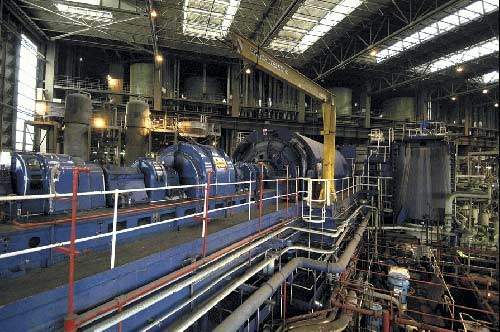
Each of the six turbines consists of five separate turbines, namely one high pressure (HP), one intermediate-pressure (IP) and three low-pressure (LP).
To produce steam Drax has six boilers, each weighing 4,000t. They convert energy from coal into steam at a rate of 563kg/s (4,468,243lb/h). Pure boiler feedwater is turned to steam inside 480km of steel tubing by the heat of the boiler or furnace.
The steam temperature is raised to 568°C and the pressure to 166bar (2,400lb/in²). The boilers operate either continuously or on a daily cycle of morning start-up and night shutdown as required by demand (‘two-shifting’).
Sempra Energy Europe supplied 150MW of power and one million tons of coal to the plant over two years, starting in April 2006.
Electricity generation
Exhaust steam from the 140MW HP turbine is returned to the boiler for reheating before being used in the 250MW IP turbine at 565°C and 40.2bar. It then passes to the three 90MW LP turbines at 308°C and 6.32bar.
The steam strikes and lifts a series of angled blades mounted on the turbine shaft making it rotate at 3,000 revolutions a minute (50 cycles a second).
The steam then passes to two condensers and is taken to the cooling towers. There are 12 cooling towers at Drax, two for each generating unit.
To generate electricity, the electromagnet on the rotor rotates at 3,000rpm inside a stator of copper windings.
These generate 19,000A at 23,500V. A transformer increases the voltage to 400,000V before sending it via cables to the National Grid sub-station for distribution.
Willow coppicing trials
In September 2005, Drax’s short rotation coppice willow processing trial proceeded to its second phase. Phase one successfully identified the issues associated with the processing of wet wood, including the transport and handling of processed fuel.
Wood-derived biomass fuel, including Short Rotation Coppice (SRC) willow, was supplied to Drax by Renewable Fuels. The SRC used in the trial originates from 1,100ha of willow grown locally by the producer group, Renewable Energy Growers.
Drax Power commissioned a ‘direct injection’ system on one of its six generating units. ‘Direct injection’ allows biomass materials to be injected either directly into the boiler or into the fuel line, which delivers a mixture of pulverised coal and hot air into the boiler. This bypasses the pulverising fuel mills, potentially allowing greater throughput of biomass.
The second phase of the processing trial involves linking up the processing equipment with the ‘direct injection’ system to provide an online supply of wood-derived biomass.
The biomass trials at Drax have successfully demonstrated the potential to handle and co-fire significant quantities of biomass fuels, including SRC willow and round wood. The company has successfully established SRC in Yorkshire with a further planting programme for local growers in 2006.
Contractors involved
Capula is responsible for the replacement of the control systems of biomass-fired power generating units for proper functioning of the plant.
Doosan Babcock and Fuel Tech are responsible for the installation of emissions reduction technology on four boilers at the power station.
The future of coal
In April 2009 a design-build contract was signed between Drax Power and C Spencer. Under the £18m contract, Spencer supplied rail unloading equipment and biomass bulk storage and handling systems.
Drax uses this system to feed the direct injection biomass co-firing systems installed at the station.
DB Schenker Rail received a contract to supply coal to the power station in April 2015.
Related content
Future Power Technology: Emissions Edition
In this issue we explore the industry’s efforts to reduce emissions from power generation, looking at the latest developments in cleaner coal generation and carbon capture and storage, as well as new tools for accurate measuring of carbon emissions and the push for investment in cleaner energy technologies.
