

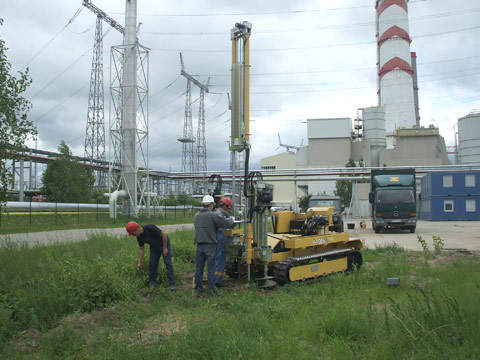
Iberdrola Ingeniería officially opened a combined cycle type power plant for government-owned Lietuvos Elektrine in Lithuania in October 2012.
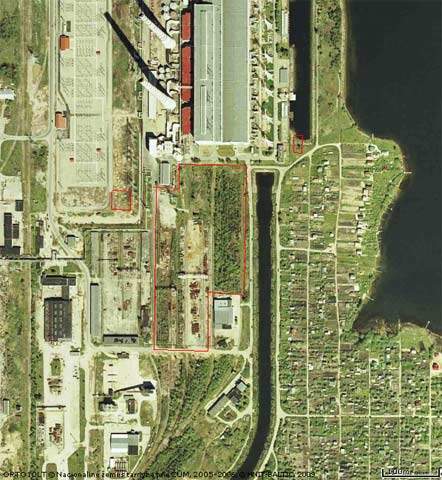
The plant is situated in Elektranai, 40km away from Vilnius.
Recommended Buyers Guides

The state-of-the-art facility was developed to guarantee an uninterrupted power supply to Lithuania after the closure of the Ignalina Nuclear Power Plant in 2010.
The contract for the 455MW power plant was awarded to Iberdrola in 2009. The plant was built on a turnkey basis for Lietuvos Elektrine, which is involved in the generation, supply and distribution of electricity and thermal energy in Lithuania.
Project finance
The €330m (LTL1.3bn) project is the biggest funded by the European Bank for Reconstruction and Development (EBRD) for a Spanish contractor. Iberdrola beat France’s Alstom, Germany’s Siemens and Canada’s SNC Lavalin to win the contract. The European Union committed itself to fund 57% of the project. Lietuvos Energija invested 33%, and the remaining funds were provided by the National Ignalia Decommissioning Fund.
Power Plant Construction
Construction of the power plant started in April 2009. Iberdrola was the EPC contractor for the plant and GE was the main equipment supplier.
Iberdrola built a similar cycle type power plant in Latvia, which was inaugurated in May 2009. Located in Riga in Latvia, the plant has a capacity of 420MW. It is equipped with a district heating system that provides heating and hot water for a population of approximately 7,000 in the southern part of Riga.
Plant details
The plant has one block encompassing a gas turbine with dry low nitrogen oxide (Nox) combustors. The cycle technology of the power plant is based on a single shaft arrangement. It consists of a 9FB gas turbine, along with a heat recovery steam generator (HRSG) and D12 steam turbine. A static converter forms the start-up system for the gas turbine.
The 9FB gas turbine is the next level of improvement in GE’s F series of turbines that use state-of-the-art technology to provide a high level of output and efficiency. The technology used in the FB series results in better fuel economy and also reduces the cost of producing electricity.
The HRSG installed in the plant is a triple pressure type and an unfired one. It is equipped with a reheat section and one reheat condensing steam turbine. It is also equipped with a static excitation system.
The plant includes a generator and surface condenser, as well as auxiliary equipment.
A two-pole 3,000rpm hydrogen and water-cooled common generator is provided for both the gas and steam turbines. The excitation and protection system are redundant systems. An automatic voltage regulation system is also part of the plant.
In addition to the 455MW, the plant is also capable of producing 75t/h steam (13bar, 300°C) for the start-up needs of the existing units.
Cooling water for the steam turbine condenser and other cooling loads is drawn from a nearby lake. The power plant also complies with the emissions requirements of both Lithuania and the EU.
The combined cycle unit, with more than 58% efficiency, generates sufficient power to cover 20% to 25% of Lithuanian domestic demand. The plant generated 1.11TWh of electricity in 2013.
Plant history
The 1,800MW Elektranai Power Plant or Lithuanian Power Plant replaced the Ignalina Power Plant as the prime power supplier for Lithuania upon closure of the Ignalina plant in December 2010. Built between 1960 and 1972, the Elektranai plant had eight units.
The plant received environmental upgrades to meet EU emission standards. A flue gas desulphurisation project was undertaken in 2005.
Lithuania Power market
The Iberdrola power plant was an important step in upgrading Lithuania’s power generation facilities. The majority of the country’s electricity needs were being earlier fulfilled by the 3,000MW Ignalina nuclear plant.
Similar to the Chernobyl nuclear power plant, the Ignalina power plant lacked a sturdy containment building. Lithuania had to close unit 1 of the nuclear plant in 2004 to qualify for being part of the European Union. Unit 2 of the plant was closed in 2010.
With the closure of the plant, electricity prices in Lithuania were expected to increase by about 40%. In addition, 75% of the power sector would have been dependent on natural gas supplied from Russia for meeting their energy needs. The plant closure, therefore, necessitated the setting up of alternative power generation facilities.
