

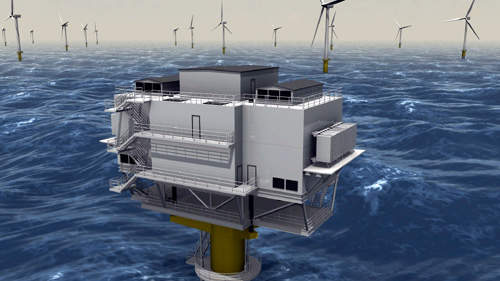
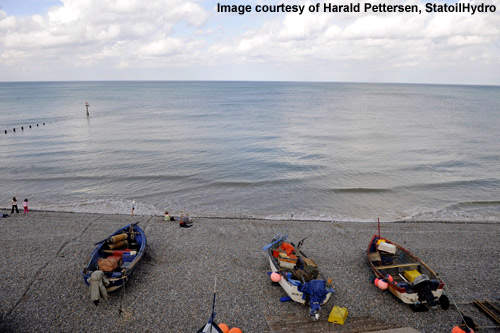
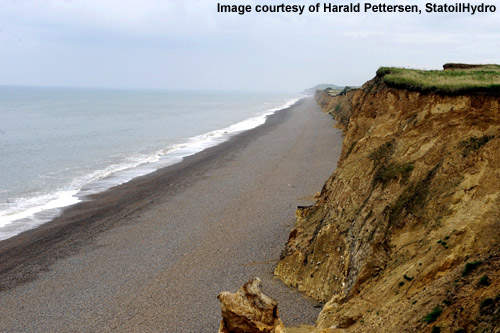

The 317MW Sheringham Shoal offshore wind farm (SSO) is located in the Greater Wash, 17km from Sheringham and 23km from Cromer’s northern coastline in eastern England.
Recommended Buyers Guides

The wind farm has been built by Scira Offshore with an investment of Nkr10bn ($1.8bn). Scira Offshore is a joint venture between Norwegian energy companies Statoil (50%) and Statkraft (50%). Statoil is carrying out the development phase operations.
Onshore installation work on the wind farm started in the third quarter of 2009 and offshore installation began on 9 March 2010. SSO will be the fourth-largest offshore wind farm being built in the UK and was officially opened in September 2012.
The first turbine began operating in August 2011. By July 2012, all 88 turbines of the wind farm had successfully been installed, with 46 connected to the grid.
The SSO wind farm is in line with the UK Government’s target of producing 15% of its energy from renewable sources by 2020.
An unexploded bomb was found at one of the foundations north-west of the wind farm sites during the survey on 30 April 2010. Divers investigated 52 targets and found many anchors and a cannon at the foundation site. The bomb was detonated by disposal specialists.
An unexploded bomb was found at one of the foundations north-west of the wind farm sites during the survey on 30 April 2010. Divers investigated 52 targets and found many anchors and a cannon at the foundation site. The bomb was detonated by disposal specialists.
Sheringham Shoal offshore wind farm features
The SSO wind farm consists of 88 wind turbines, each with a height of 80m and spread across a diamond-shaped area of 35m². They are based on foundations fixed to the seabed alongside two offshore substations. Together, the turbines will add 1.1TWh of green electricity to the national grid, sufficient for 220,000 homes.
Wells Harbour on the Norfolk coast in the UK is the operational base for the SSO project.
The site for the wind farm was allocated by the UK Government in 2004. The location has many favourable conditions such as wind speed, water depth, minimum fishing activity and accessibility. The site is also insulated with good protection measures.
Grid network for the Sheringham Shoal wind facility
The SSO project authorities have signed grid agreements with two UK-based energy companies EDF Energy (EDFE) and National Grid Transco (NGT). The agreement ensures grid connectivity to both the regional and national grids.
Construction of the Norfolk coast wind power farm
In 2003, Scira Offshore leased the offshore wind farm area from the Crown Estate for a period of 40 years.
Repowering of the wind farm will be done after a period of 20 to 25 years. Towards the completion of the lease period, SSO will be decommissioned in line with the governmental norms.
A 21.3km buried cable system and two 1000t offshore substations have been constructed in the Broadland district. These are located adjacent to an existing facility at Salle near Cawston, Norfolk. The foundations for the substations were erected in autumn 2010 and the substations were installed in May 2011.
Export cables were installed through an open-cut trenching method, which measures 2.2m wide and 1.6m deep. In addition, fibre optic cables are installed near the substations for communications.
The first turbine was installed on 3 July 2011. It started providing electricity to the UK Grid in August 2011. Installation of all the turbine foundations was completed in August 2011. Laying of the cables connecting the turbines with the offshore substations was finished in March 2012.
Monopile foundations were laid according to the required specifications to fix the turbines in the sea. The foundation measures 50-55m long, with a 4.2m-5.2m diameter. Its weight is 400t-600t.
Contracts for the Sheringham Shoal offshore plant
Related project
Centrica Lincs Offshore Wind Project, Lincolnshire, United Kingdom
The Lincs offshore wind farm is one of the five renewable projects under development by Centrica Renewable Energy (Centrica) in the Greater Wash. .
Two offshore substations and a gas-insulated onshore substation were supplied by AREVA under a €60m ($88.1m) contract signed with Statoil in 2008. AREVA was also contracted to supply transformers, circuit breakers and reactive power compensation, which helps in supporting variations during the power flow from the wind farm.
Wood Group Engineering (North Sea) was subcontracted by AREVA for designing two offshore stations.
Scira Offshore obtained Marine and Fisheries Agency licence for Sheringham Shoal wind farm in August 2008 to install export power cabling. Nexans, a cable company, was awarded a €24m contract in April 2008 to supply 22km of 145kV cross-linked polyethylene submarine export cables, spare cable and equipment and an optical-fibre cable. The company received another €12m ($15.8m) contract in April 2009 to supply 81km of infield cables and equipment.
Visser and Smit Marine Contracting and Global Marine Systems were contracted to install the submarine cables. Support services provider Carillion is undertaking onshore cable work.
MT Højgaard supplied 90 offshore foundations for the turbines and two substations. Siemens Energy supplied turbines under a €450m ($597m) contract won in 2009. Siemens will also service the turbines at the wind farm for five years. The turbines were installed by Master Marine, an offshore service company. It also installed two substation modules. Master Marine was awarded the €78m ($104.8m) installation contract in April 2009. Under the contract, the company also supplied a vessel for WTG installation and offshore substation lift.
Sheringham Shoal wind turbines
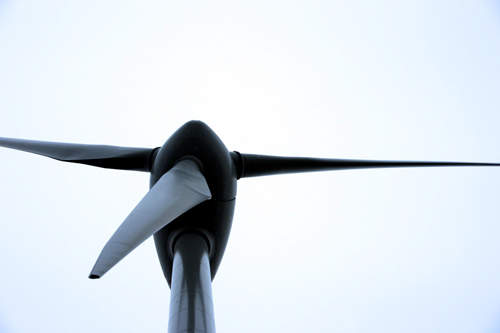
The wind farm has 88 turbines of 3.6MW each. The turbines have three 170ft long blades mounted at a height of 262ft.
They automatically at a wind speed of 3-5m/s and increase output until the wind speed reaches 13-14m/s. It stops operating if the average wind speed exceeds 25m/s.
The safety system will automatically be reset when the wind speed drops below the restart speed.
Turbines are connected to offshore substations through two types of infield cables. The first type is the 27kg/m cable, which connect the turbines to the substation; its total length is 26km. The second type is an 18kg/m cable, measuring 56km in length, which connects the turbines further out from the substations.
Environmental impact on the Norfolk coast
Wind energy is an alternative to fossil fuel. The SSO wind farm will reduce CO2 emissions by 500,000t annually. Horizontal drilling is being undertaken alongside directional drilling under roads at key landmarks to minimise the impact on local fauna and flora. Underground cabling along the 21.6km route from the regional grid to Salle will have less visual impact.
Royal Haskoning, a provider of maritime consulting services, prepared an environment impact assessment (EIA).
UK power market
Wind power is the second largest renewable resource in the UK.
The country has an installed wind power of 5GW (as of mid-2011) and generating capacity of 1GW. It has 500MW onshore and 653MW offshore wind farms (as of 2010). Wind energy overtook hydroelectricity in 2007, contributing 2.2% of the total electricity consumption in the UK. It is the fastest growing renewable energy source and is expected to grow further due to low costs, lower energy security threats and an urgent need to address the CO2 emissions to prevent climate change.
In the UK, the development of onshore and offshore wind farms predicted to deliver 30% of the country’s electricity supply and to decarbonise the economy by 2020.
