
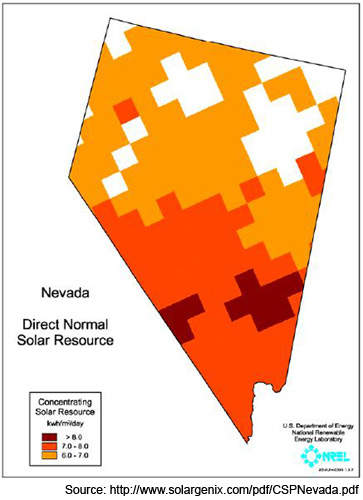
The Nevada Solar One Concentrated Solar Power (CSP) plant is now producing 64MW in 140 hectares of desert in Nevada, US. The plant is located in Eldorado Valley, near Boulder City (south of Las Vegas), and is one of the world's largest CSP plants. It cost around $262m and was developed by Solargenix Energy.
Groundbreaking was in February 2006, and the plant came on line just over a year later in June 2007.
Recommended White Papers

Recommended Buyers Guides

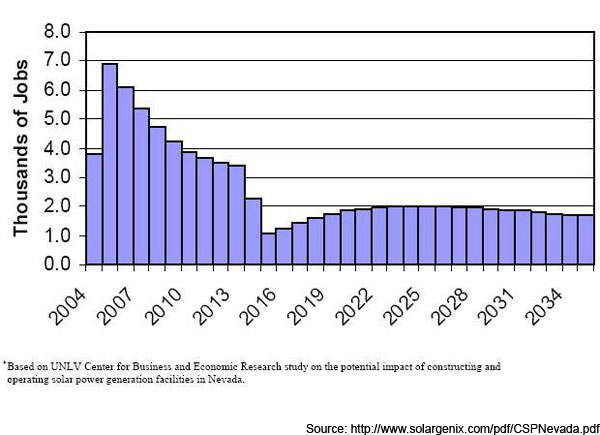
Solar One generates enough electricity to power 40,000 households during the day, generating electricity at a competitive 9–13 cents per kWh. Up to 850 people (average 400) were involved in the construction, and there are now 28 full-time staff. Nevada One is an independent power project, with power being sold to utilities Nevada Power Co. and Sierra Pacific Power Co.
CO-OPERATION BETWEEN MANUFACTURERS
Project developer was Solargenix Energy, formerly Duke Solar. In 2006, Spanish company Acciona Energia bought a 55% stake in Solargenix, and the company now owns the whole project. The main construction contractor was EPC (Houston, Texas), and Acciona/Solargenix Energy is the operator.
The project uses Solargenix SGX-1 parabolic trough collectors, which were developed under the US Department of Energy's USA Trough Initiative. The Solargenix collectors are made from extruded aluminum. A unique organic hubbing structure was initially developed by Gossamer Spaceframes for buildings and bridges.
The new design weighs less than steel designs, requires few fasteners, needs no welding or specialised manufacturing, assembles easily and requires no field alignment.
Light is collected by around 184,000 mirrors made by German company Flabeg, which are arranged in long, parabolic arrays. Schott (another German company) supplied a total of 19,300 PTR-70 steel-and-glass vacuum tube receivers. The new Schott receiver design uses an innovative glass with the same thermal coefficient as steel. That greatly reduces temperature stresses during hot/cold cycling of day and night temperatures. Solel (Israel) provided backup UVAC receivers.
The receivers heat oil to 300°C, and this acts as a heat transfer fluid that is passed to heat exchangers. These hold water that boils to drive a 75MW Siemens reheat steam turbine. During cloudy conditions, additional (natural gas) heating can heat the heat transfer fluid and so produce steam to stabilise the output. This forms just 2% of the total heating requirements.
DEVELOPMENT OF PIONEERING SEGS PLANTS
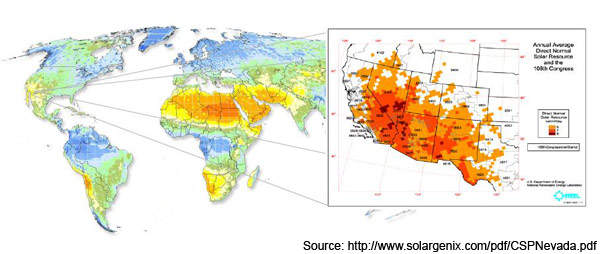
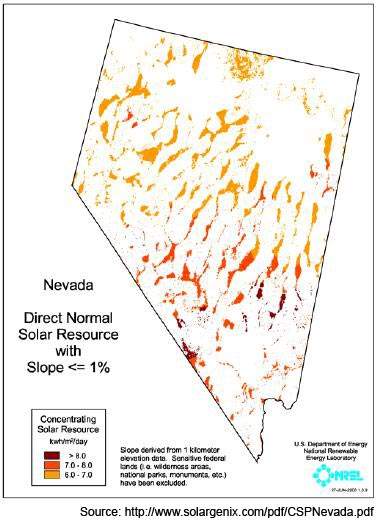
There are several similar projects in the Mojave Desert in California; the south-western area of the US receives some of the highest sunlight in the country.
First were the Solar Electric Generating Stations (SEGS), built in the Mojave Desert in the 1980s and still reliably producing 345MW. Israeli company Luz Industries originally built the SEGS. Since then, the projects have changed hands a number of times and are now owned by FPL Energy. They are still partially maintained and upgraded by Solel.
These SEGS plants were pioneering projects that demonstrated the reliability of the technology. The present design is more advanced. For example, the first SEGS needed considerable natural gas-fired backup to maintain the temperature of the heat transfer fluid.
Other plants in the desert include Solar One, a demonstration 10MW solar tower that was upgraded to Solar Two and ran for a total of 17 years.
The 14MW Nellis solar power plant, completed in December 2007, uses photovoltaic panels and will supply around a quarter of the power used at the Nellis Air Force Base.
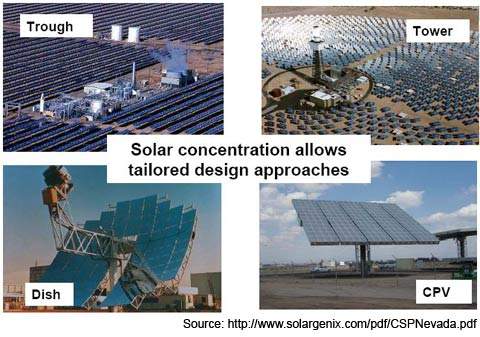
Further plans are for a 553MW Mojave Solar Park, a 500MW Stirling Solar Dish, and a 100MW plant for Solar Renewable Energy-1 LLC of Nevada (using acrylic Fresnel lenses to focus sunlight onto receiver tubes).
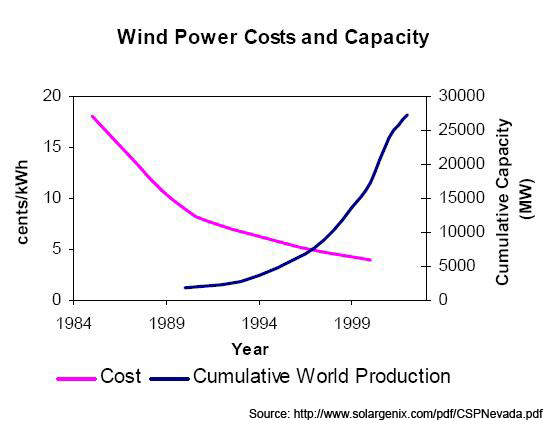
If CSP can be mass produced, subsequent plants could give energy prices as little as 7 cents/kWh, better than new fossil and nuclear plants.