

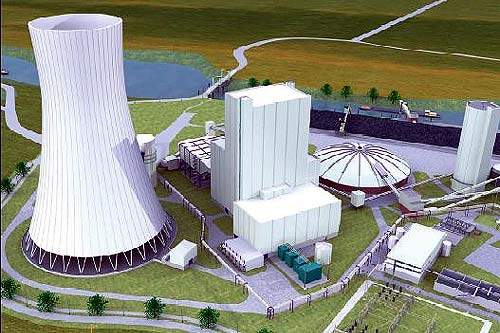
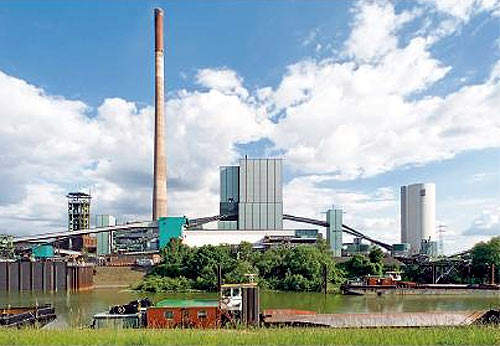
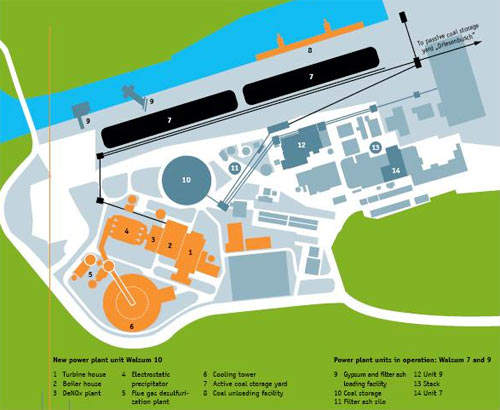
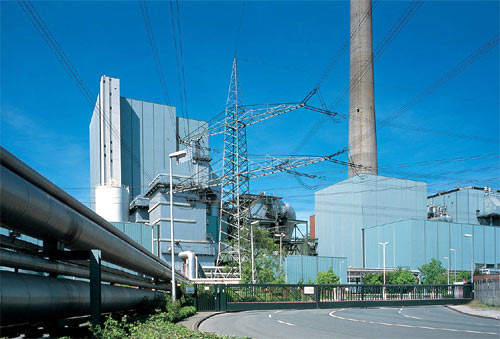
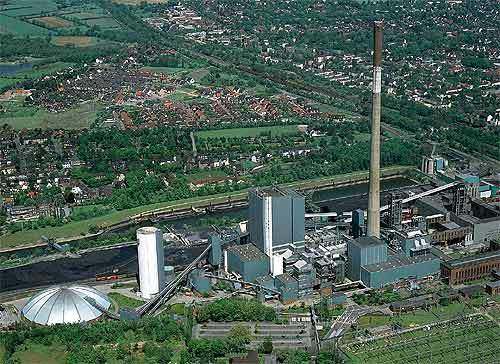
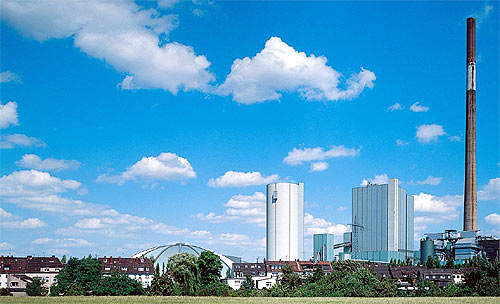
A 750MW hard-coal-fired cogeneration unit at Duisburg-Walsum will generate various forms of energy. Unit 10 at the power plant will produce 790MW gross – made up of electricity, district heating, process steam (for a paper mill) and compressed air (for the Walsum coal mine). The plant will use advanced flue gas desulphurisation.
Net efficiency will be above 45%, about 5% higher than other German coal-fired power plants. This increase comes in part from advanced material allowing higher boiler steam pressures and temperatures. An efficient 181m tall cooling tower allows high steam energy utilisation in the turbine.
Recommended Buyers Guides
The plant is being built by energy company Steag and infrastructure company EVN, with EVN and EnBW Energie Baden-Württemberg buying the electricity. It will supply enough electricity for a city of half a million people.
Costing around €820m, theplant is being built by energy company Steag and infrastructure company EVN, with EVN and EnBW Energie Baden-Württemberg buying the electricity. It will supply enough electricity for a city of half a million people, the plant will take three years to complete. Commissioning was originally planned for 2010, but has now been postponed to 2011. The plant will have a 45%+ efficiency.
Technology
Air pollution control includes flue gas desulfurisation (FGD) systems. Hitachi uses the quicklime and limestone process to remove sulfur dioxide from the flue gases. The gas is then cooled to saturation temperature in a flue gas scrubber and cleaned with a slurry suspension injected in the counter stream.
The cleaned flue gas is discharged to the atmosphere through the “wet” stack or cooling tower after being heated in a gas/gas heat exchanger through a “dry” stack. The limestone needed for desulfurisation is normally stored on the site and turned into a limestone slurry in a limestone treatment process. Gypsum is dewatered and sent to the manufacturing industries.
Hitachi uses selective catalytic reduction (SCR) after combustion to practically eliminate NOx pollution. SCR is normally used between the economiser and air heater. Ammonia/ammonium hydroxide is injected and blended, followed by processing in a nitrogen oxide reduction (DeNOx ) reactor with rectifier and sootblower.
Catalysts are at the heart of the DeNOx process, with processes using either plate or honeycomb types. The system uses the ammonia and catalysts to convert the oxides of nitrogen into water and nitrogen. Ash particles and dust cling to electrically charged plates in the electrostatic precipitator.
Cleaned flue gases are carried away in a flue gas duct via the cooling tower, so the plant needs no stack.
Development
Development
The joint venture of Steag (51%) and EVN (49%) awarded the contract for the turnkey construction to Hitachi Power Europe (HPE) of Oberhausen, Germany. The supply includes a steam turbine and generator, a large-scale steam generating unit, environmental protection equipment and structural and civil engineering work including a cooling tower. It is also handling overall plant engineering (which is based on a Steag design).
Construction
The plant in Duisburg-Walsum is the first in Germany to be ordered as a “complete package”.
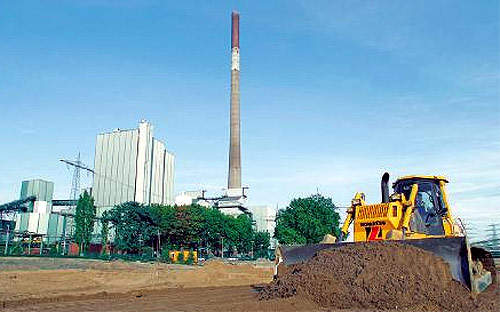
Construction began ahead of schedule in 2006 November. It is having considerable impact on employment in North Rhine-Westphalia, and the Ruhr district in particular. Roads and much other infrastructure is being provided by regional companies.
After earth-moving, the first few months saw the foundations for the individual sections of the plant (boiler, cooling tower and so on). Construction has created up to 1,500 jobs, with around 60 permanent jobs at the plant. The construction of the plant has been on for almost four years. Hitachi Power Europe is installing the coal plant in a turnkey manner.
The construction of the plant has been on for almost two years. Hitachi Power Europe is installing the coal plant in a turnkey manner.
In July 2009, a boiler pressure test was conducted at the plant. The test endorsed the boiler’s ability to endure high pressure. The 106m high boiler will generate over 600 degree C hot steam under very high pressure (nearly 274 bar). The steam will then pass through a turbine with an attached generator that turns the moving energy into electrical energy. Around 9,900t of steel has been used for the test. The total length of the piping is 450km.
Organisation and finance
Steag is a wholly owned subsidiary of RAG Aktiengesellschaft, and is the fifth largest German power generator. Its core business is power generation in hard-coal-fired power plants (eight in the Rhine/Ruhr region and the Saarland; three abroad), in industrial power plants, and in decentralised energy supply installations. The total installed electric capacity, nationally and internationally, is about 9,000MW.
Steag maintains its use of hard coal instead of natural gas at Walsum is based on secure long-term electricity production from a guaranteed supply of hard coal, which is not subject to the price fluctuations of oil and gas.
EVN is a listed Austrian energy and infrastructure company which supplies electric power to three million customers in Europe. Controlling shareholder with 51% is the province of Lower Austria. The EVN Group offers its customers electricity, gas, heat, water, heat recovery incineration and related services.
The company relies on a flexible production mix combining water and thermal power with alternative energy, and currently has a production capacity in Lower Austria of some 1,600MW.
Through wholly owned subsidiaries the company is active in the water and waste-to-energy business in Austria and eleven other Central and East European countries.
KfW IPEX-Bank, IKB and Helaba are providing €615m ($785m) in finance. EVN and EnBW are headquartered in Austria and Southern Germany, but deliver electricity in the Ruhr district and elsewhere.
