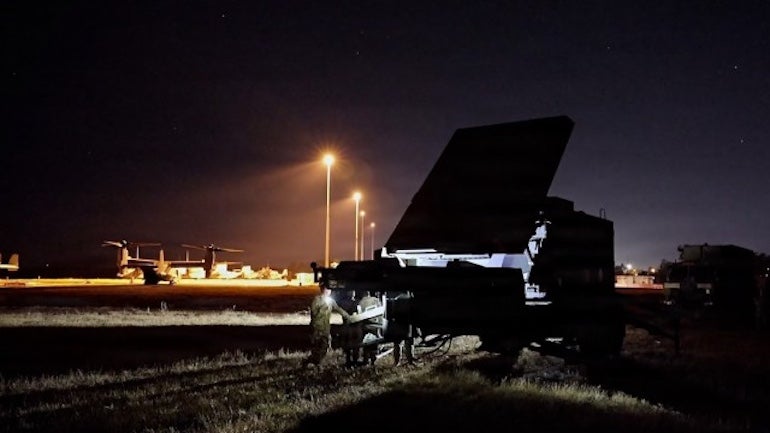
The US Department of the Army is progressing plans to establish microreactors at its military bases under the Janus Program. In partnership with the Department of War (DOW) Innovation Unit (DIU), the Army is awarding up to a combined $2.2bn to vendors to own, construct, and operate nuclear microreactors on the first five military installations.
The selected vendors and installations are as follows:

Discover B2B Marketing That Performs
Combine business intelligence and editorial excellence to reach engaged professionals across 36 leading media platforms.
- Antares Nuclear – Fort Bragg, North Carolina (home of the Airborne and Special Operations Forces and the largest US Army base by population);
- BWXT Advanced Technologies – Fort Campbell, Kentucky (home to the 101st Airborne Division (Air Assault) and to two Special Operations Command units);
- General Atomics Electromagnetic Systems – Fort Hood, Texas (the Army’s premier installation to train and deploy heavy forces);
- Radiant Industries – Fort Benning, Georgia (the US Army’s premier training centre); and
- Westinghouse Government Services – Fort Drum, New York (home of the 10th Mountain Division – Light Infantry – and a training facility for Reserve and National Guard units).
Using private sector funding along with government finance, the Army expects eventually more than 20 nuclear microreactors to be built and operated across DOW installations. In November 2025, the Army had identified nine sites following comprehensive analysis and on-site assessments to find optimal locations for initial deployment. The other four sites were:
- Fort Wainwright (Alaska), home to the 1st Infantry Brigade Combat Team, 11th Airborne Division and the Arctic Aviation Command;
- Holston Army Ammunition Plant (Tennessee), a government-owned and contractor-operated facility that produces explosives for the US military, operated by BAE Systems Ordnance Systems;
- Joint Base Lewis-McChord (Washington), which provides installation support functions by the Army-led Joint Base Garrison to Army, Navy and Marines; and
- Redstone Arsenal (Alabama), a Federal Centre of Excellence for Logistics & Acquisition Services; Space Operations & Missile Defense; Research, Development, Test & Engineering; and Intelligence & Homeland Defense.
“Since launching the Janus Program, our mandate …has been clear: secure the power our warfighters need to train, deploy and win,” said Dan Driscoll, Secretary of the Army. “Awarding these contracts accelerates our ability to deliver safe, reliable baseload power directly to our installations. We are building the energy resilience necessary to project combat power globally, without relying on potentially vulnerable external grids.”
The Janus Program, launched in October 2025, is the Army’s next-generation nuclear power programme, which aims to deliver secure, resilient, and reliable energy to support national defence installations and critical missions in line with President Donald Trumps’s May 2025 Executive Order (EO) 14299: Deploying Advanced Nuclear Reactor Technologies for National Security. It leverages the Army’s nuclear regulatory authorities in close partnership with the Department of Energy (DOE). EO 14299 targets September 2028 for operation of a first reactor, regulated by the Army, on a military installation.
“The Janus Program is grabbing the baton from Project Pele and the Reactor Pilot Program,” said Dr Jeff Waksman, Principal Deputy Assistant Secretary of the Army for Installations, Energy & Environment. “We are seeking not just reactors capable of turning on for a brief demonstration, but rather systems able to deliver power with high-capacity factors for years of operation. The Janus Program will be a complete success when and only when we have assisted multiple nuclear companies in developing truly reliable and affordable nuclear microreactors which they can sell to other buyers beyond just the military.”
Project Pele is a whole-of-government effort, with critical expertise provided by the Department of Energy (DOE), the Nuclear Regulatory Commission (NRC), US Army Corps of Engineers USACE), NASA, and the National Nuclear Security Administration (NNSA). Pele is a 1.5 MWe high-temperature gas-cooled demonstration microreactor for the Department of Defence (DOD – now renamed DOW) Strategic Capabilities Office. The technology is expected to begin producing electricity in 2028. DOD broke ground on the Project Pele transportable microreactor at Idaho National Laboratory (INL) in September 2024. The reactor is expected to operate for a minimum of three years at INL.
As the Janus Program moves forward, it is intended that the selected vendors will also site nuclear technologies on other service installations for continued energy resilience across the entire DOW. Additional Army and other Service sites will be announced at a later date. Using a milestone-based payment model, vendors will receive government funding only after successfully hitting specific technical goals. The prototype reactors will be contractor-owned and operated.
The microreactors
Antares plans to deliver and deploy its 1-20 MWe microreactors in sets of three to Fort Bragg in North Carolina with the first reactor targeting operation by September 2028. While the specific production model for Fort Bragg has not been detailed, Antares achieved zero-power criticality of its preliminary Mark-0 reactor at the Idaho National Laboratory (INL) in June.
The Antares R1 Mark-0 is a full-scale, zero-power demonstration microreactor built to validate the physics and core performance of the company’s planned commercial R1 design. It is a high-temperature sodium heat-pipe reactor, utilising entirely passive, redundant liquid metal heat pipes instead of high-pressure liquid pumps. The core uses graphite and boron carbide control drums turned by independent actuator motors, a physical setup heavily inspired by historical space reactor designs.
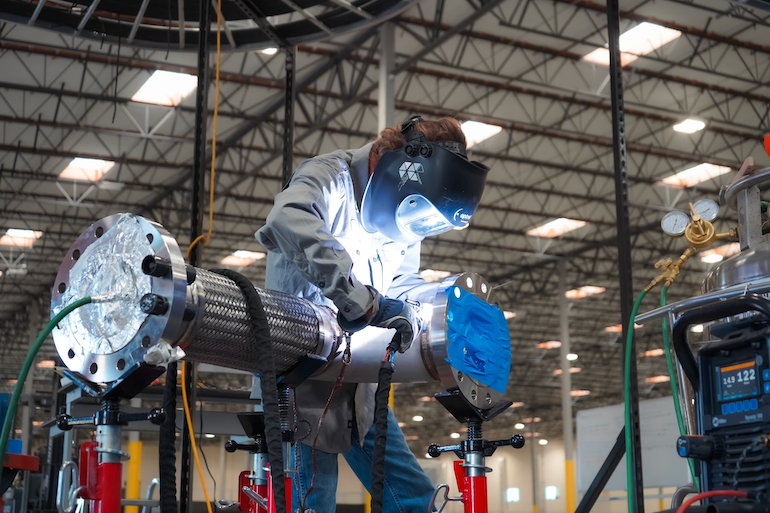
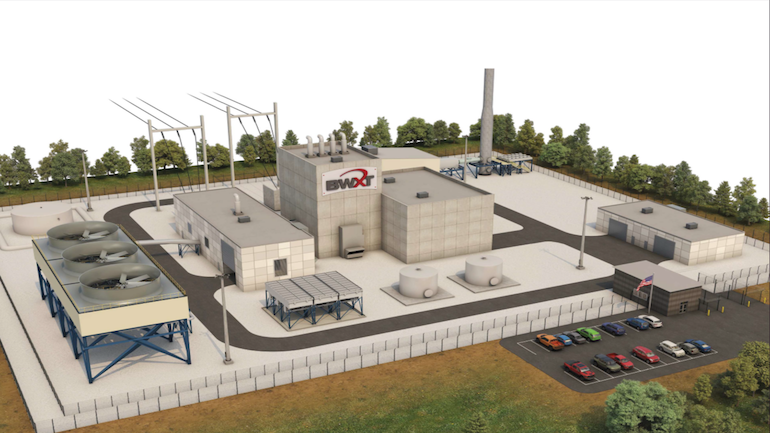
BWXT said it will deploy its BWXT Advanced Nuclear Reactor (BANR) technology in support of the Janus program. BANR is a high temperature, gas-cooled reactor that uses TRi-structural ISOtropic (TRISO), fuel. For Janus, a 20 MWe version of BANR will be deployed.
The first phase will include working with the Army and DIU on final site selection within Fort Campbell in Kentucky, initiating nuclear regulatory processes with the Army and initiating TRISO fuel fabrication at existing BWXT facilities. Concurrently, BWXT will work with the customer and potential partners on establishing the operating company structure, characterising the site, and preparing supply chains for long-lead procurements. BWXT is targeting ground-breaking for site construction in late 2028 with reactor operations starting in the early 2030s. A news release from Fort Campbell said the microreactor will occupy a footprint of less than five acres, entirely on post.
General Atomics Electromagnetic Systems (GA-EMS) plans to install the General Atomics Tactical Energy System (GA‑TES) at Fort Hood in Texas. GA‑TES is a liquid-metal-cooled microreactor with a baseline net output of approximately 5 MWe and an architecture scalable to approximately 20 MWe. The plant has a design life of 40 years. Its modular architecture supports transport and deployment by truck or rail, while natural-circulation primary coolant flow eliminates pumps and associated mechanical complexity. It uses uranium zirconium hydride (UZrH) specialised solid nuclear fuel composed of an alloy of metallic uranium dispersed within a zirconium hydride matrix.
“Passive safety and operational simplicity are fundamental to our Tactical Energy System design,” said Christina Back, Vice President of GA-EMS Nuclear Technologies & Materials. “Self-protecting UZrH fuel and pump-free natural-circulation cooling reduce reliance on active systems and operator intervention, while provide flexibility to meet evolving defence energy requirements.”
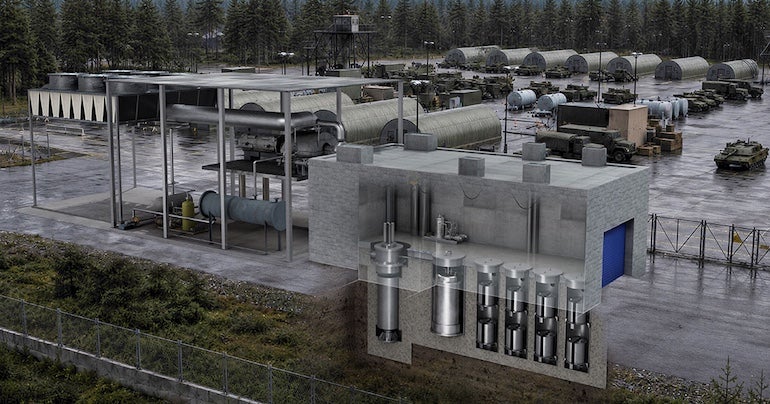
Radiant said the Army, in partnership with DIU had executed a binding agreement totalling up to $750m to develop and deploy 15 Kaleidos nuclear microreactors through the Army’s Janus Program. Kaleidos is a transportable high-temperature gas-cooled reactor (HTGR) using high-assay low-enriched uranium (HALEU) TRISO fuel, helium gas coolant, and prismatic graphite blocks. It has a capacity of 3 MWt or 1 MWe. Each 70-tonne microreactor will fit into a single shipping container. Radiant says the reactor can set up to be producing power within 48 hours of delivery at a customer site.
The reactor has a five-year fuel cycle and a 20-year service life. Radiant manages fuelling, refuelling, and used-fuel storage at its own facilities, allowing customer sites to return to greenfield condition, within two years or less after a unit is removed. Kaleidos is currently undergoing a rigorous test campaign at INL’s Demonstration of Microreactor Experiments (DOME) facility which was launched earlier this year.
The Janus award builds on Radiant’s previous selection by the Department of the Air Force and DIU to develop and operate Kaleidos microreactors at Buckley Space Force Base in Colorado.
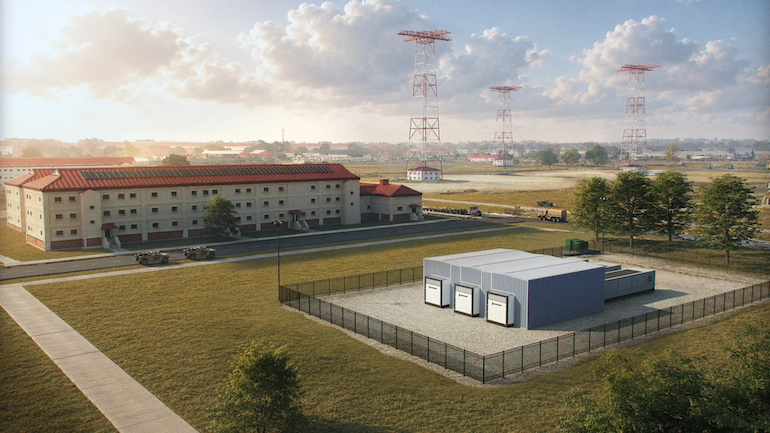
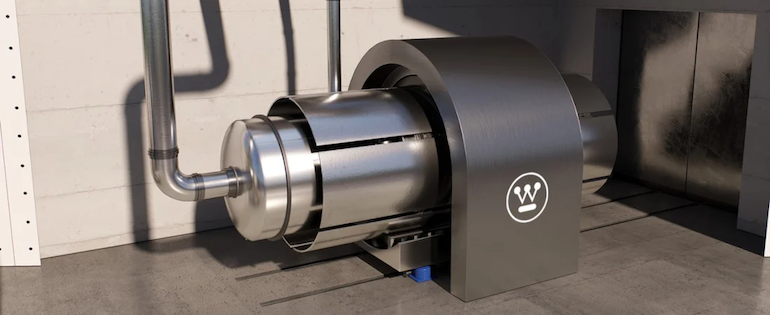
Westinghouse Government Services said it will deploy its eVinci microreactor at Fort Drum in New York. The eVinci microreactor is a 15MWt/5MWe nuclear battery. The core comprises HALEU encapsulated into TRISO fuel particles embedded in a solid graphite block, which serves as the neutron moderator and provides thermal inertia.
Instead of pumping liquid water or gas through the core to cool it, the eVinci uses an array of 24-foot-long liquid sodium heat pipes. Capillary action and phase changes drive this system: heat from the core vaporises the sodium, which flows to the cold end of the pipe, releases its energy to a heat exchanger, condenses back into liquid, and cycles back. This eliminates pumps, mechanical valves, seals, and the risk of a loss-of-coolant accident.
Westinghouse recently completed zero-power criticality testing for eVinci in partnership with Los Alamos National Laboratory and INL at the National Criticality Experiments Research Center (NCERC), a National Nuclear Security Administration (NNSA) facility at the Nevada National Security Site (NNSS). It will undergo detailed testing at INL’s DOME facility after testing on Radiant’s Kaleidos is completed.