EP79: Used to Connect Electrically Conductive Joints in the ATLAS Detector at CERN
Scientists at CERN, The European Organization for Nuclear Research, used EP79 to reduce the radiation length and connect electrically-conductive joints of the aluminium barrel and copper end caps of the Faraday cage of the ATLAS detector. ATLAS at the Large Hadron Collider at CERN is a particle detector used to record high-energy particle collisions, in order to understand the fundamental interactions between ionizing particles.
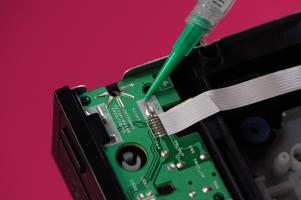
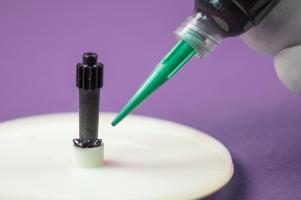
EP79 is a two-component, electrically conductive epoxy adhesive for bonding, coating and sealing applications. After curing, it has low shrinkage, good bond strength and toughness, making it suitable for thermal cycling over a wide temperature range. It is often recommended for applications in the semiconductor and electronics industries.
Download this free white paper to read more about this case study.