

Despite gradual progress in recent years, women remain significantly underrepresented across the global energy workforce.
According to the International Energy Agency’s (IEA) 2025 World Energy Employment report, women account for roughly 20% – one in five jobs – of the energy sector globally. In the wider global economy, women make up double that share.
Go deeper with GlobalData

Discover B2B Marketing That Performs
Combine business intelligence and editorial excellence to reach engaged professionals across 36 leading media platforms.
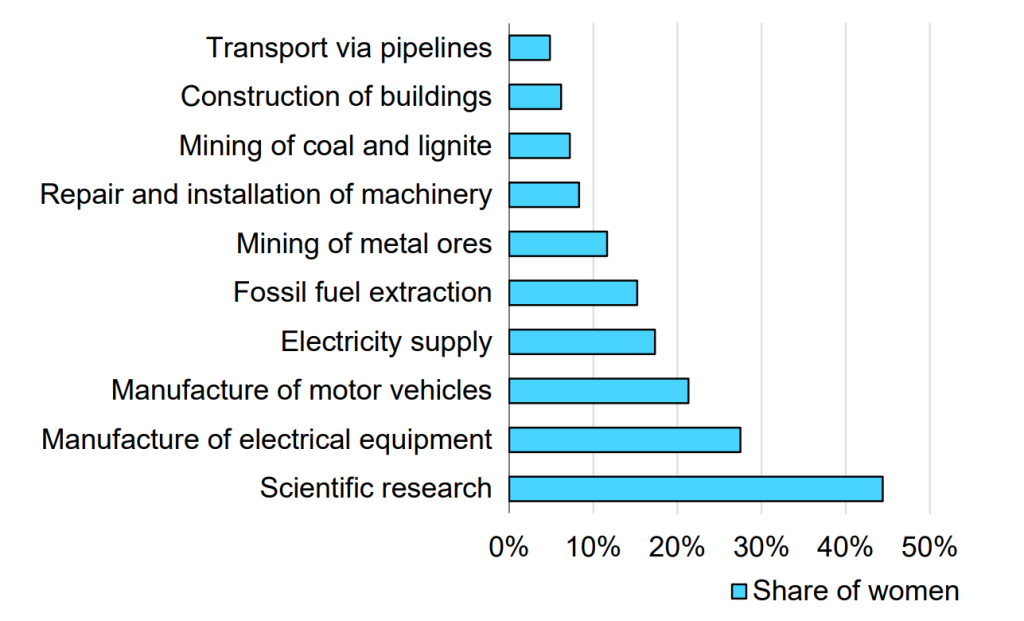
What is striking is that this ratio has remained largely static in recent years, partly because the fastest job growth in the sector has been with occupations in which women make up less than 5% of workers, such as welders, electricians and line workers.
So while the industry grows, those gains have not necessarily translated into broader gender representation.
In comparison, women’s representation in energy is much higher in areas like scientific research and electrical equipment manufacturing, where they account for around 45% and 27% of positions, respectively.
Women’s participation also varies across energy subsectors. The International Renewable Energy Agency reports that around 32% of full-time roles in renewable energy are held by women, with solar leading the charge at roughly 40% and wind lagging behind at about 21%.
US Tariffs are shifting - will you react or anticipate?
Don’t let policy changes catch you off guard. Stay proactive with real-time data and expert analysis.
By GlobalDataIn nuclear, women represent around 25% of the workforce. Elsewhere, in oil and gas, the number drops to approximately 22%, and the IEA points to pipeline transportation in particular as one of the least represented areas in energy, with women accounting for less than 5%.
Mining remains one of the most male-dominated sectors in the broader energy value chain, with women representing just 15% of the global mining workforce, according to the World Bank. The IEA also highlights metal ore mining (11%) and coal and lignite mining (7%) as some of the least female-represented areas in the sector.
Signs of progress: women in energy leadership
The good news is that, according to the IEA report, women’s share of senior leadership positions in the energy workforce since 2015 has risen faster than the economy-wide average. As of 2024, women held about 18% of senior leadership roles in energy, up from 13% in 2015.
Some sectors are outperforming. Renewables have seen steady gains, with women now accounting for around 30% of senior leadership roles. Nuclear has progressed even faster at a compound annual growth rate of over 4% between 2015 and 2024, reaching 29% in representation. The grid sector has also seen improvement, though with more modest gains, reaching just under 18%.
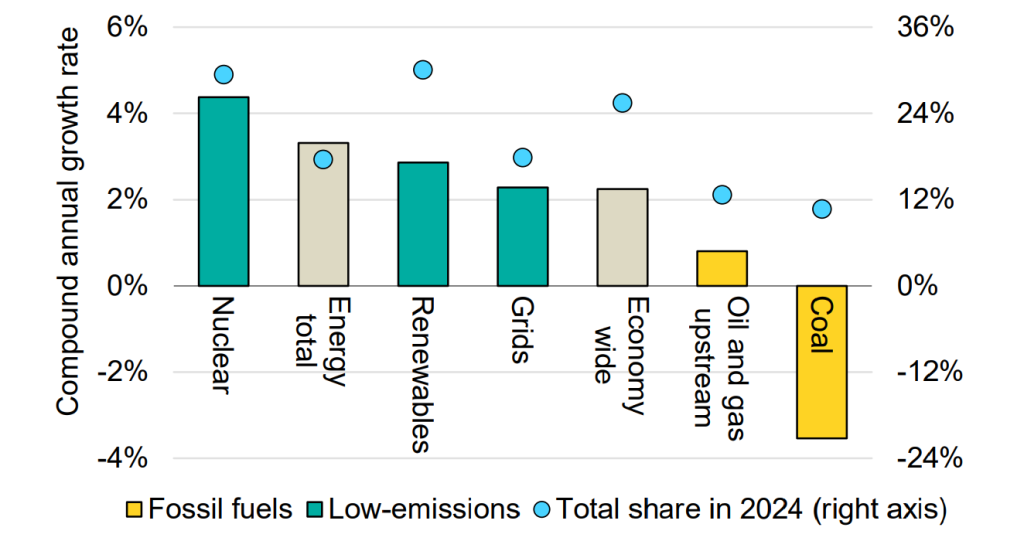
But despite this progress, the share of women in energy leadership still falls short of the broader economy-wide average of 25%.
Plus, progress has, again, not been even across the industry.
In oil and gas, growth over the last decade has been marginal, and the share of women in senior leadership positions remains below 1%. Meanwhile, a 2023 White & Case analysis found that 42% of the world’s top 100 listed mining companies had no women in executive management positions as of 2023 – an improvement from 55% in 2012, but still leaving nearly half of mining majors without C-suite women in sight.
In the coal sector, representation has gone backwards. According to the IEA, women’s share of leadership roles in coal declined by around 20% between 2015 and 2024, dropping to just over 10%.
Voices behind the statistics: Shell, Scatec and Rebel Energy
Behind the numbers are individual experiences that reflect the systemic barriers women still face in energy careers.
Sabine Hauser, managing director for Shell Austria, began her career at the company in 1994 as a trainee and eventually worked her way into senior leadership.
Looking back at her early career, she says: “When I was younger, I was a little more insecure and didn’t speak up like my male counterparts, and I found myself getting overlooked.”
Kine Årdal, chief digital and information officer at Scatec, reflects on a similar sentiment: “I don’t have the loudest voice in the room. And if you don’t have the most assertive voice, you might not be heard.”
Difficulties in energy entrepreneurship for women are akin to those climbing the career ladder. “In fundraising, the statistics are stacked against women, and confidence is the key difference I’ve observed – not ability,” says Penelope Hope, co-founder and former chief operating officer of Rebel Energy.
“Women, even while equally capable, tend to be highly conscientious and very aware of risk and responsibility. When you’re raising money, you’re asking people to trust you with their capital, and that weighs heavily. Men, in contrast, often appear more comfortable with risk-taking, which translates into bolder pitches and decision-making abilities.”
The IEA report points to a range of drivers contributing to the gender imbalance in the sector, including negative perceptions of women in certain occupations, workplace cultures and limited exposure to career pathways. The agency’s Educators’ Employment Survey indicated that insufficient flexible work arrangements and childcare policies – both relevant to parenthood – were the most frequently cited challenges among women in the energy workforce.
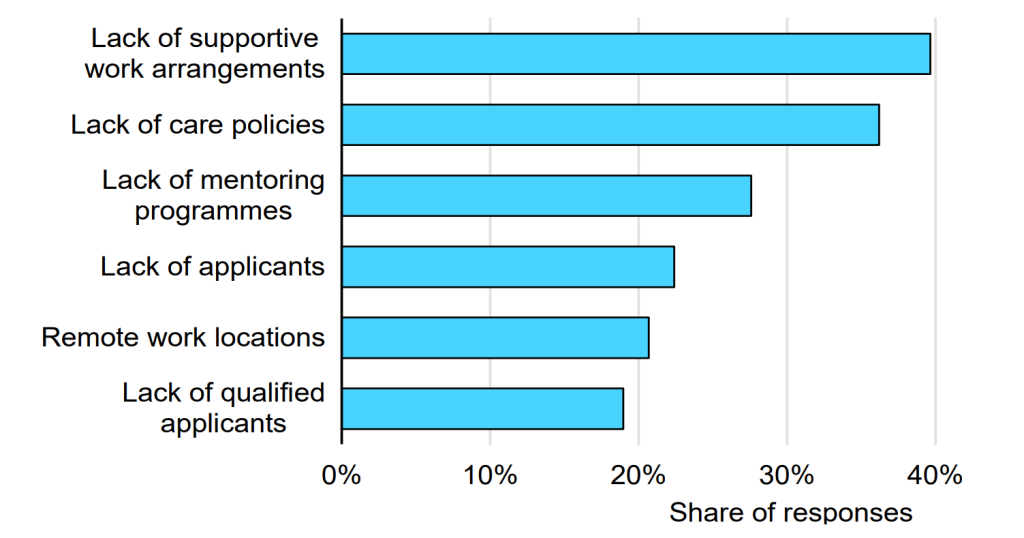
Indeed, both Hauser and Årdal faced challenges in their careers when childcare entered the picture. After returning to work shortly after giving birth, Hauser found herself in unideal circumstances “spending hours in the office bathroom to pump milk”, as if it was not difficult enough to leave behind her three-month-old. Årdal, on the other hand, was on track for a leadership programme when she was told that she was “no longer fit” for the role after she became pregnant.
“It was one of those moments where I wondered whether it would have been easier if I were a man,” Årdal admits.
Hauser emphasises that government and corporate support for working mothers is one thing, but societal perception is another. While her company and country (Austria) had supportive frameworks for her to take a longer maternal leave, she struggled to cope with the judgement of not taking full advantage.
“I could’ve stayed home for a year or even two but decided to return to work in three months, and I was told ‘why aren’t you staying home with your kid?’ – that hurt the most,” she says.
What energy companies can do differently
A growing number of initiatives are working to close the energy gender gap. Some governments have introduced scholarships for fields of studies in which women are underrepresented, established gender targets for hiring and expanded childcare policies, among other efforts.
However, arguably the most important change is required at the workplace level, and Lucy Webb, head of people partnering at So Energy, says that recruitment practices can make a significant difference in whether women apply for roles in the first place.
“Gender-neutral job descriptions are important,” Webb notes. “If there are more masculine-coded words, it can detract women from applying. So, ensuring your advert is attractive to all is really important to increase female applicants.”
She stresses that having a diverse hiring panel is equally important: “If you’re a female candidate and see gender balance at the interview stage, especially at different seniority levels, that’s powerful. Also, seeing women in roles beyond traditionally ‘female’ positions – not just people director, for example – is important.”
Programmes such as Chicago Women in Trades in the US, Build Together in Canada and Women in Trades Roadmap in Australia have been helpful in recruiting and training women for energy roles. But Webb argues that besides recruitment, “retention is key”.
“If you see women join as graduates or apprentices and progress into management and senior leadership, that’s a strong signal the organisation is doing something right.”
According to Webb, companies that successfully retain female talent often have solid leadership development programmes and partnerships with organisations that offer training for women. “These [frameworks] show that the company is investing in the progression of women.”
From a governance perspective, she adds, “inclusive policies are critical: flexible working, enhanced parental leave – not just maternity but paternity too – and menopause policies”.
Webb concludes: “Organisations that actively promote and support these initiatives tend to be inclusive across the board – ethnic minority groups, neurodiversity groups, wellbeing groups. That holistic inclusion shows genuine commitment to a diverse workplace.”
Encouraging the next generation
Beyond fairness and equality, increasing women’s participation is critical for the energy sector’s future. The global energy transition will require millions of new workers across the value chain, and many companies are already reporting labour shortages in specialised fields. Expanding the talent pool to include more women could help address those shortages while also bringing broader perspectives into problem-solving and innovation.
Research across multiple industries has also linked more diverse teams to stronger financial performance and risk management – outcomes that could be particularly valuable in a sector navigating rapid technological and regulatory change.
“Women bring emotional intelligence and awareness of impact, which can be incredibly powerful in attracting more talent, motivating teams through tough periods and fostering creativity and resilience,” Hope notes.
For women considering careers in energy, industry leaders say confidence and preparation are key.
“Women will often see a job advert and feel they have to hit every single point to apply, whereas men tend to think, ‘I hit a couple, I may as well try,’” says Webb.
Her advice for female applicants: apply anyway. “You don’t have to tick every box. Do your research. Showcase your transferable skills. Reach out on LinkedIn. Show passion and understanding of the sector.
“Ultimately, just shoot your shot.”
“Speak up. Be confident,” Hauser advises. “You can do training – like how to speak in front of an audience or make your voice heard. But also, be the source of knowledge, so that people have no choice but to listen.”
“Knowing my material gave me confidence. When building on facts and research, I came across with credibility, and people listened,” Årdal echoes, suggesting being honest with oneself: “Ask yourself, ‘what do I need to learn?’ and work on those aspects… You don’t need to do it yourself. Get feedback from your network and your managers on what you need to improve on to prepare for a leadership role.”
Hope agrees that increasing women’s participation in the sector starts with speaking up, regardless of seniority.
“Women can have the most influence from exactly where they are right now. Whether at the most junior or C-suite executive level, influence begins with voice and conviction.”



