

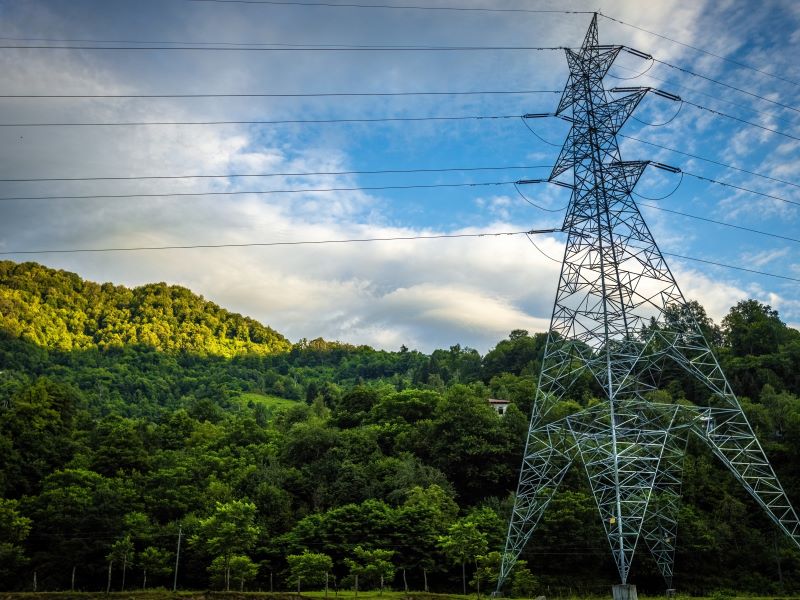
The Hunter Transmission Project is a 110km-long, 500kV high-voltage transmission corridor being developed in New South Wales (NSW), Australia, by the NSW Energy Corporation, also known as EnergyCo.
The transmission line will be operated by Transgrid, under a commitment deed agreement signed in January 2025 by EnergyCo, naming Transgrid as the preferred network operator.
Recommended Buyers Guides

In July 2026, the NSW Department of Planning, Housing and Infrastructure granted planning approval for the project.
Subject to Commonwealth Government consent, work on the project is expected to start in 2027 and finish in late 2029.
The transmission line will enable an additional 5GW of renewable electricity to be transmitted from the Central-West Orana and New England renewable energy zones (REZs), bringing the total to around 8GW.
The development is expected to support around 830 construction roles including more than 160 in the Hunter region, while creating supply chain opportunities for manufacturers, suppliers, transport operators and other regional businesses. Across NSW, the project is forecast to support around 1,500 direct and indirect jobs.
Project purpose
With NSW’s older coal-fired generators nearing retirement, the current transmission network lacks sufficient capacity to move electricity from the new REZs to households and businesses across the state.
The project will establish a 500kV transmission ring forming the core of NSW’s power network, delivering low-emissions, dependable electricity to the Hunter, Sydney and Illawarra regions, which together account for around 80% of the region’s power demand.
The transmission line has been designated as both a critical state significant infrastructure project and a priority network infrastructure project.
Hunter Transmission Project details
The Hunter Transmission Project scope comprises the construction and operation of a 500kV overhead double-circuit transmission line, linking the proposed Bayswater South 500kV switching station to the Olney 500kV switching station.
The line will be carried on steel lattice towers reaching up to 85m in height. Span distances will vary from 75m to around 1.5km depending on terrain, with typical spacing being between 300m and 600m.
The design includes 24 phase conductors, with 12 on each circuit, alongside two earth wires, and a minimum vertical clearance of around 13.5m. The works also cover the development of the Bayswater South and Olney switching stations.
Project route
The Hunter Transmission corridor will cross five local government areas: Muswellbrook Shire Council, Singleton Council, Cessnock City Council, Lake Macquarie City Council and Central Coast Council.
The project’s preliminary corridor is divided into three sections, HTP North, HTP Central and HTP South. HTP North runs from Bayswater to Broke, HTP Central runs from Pokolbin to Corrabare and HTP South runs from Olney to Eraring.
The project alignment has been adjusted to reduce impacts on communities and the environment, with around 89% of the corridor located on mining, energy and government land to limit disturbance.
Bayswater South and Olney switching stations
The Bayswater South switching station is set to be constructed approximately 400m south-west of the existing substation at Bayswater Power Station on AGL-owned land. Access is planned from the New England Highway using a mix of new and existing roads and tracks within the power station site.
The facility will include a 500kV switchyard connecting into the NSW transmission network, with associated equipment such as busbars, circuit breakers and isolators, as well as line shunt reactors and gantries for transmission line connections. Space is expected to be reserved for future expansion, including additional bays, extra line shunt reactors and connections for more transmission lines.
The Olney switching station is due to be constructed within Olney State Forest, around 1.7km north-west of the existing Eraring to Kemps Creek 500kV transmission line, with access via Watagan Forest Road through the forest. It would broadly mirror the Bayswater South configuration, with a 500kV switchyard, busbars, circuit breakers, isolators and gantries, but it will not include line shunt reactors. As with Bayswater South, provision is intended for future additions including potential line shunt reactors and further line connections.
Existing infrastructure upgrades and modifications
Connecting the new transmission corridor to the electricity network will require upgrades at the existing substations at Bayswater and Eraring power stations.
At Bayswater, the plan includes installing two new switchbays to manage power flows, along with expanding the substation footprint to accommodate additional equipment. At Eraring, works are set to include new landing spans to bring the line into the substation and upgrades to existing equipment to handle higher loads. The scope also covers relocating or upgrading switchgear and adding new transformer units and associated equipment.
Additional activities include modifications to existing transmission lines, utility adjustments and other supporting works. These will include building and upgrading permanent and temporary access tracks, road upgrades, and establishing construction support sites and laydown areas.
Financing
In December 2022, the Federal Government announced that the Hunter Transmission Project had been selected as one of eight critical transmission and REZs initiatives to benefit from support under a joint Federal–NSW funding programme worth $7.8bn. This programme comprises $4.7bn from the Commonwealth’s Rewiring the Nation scheme and $3.1bn provided through the NSW Transmission Acceleration Facility.
Contractors involved
ConnellGriffin, a commercial advisory practice, was appointed by EnergyCo to run the market sounding phase and lead engagement with potential contractors. This work included preparing a market engagement plan setting out how EnergyCo will interact with industry and a market sounding report drawing on consultations with the market and other stakeholders including the Australian Energy Regulator.
Beca, an engineering and consulting company, supported EnergyCo as a technical adviser, producing a full reference design including civil engineering activity, such as the design of two new substations, integration of a new transmission line into the existing network and management of brownfield construction constraints.
