


CERALEP is the last French porcelain insulator manufacturer to specialise in high and very-high voltage insulators. Founded in 1921, the company has changed greatly over the years and finally become a cooperative in 2004, when its employees bought back its plant.
Extreme-sized and highly resistant insulators
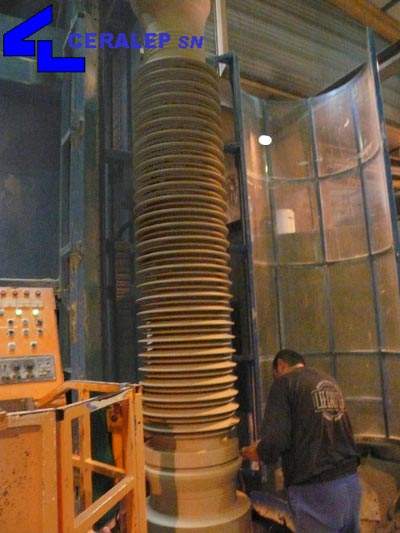
Recently, CERALEP has chosen to specialise in high and very-high voltage products with extreme sizes (up to 10m), and a body with high-resistance capabilities (for seismic areas and resisting to a temperature range of 55°C to +400°C).
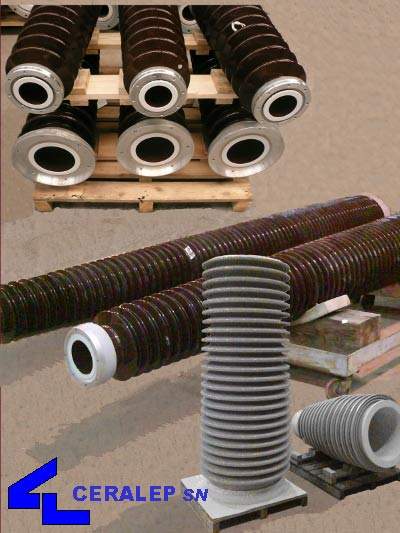
Porcelain insulators
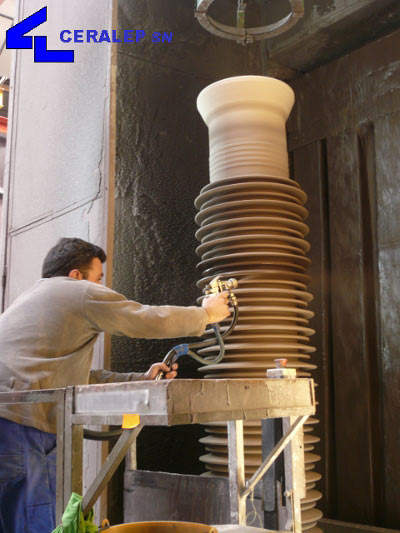
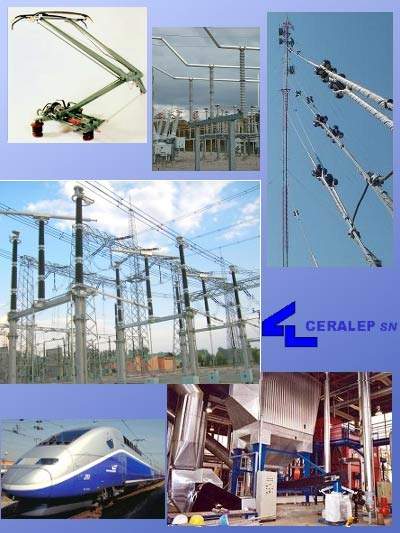
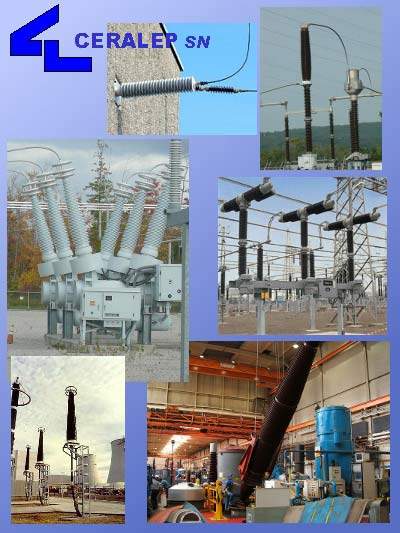
CERALEP is able to produce all types of ceramic insulators: hollow and solid cores, and insulators with a special body for high frequency stations and electrostatic precipitators. The many different uses for our ceramics include:
- Disconnectors
- Power and instrument transformers
- Gas insulated stations (GIS)
- Dead tanks
- Live tanks
- Wall bushing
- Railways
- Cable terminations
- Arresters
- High-frequency radio stations
- Electrostatic precipitators
Experienced and flexible porcelain insulator manufacture
Two major advantages of using CERALEP insulators are: our know-how – with almost a century of existence, we have manufactured more than 2,000 different drawings (since 1948). As we understand the limited needs for replacement, we provide advice and support for customers, even after the sale, and we can manufacture specific spare parts; and our flexibility – no minimum quantity and to reduce delivery times, we can even create a safety stock and store your current items.
Porcelain insulator design, engineering and routine tests
CERALEP has its own engineering department, which produces models and drawings in order to ensure its clients of the most efficient insulators.
Our laboratory continually improves and tests the ceramic bodies we use for our ceramics. During the whole of manufacturing cycle, many tests are performed upon the insulators: torsion testing, bending testing, thermal testing and pressure testing.
The values of CERALEP cooperative include the following:
- To initiate a real relationship with our clients and suppliers
- Social responsibility as a cooperative
- The preservation of the hand-manufactured tradition
- The well-being of the employees
- To improve and increase without ceasing our quality tests during the whole production cycle (which brought ISO 9001 certification in 1995, and approval to ANSI and IEC standards)
- A real interest in environmental issues: the set-up of a recycling chain of heat during the production process and the use of green raw materials will help us to obtain the ISO 14001 certification