

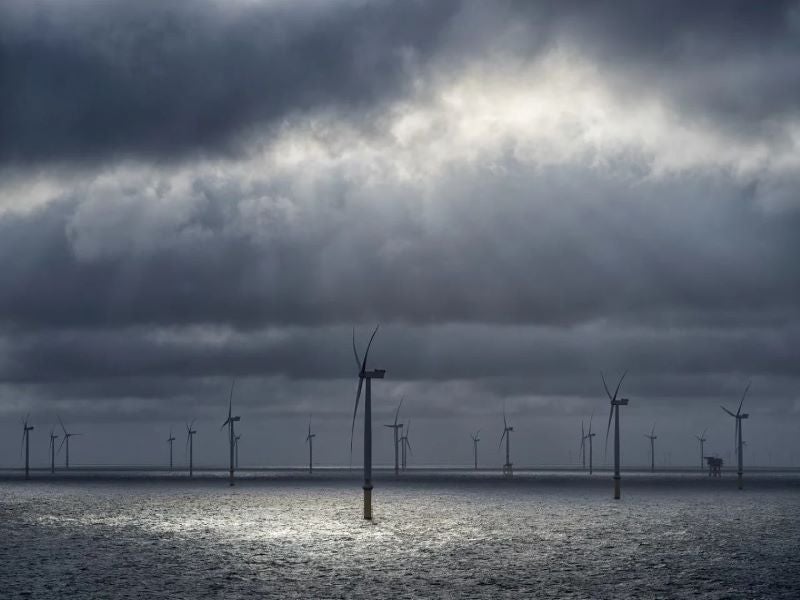
The Gode Wind 3 offshore wind farm was developed in the North Sea, offshore Germany, by Danish energy company Orsted.
The German Federal Maritime and Hydrographic Agency granted planning approval for the project in April 2021. The final investment decision for the project was made in December 2021.
Recommended Buyers Guides

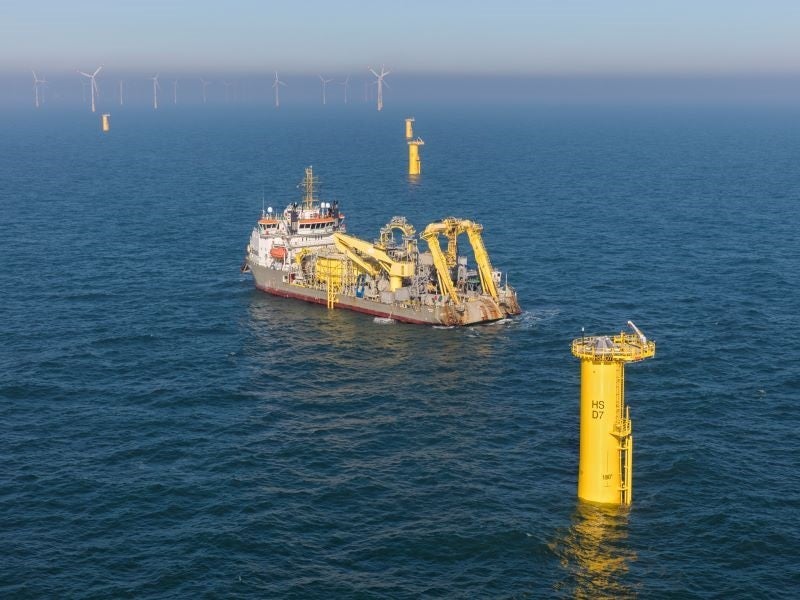
The first monopile foundation for the Gode Wind 3 wind farm was installed in August 2023.
In October 2023, Orsted signed an agreement with Glennmont Partners, owned by Nuveen Infrastructure, to sell a 50% stake in the wind farm. The €473m ($499.03m) deal included both the price of the acquisition and a commitment to finance 50% of the construction cost. The transaction closed in December of the same year.
The first turbine at the wind farm was installed in May 2024 and started delivering electricity to the German grid.
The Gode Wind 3 offshore wind farm achieved full commercial operations in March 2025. The wind farm can supply renewable electricity equivalent to that used by 250,000 households.
Gode Wind 3 location and development background
The Gode Wind 3 offshore wind farm is located in the German North Sea, approximately 32km away from the island of Norderney within Cluster 3 and the country’s exclusive economic zone.
The project was developed along with the Borkum Riffgrund 3 wind farm, which is also owned by Orsted.
The two wind farms are situated 60km apart and close to Orsted’s Gode Wind 1 and 2, which are among the biggest wind farms in Europe.
Gode Wind 3 was initially proposed as two projects of 110MW and 132MW, which were awarded to Orsted in 2017 and 2018, respectively, through the offshore wind auctions of the Federal Network Agency. The two projects were merged in September 2019 to build a joint project.
Gode Wind 3 offshore wind farm make-up
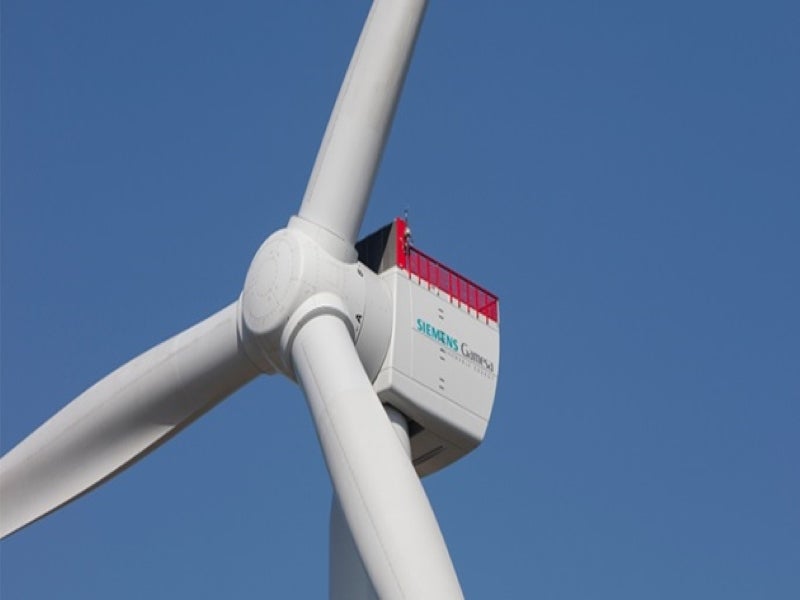
The Gode Wind 3 offshore wind farm consists of 23 Siemens Gamesa SG 11.0-200 DD offshore wind turbines.
The turbine design is based on Siemens Gamesa’s direct drive technology, which reduces the wear and tear of turbine components while enabling easier maintenance. The turbine features a permanent magnet generator, which requires no excitation power and improves efficiency.
Each wind turbine has a nominal output of 11MW of clean energy and features 97m-long B97 IntegralBlade rotor blades, which have a diameter of 200m and a swept area of 31,400m2 (337,986ft2).
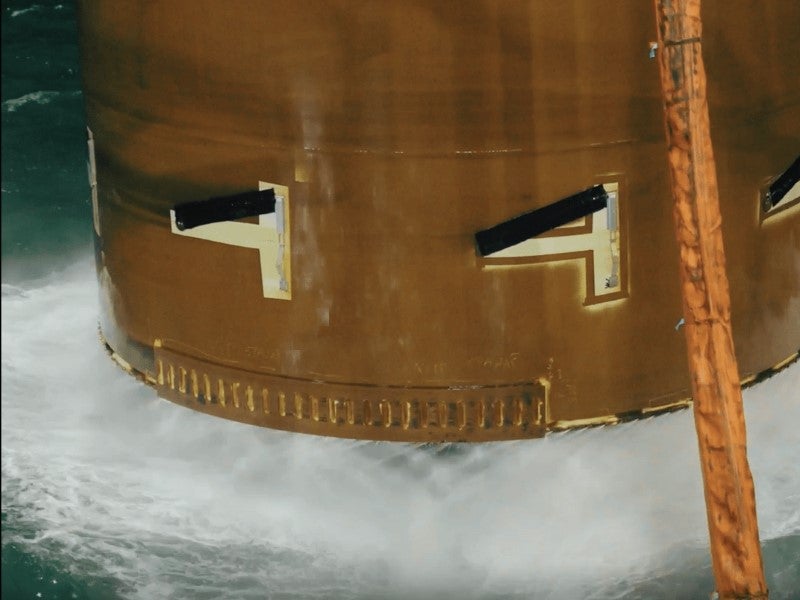
The turbines are mounted on monopile foundations with a length of 100m and a weight of approximately 1,200t.
The monopile foundations were installed using Orsted’s low-noise monopile installation technology, named Osonic, which is an alternative to the conventional pile driving installation method.
The jetting technique lowers the seabed’s resistance, allowing foundations to be installed more quietly with minimal disturbance to marine life.
At Gode Wind 3, the Osonic technology achieved a 99% reduction in underwater noise compared with the most widely used installation approach, while also enabling cost savings.
Noise was cut to levels only slightly above the natural background sound in the German Bight area of the North Sea.
Power transmission details of Gode Wind 3
The power generated from the offshore wind farm is sent to a 253MW offshore substation through dedicated underwater cables. The substation was installed in September 2023 and functions as a remote control and monitoring station for the Gode Wind 3 offshore wind farm.
A three-phase power connection is installed in Cluster 3 to facilitate the transmission of the three-phase electric power produced from Gode Wind 3 to the DolWin kappa offshore converter platform through an alternating current (AC) subsea cable.
The wind farm is connected to TenneT’s extra-high-voltage grid by the DolWin kappa high-voltage, direct current (HVDC) converter station in the German North Sea as well as the associated DolWin6 320kV onshore grid connection in Emden/East (Lower Saxony), Germany.
Contractors involved
Siemens Gamesa Renewable Energy (SGRE) was selected as the preferred turbine supplier for the project. The supply contract also includes a service and maintenance agreement for five years.
Jan De Nul Group was contracted to transport and install monopile foundations as well as an offshore substation topside for the Gode Wind 3 and Borkum Riffgrund 3 wind farms. The company utilised its next-generation offshore installation vessel, Les Alizes, for transport and installation.
Jan De Nul contracted Balltec to supply connector tools and receptacles for handling multiple wind turbine generator components.
The contracts for the supply of monopile foundations were awarded to Bladt Industries and Steelwind Nordenham in September 2021. Steelwind Nordenham provided 66 monopiles, while the remaining 41 were delivered by Bladt Industries.
Prysmian Group was contracted to perform the design, supply, termination and testing of the inter-array submarine cable systems. The contract for the inter-array cable installation was awarded to Boskalis in November 2021.
Atlantique Offshore Energy received the contract for the engineering, procurement, construction and commissioning works for the offshore electrical substation.
Cadeler was awarded a contract to provide its Wind Osprey wind turbine installation vessel in November 2021.
Zhongtian Technology Submarine Cable (ZTT) was contracted by grid operator TenneT to provide the cable systems for the wind farm connection.
Tekmar Energy was selected by ZTT to supply its cable protection systems for the 16km-long submarine cable as part of the Gode Wind 3 high-voltage grid connection project.
Germany’s transmission system operator selected Asso.subsea to connect two AC grid systems, the offshore wind farms Kaskasi II and Gode Wind 3, to their respective HVDC offshore substations. The company’s work included offshore cable laying and burial works.
Seaway 7, Kraken Robotics, SPIE Wind Connect (previously Correll Group), Wagenborg Towage and Taylor Hopkinson are some of the other contractors involved in the project.
