

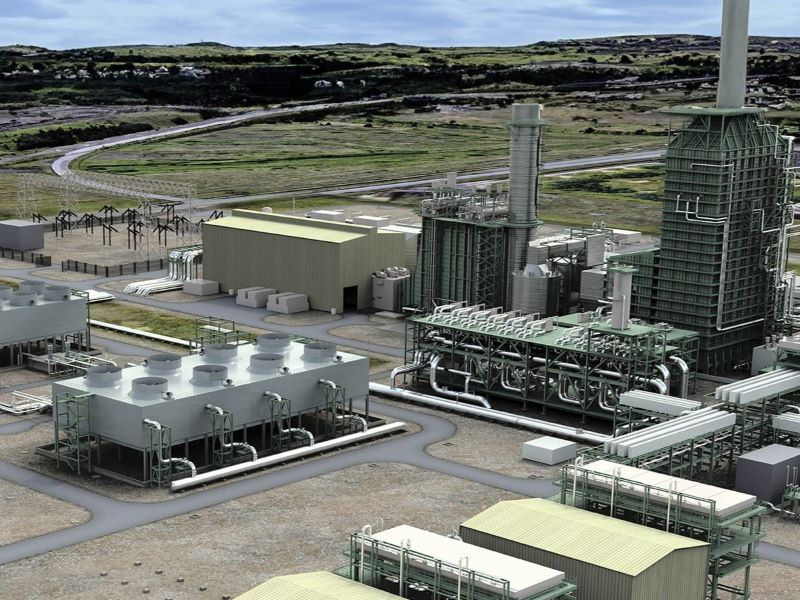
The Net Zero Teesside (NZT) power project, located in the Teesside region of north-east England, UK, is an integrated gas-fired power generation project with carbon capture technology.
Officially launched in February 2020, the project is being developed by a joint venture between BP and Equinor, known as NZT Power Limited (NZT Power).
Recommended White Papers

Recommended Buyers Guides

With a projected capacity of 742MW, the NZT power project is poised to make a substantial contribution to the UK’s energy needs, while capturing up to two million tonnes per annum (mtpa) of CO₂. The project will generate enough power to meet the needs of 1.3 million homes in the UK.
Previously referred to as the Clean Gas project, the project is a major development in the UK’s efforts to achieve a lower-carbon energy future.
The project is expected to generate 3,000 jobs during construction and contribute up to £300m ($370m) per year to the economy, with commercial operations expected by 2028.
Net Zero Teesside power project development milestones
In October 2020, the Northern Endurance Partnership (NEP) was announced, comprising BP, Equinor, Eni, National Grid, Shell and Total.
Operated by BP, the partnership is developing offshore CO₂ transport and storage infrastructure in the UK North Sea to serve the NZT power project and support the creation of decarbonised industrial clusters in Teesside.
The NZT project received development consent from the Secretary of State for the Department for Energy Security and Net Zero in February 2024.
In December 2024, the project achieved financial close, and NZT Power issued a “Full Notice to Proceed” to the Technip Energies-led consortium, enabling the start of the engineering, procurement and construction (EPC) works under the onshore power, capture and compression scope. Construction work is currently underway.
The milestone followed the UK Government’s commitment of £21.7bn ($27.5bn) to support carbon capture and storage projects across the energy, industrial and hydrogen sectors.
In March 2025, Hartlepool-based Liberty Steel began manufacturing pipelines for onshore and offshore infrastructure to carry CO₂ from the NZT power project for permanent storage beneath the North Sea.
Location details of the Net Zero Teesside project
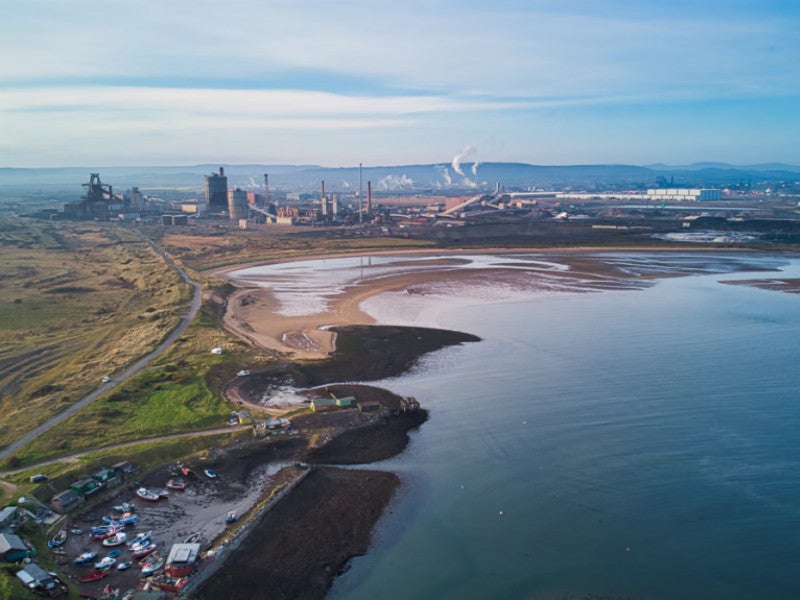
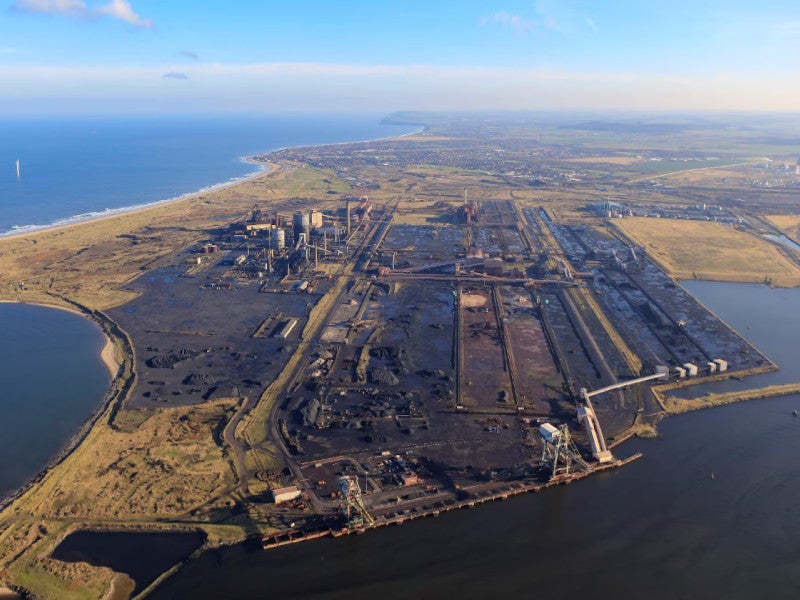
The NZT power project is situated on the South Tees Development site and will be the first major development there.
The site lies within the Redcar and Cleveland Borough Council and the Stockton-on-Tees Borough Council areas.
The proposed gas-fired power station and the CO₂ collection and compression facility will be located in the SSI steelworks in Redcar.
The commencement point of the CO₂ transportation / export pipeline, which is intended to extend offshore, is in the same place. The infrastructure for the power station and the CO₂ collection network will traverse territories within both Redcar and Stockton-on-Tees, including sub-river passages beneath the River Tees.
Net Zero Teesside power project details
The NZT power project will operate as a combined-cycle gas turbine (CCGT) electricity-generating station.
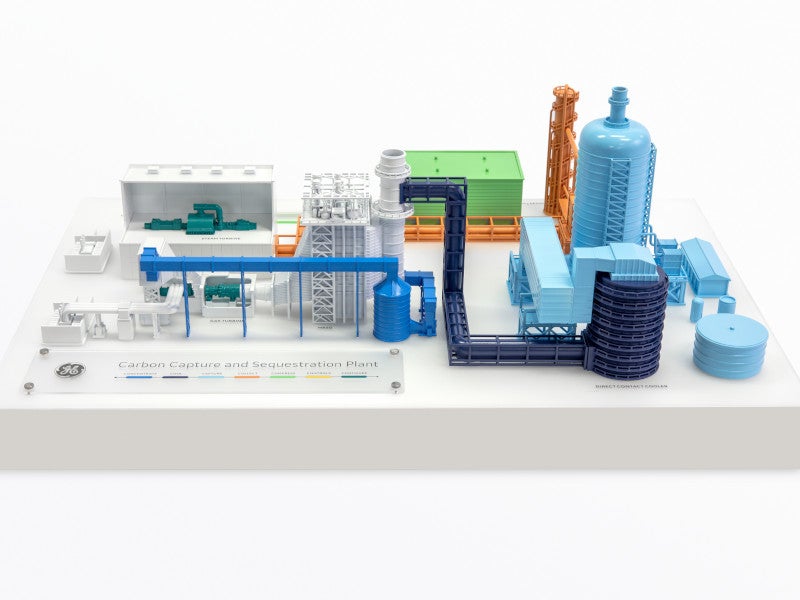
It will feature an advanced GE Vernova 9HA.02 gas turbine, a steam turbine, a generator, and a heat recovery steam generator. The systems will be integrated with a state-of-the-art carbon capture plant utilising the Canopy by T.EN™ carbon capture solution powered by CANSOLV® CO₂ capture technology.
The power station is designed for rapid start-up and will capture more than 95% of emissions.
The captured CO₂ will be dried and compressed for safe transportation and storage by the NEP in subsea sites beneath the North Sea. The power generated from the site will be fed to the national grid via the nearby Tod Point facility.
Combined-cycle gas turbine details
The GE Vernova 9HA.02 gas turbine is recognised for its reliability, efficiency, and low emissions. It can achieve more than 64% net efficiency in combined-cycle operation and has a NOₓ emission level of 15ppm [parts per million].
The turbine offers industry-leading reliability, availability and operational flexibility, including the ability to operate on up to 50% hydrogen by volume.
It has a 5% lower total cost of ownership compared to GE’s F-class, resulting from lower capital expenditure, simplified configuration, reduced fuel costs and extended maintenance intervals.
Funding for NZT Project
Private and public funding totalling £229m ($317.7m) was secured in March 2021 as part of the Industrial Decarbonisation Challenge under the UK Research and Innovation’s Industrial Strategy Challenge Fund (ISCF). The financing was received to accelerate projects, which included the NZT, that will reduce industrial emissions on the east coast of England.
The NZT power project also received funding in December 2023 through the industrial decarbonisation challenge, with awards of £28m ($36m) to NZT Power and £24m ($31m) to NEP from the ISCF for the design and development of the project.
Contractors involved
The contracts for design and development were awarded to two engineering consortia in December 2021. The first was led by engineering and technology company Technip Energies and included energy company Shell and infrastructure group Balfour Beatty, and the second was led by Aker Solutions with Aker Carbon Capture, Doosan Babcock and Siemens Energy. Each group was committed to delivering a comprehensive front-end engineering design package.
A consortium of Technip Energies, energy company GE Vernova, Balfour Beatty and Shell was awarded the EPC contracts for the onshore power, capture and compression aspects of the project.
Balfour Beatty announced in June 2025 that it had been awarded an £833m ($1.1bn) contract by Technip Energies to act as the construction partner.
Separation solutions provider Sulzer was contracted in July 2025 to design, manufacture and supply essential proprietary internals for the combined-cycle unit.
Societe Generale served as the exclusive financial adviser, mandated lead arranger, documentation lead arranger and hedging bank for the NEP and the NZT power projects.
In August 2025, DNV secured a three-year contract to provide quality assurance services for NZT power and NEP projects.
Honeywell received a contract in December 2025 to supply integrated automation and safety systems for the NZT power and NEP projects.
Construction and engineering company Costain will handle the onshore CO₂ gathering system and gas connection.
A partnership of Marubeni-Itochu Tubulars (an equipment manufacturer), Liberty Steel Hartlepool (a steel and mining company), Corinth Pipeworks (a steel pipes supplier) and Eisenbau Kramer (a steel pipes specialist), was chosen for the onshore and offshore line pipe provision.
Italian multinational oilfield services company Saipem has been tasked with the offshore pipeline, landfalls, onshore outlet facilities and water outfall.
