

The costs associated with capturing, transporting and converting CO₂ make the carbon capture and utilisation (CCU) space a difficult one to monetise. Emerging utilisation solutions have struggled to reach commercial viability, stifled by the lack of large-scale markets for CO₂.
However, carbon mineralisation (also known as mineral carbonation) – a chemical process in which CO₂ reacts with metal oxides to produce carbonates, sequestrating carbon for indefinite periods as stable, solid carbonate minerals – is a technique that is proving to be profitable.
Go deeper with GlobalData


Discover B2B Marketing That Performs
Combine business intelligence and editorial excellence to reach engaged professionals across 36 leading media platforms.
A handful of early industrial adopters, including thermal power plant owners, have successfully capitalised on decarbonising operations by turning waste into a marketable product. As pressure mounts on hard-to-abate industries to find decarbonisation solutions that don’t topple delicate balance sheets, the need for profitable CCU solutions is palpable. As Tapio Vehmas, CEO of solutions provider Carbonaide, puts it: “Carbon capture, utilisation and storage [CCUS] is important because it turns carbon dioxide from a waste stream into a useful resource while storing it permanently.”
Carbon mineralisation for baking powder
In CCU solutions, CO₂ is increasingly being captured through direct air capture (DAC) – a filtration system that uses either liquid solvents or solid sorbents to remove CO₂ from ambient air. Carbon is subsequently released (for utilisation) through a desorber, which applies heat, usually between 80°C and 100°C for solid sorbents and up to 900°C for liquid solvents.
This carbon can then be used to produce sodium bicarbonate, often referred to as baking soda. Reacting captured carbon with sodium oxide produces sodium carbonate (soda ash), and infusing CO₂ into a saturated solution of this sodium carbonate results in sodium bicarbonate precipitated as crystals.
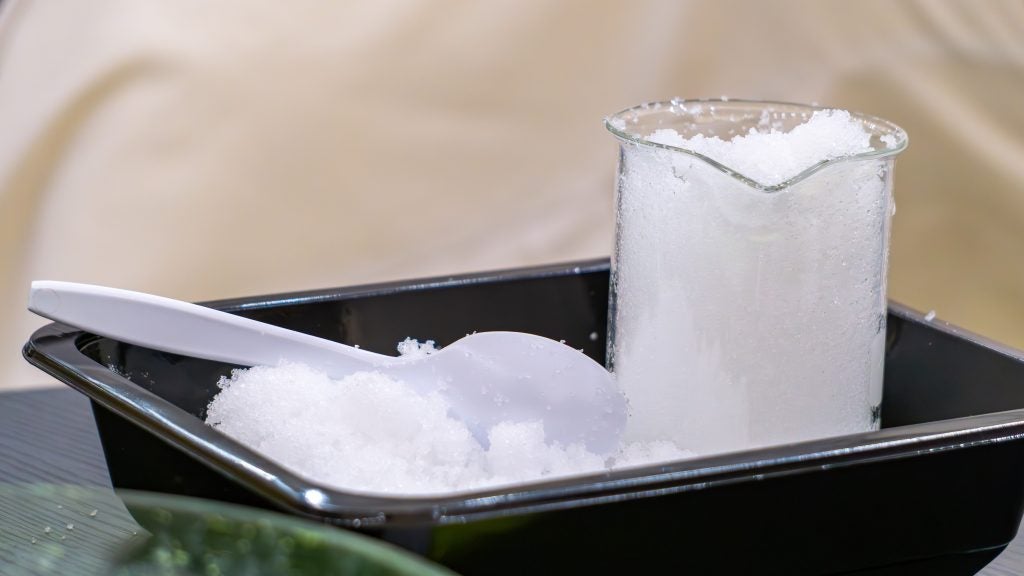
Although DAC and CCU technologies are, broadly, in the early phases of implementation, there are already major industrial names monetising the sodium bicarbonate solution. Tata Chemicals Europe (TCE) entered the space in 2022 with the UK’s first industrial-scale CCU plant in Northwich, Cheshire, UK, which TCE managing director Martin Ashcroft calls “a significant success”.
Speaking to Power Technology, he explains: “TCE captures 40,000t per year of pharmaceutical-grade CO₂ from its gas-fired combined heat and power plant, which it then utilises as a key raw material in the production of 80,000t of pharmaceutical-grade sodium bicarbonate at the same site.”
Finding a market for utilised carbon has been an enduring challenge in the CCU space. TCE has targeted its product (EcoKarb) towards the global pharmaceuticals sector for treating indigestion, now exporting its sodium bicarbonate to more than 60 countries for use in “high-value food, pharmaceutical and haemodialysis products”.
Since becoming operational in 2021, Ashcroft says the plant “has already helped avoid nearly 200,000t of carbon dioxide emissions and enabled the production of more than 400,000t of sodium bicarbonate using captured carbon”. Confident in the commercial benefits of CCU, he says the company sees “a potential to replicate this approach at other Tata Chemicals facilities”.
TCE has tackled CCU implementation as a major manufacturer, but the growing interest in CCU has sparked its own solutions industry. Companies including CarbonFree and Carbotreat seek to provide end-to-end technologies to players in hard-to-abate industries, offering CO₂ capture from industrial flue gases and mineralisation technology to turn captured CO₂ into marketable products.
Carbotreat’s technology feeds CO₂ through a sodium solution in a mixing vessel, using an agitator to stir the substance. The process is repeated, but the liquid is cooled between each rotation to enable the sodium solution to form a sludge. It can be dried to create a powder, but Carbotreat has found a business case in sodium bicarbonate sludge, which is useful to waste incarnation plants for the removal of chlorine and sulphur from flue gas.
However, sodium bicarbonate is a mature market with established key players, and some CCU companies have looked to diversify away from mineralisation technologies, finding more value in other CCU solutions.
These include circular economy company Twence, which provides solutions across the waste-to-energy value chain. It previously operated in the mineralisation space but has substituted its sodium bicarbonate production for liquefaction of CO₂, which it then supplies to the greenhouse horticulture sector.
“Since we have been able to liquefy CO₂ in 2020 we don’t produce baking powder anymore,” explains manager of projects Ronald de Vries. “By using it in greenhouse horticulture, growers can accelerate the transition to more sustainable greenhouse cultivation. This eliminates the need for natural gas, which is currently burned to release CO₂ [of fossil origin] for use as a fertiliser.”
Calcium carbonate: carbon mineralisation for concrete
Unlike reacting captured carbon with sodium oxide, reacting it with calcium oxide produces calcium carbonate. This chemistry has had a positive reaction in the construction space, where it offers a near-perfect solution for concrete production and a complete CCUS solution in that the carbon is both utilised and stored.
Captured CO₂ is injected into concrete before it hardens, where it reacts with calcium ions to form durable calcium carbonate nanoparticles that maintain the strength of the concrete, allowing for less cement to be used and thus improving profit margins.
The solution is already seeing rapid uptake, driven by providers including CarbonCure and Carbonaide.
Vehmas explains to Power Technology: “Fresh concrete naturally contains reactive calcium compounds originating from cement or alternative binders. When controlled amounts of CO₂ are introduced into the curing chamber, the gas reacts with these calcium phases to form stable calcium carbonates.”
The reaction forms solid carbonates, which are thermodynamically stable minerals, offering structural strength and permanent sequestration. “The technology can enable low-carbon or even carbon-neutral concrete products depending on the binder composition and CO₂ source,” notes Vehmas.
CarbonCure uses a similar approach, but introduces the carbon earlier, injecting it as it is batched. Senior director of external affairs at CarbonCure, Mike Carter-Conneen, explains: “Immediately upon injection, the CO₂ chemically converts into a nano-sized mineral [calcium carbonate] and gets permanently embedded in the concrete.”
As the CO₂ is no longer a gas, it will not return to the atmosphere, making it a valuable decarbonisation solution in the famously hard-to-abate construction sector.
However, what makes it particularly exciting is the commercial potential. Where there is building expansion, there is the potential for carbon mineralisation technologies. “The world’s building stock is expected to double by 2060. That is like building another New York City every month and most of that will be concrete – the world’s most used building material,” Carter-Conneen says.
Vehmas echoes the sentiment: “Because the construction sector uses billions of tonnes of material annually, mineralisation can create a very large carbon sink while decarbonising building materials.”
CO₂ can also be used elsewhere in construction, not only as an additive in the application of cement but also as a means of speeding up the aging process of bottom ash produced at biomass plants. Upgraded bottom ash is stable and can be used as a substitute for sand and gravel used in building materials such as concrete.
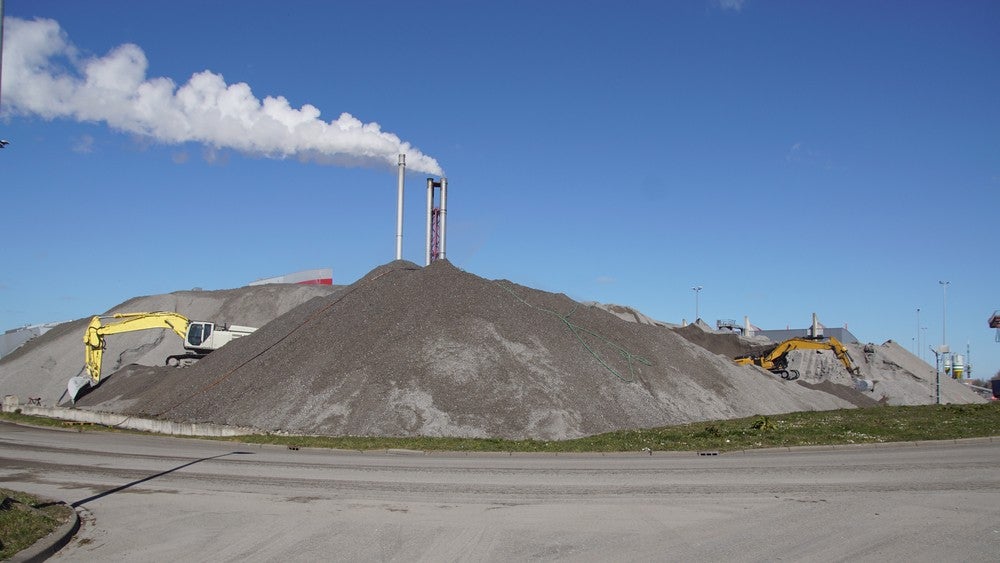
Carbon mineralisation for the construction sector is already established and profitable. CarbonCure was deployed commercially just under a decade ago and has been adopted by concrete producers in 24 countries. As of March 2026, more than 10.7 million truckloads of CarbonCure concrete have been delivered, generating more than $8m of carbon credit revenue shared with producers.
The sector continues to develop. Last year, German start-up NeoCarbon collaborated with Carbonaide to use carbon mineralisation to permanently lock CO₂ sequestered from its DAC technology, which uses the low-grade waste heat generated by industrial sites, into industry-grade concrete.
At the time, Vehmas called it “a significant step forward in transforming the fossil concrete production process to a more sustainable one”, while NeoCarbon CEO René Haas noted the “urgent need” for decarbonisation solutions in the concrete industry.
Other calcium carbonate products
Concrete dominates the emerging calcium carbonate space, but innovation isn’t entirely limited to construction. The global calcium carbonate market was valued at around $21.36bn in 2024 and is projected to grow at a compound annual growth rate of 4.30% through 2034, making it a potentially lucrative, although comparatively underexplored, commercialisation opportunity for CCU companies.
As a stand-alone product, it has use cases ranging from food enrichment to paint brightness, offering whiteness, abrasiveness and strength to an array of consumer products. This array of potential customers has been the focal point of CarbonFree, which offers its carbon mineralisation technology to hard-to-abate industries and markets mineralised products.
CarbonFree has been active in carbon mineralisation for more than a decade, having opened the world’s first industrial-scale carbon mineralisation facility, SkyMine, in 2016. SkyMine has the capacity to capture up to 50,000t of CO₂ annually from cement flue gas and to produce sodium bicarbonate, which CarbonFree sells as a deodoriser and cleaning solution.
However, the company has since shifted its focus to its SkyCycle technology, which captures CO₂ from hard-to-abate industrial sources and converts it into a carbon-neutral version of calcium carbonate, which it calls Endurocal.
CarbonFree claims Endurocal is “the world’s first zero-carbon mineral” and targets a vast range of industries, from paints and plastics to pharma and cosmetics. It describes the product as “cost-competitive” and offers customisable particle size distribution.
It is not the only company using carbon mineralisation to produce calcium carbonate solutions outside of the construction space. Japanese start-up TBM creates its patented LIMEX material – a sustainable limestone alternative to plastic and paper – using calcium carbonate. TBM chemically synthesises captured CO₂ with calcium-containing waste, producing calcium carbonate, which is combined with resin through a compounding and kneading process to produce LIMEX, sold as both pellets and sheets.
Outside of construction, plastics and consumer applications, carbon mineralisation also has potential in the environmental remediation space; carbonate products can stabilise soils and be used to neutralise acidic, metal-laden water from coal and metal mining.
By closing the resource loop, carbon mineralisation recycles carbon, boosting decarbonisation strategies and contributing towards circular economy targets. As a solution, it straddles waste management and carbon management, converting waste streams into valuable inputs, enhancing material efficiency and lowering the emissions from traditionally hard-to-abate sectors.


