

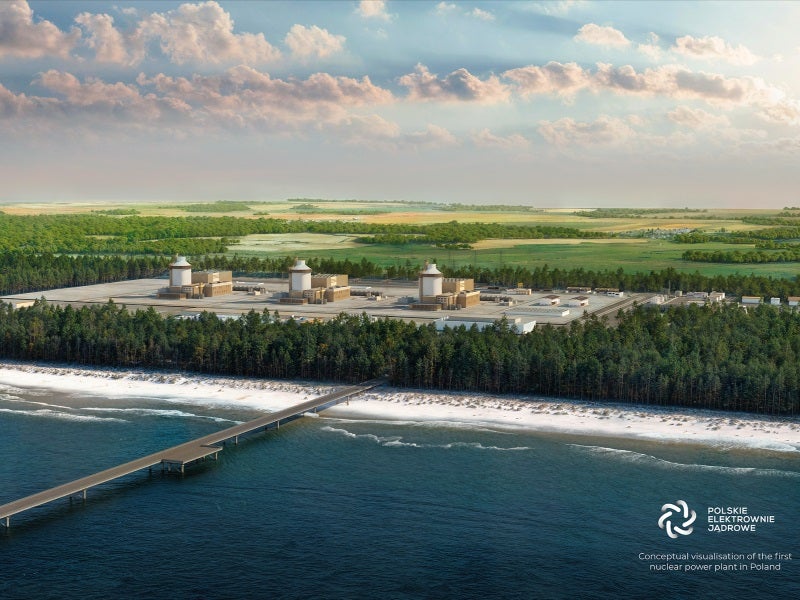
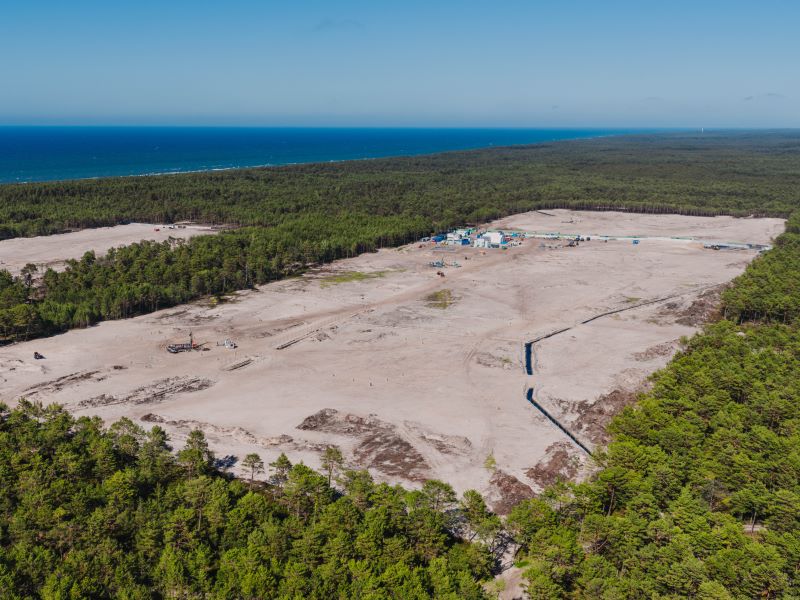
Poland is developing its first nuclear power plant at the proposed Lubiatowo-Kopalino site in Pomerania through state-owned utility Polskie Elektrownie Jądrowe (PEJ).
The project is expected to produce sufficient electricity to meet the needs of more than 12 million households upon completion.
Recommended Buyers Guides

The nuclear power project is estimated to require an investment of approximately 192bn zlotys ($51.5bn) and is planned for a 40-year operating life.
An environmental impact assessment (EIA) report for the project was submitted in March 2022, followed by a decision on environmental conditions issued by the General Director for Environmental Protection in September 2023.
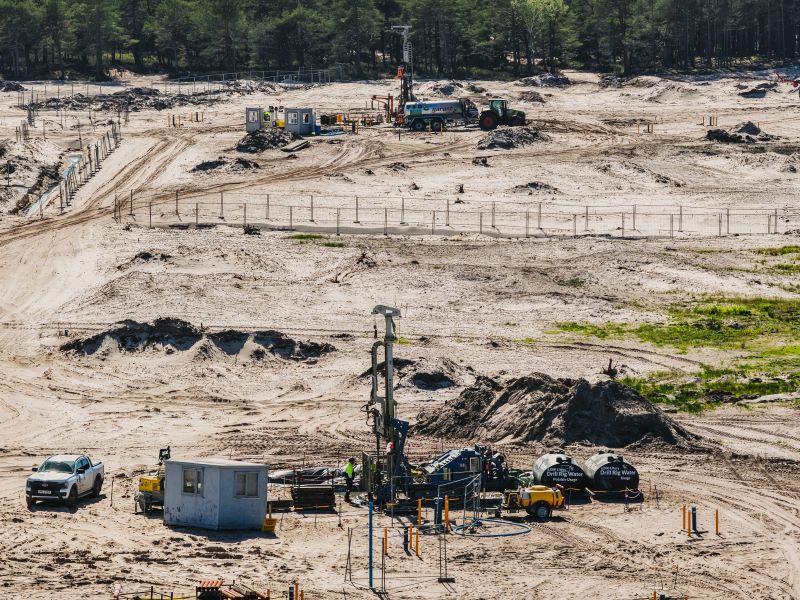
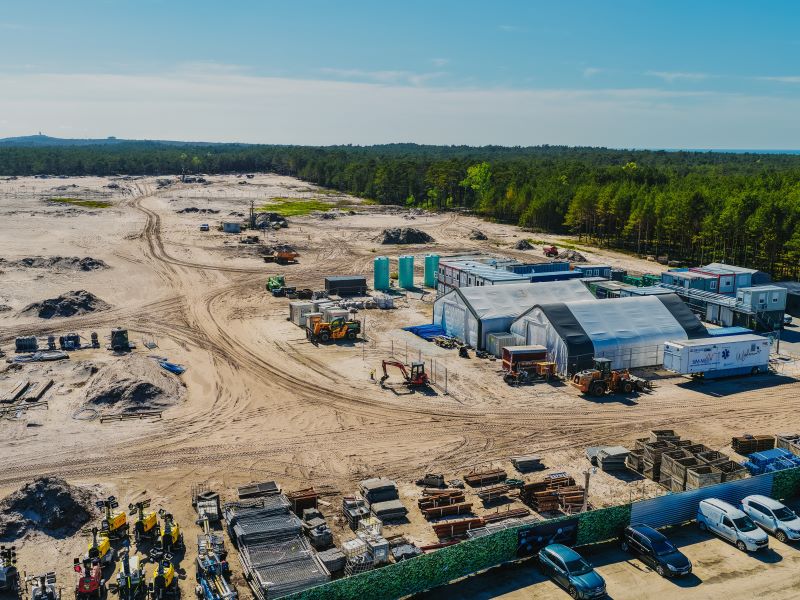
Geological surveys started at the site in April 2024, signalling the beginning of detailed ground investigations. PEJ obtained a permit in August 2025 to carry out preparatory works.
In March 2026, PEJ applied to the President of the National Atomic Energy Agency (PAA) seeking authorisation to build the plant.
Construction works are expected to commence in 2028, with commissioning of the first unit in 2036 followed by the second and third units in 2037 and 2038, respectively.
Lubiatowo-Kopalino nuclear power plant location and details
Poland’s first nuclear power plant will be constructed at the Lubiatowo-Kopalino site in the Choczewo commune in Pomerania, Poland.
The project will use Westinghouse’s AP1000 pressurised water reactors (PWRs) in a three-unit setup with each reactor unit having an output of approximately 1,250 megawatts electrical (MWe) for a total power generation capacity of 3,750MWe.
The AP1000 is a two-loop PWR with a simplified safety concept. It has a gross thermal power rating of 3,415 megawatts thermal (MWt) and a nominal net electrical output of 1,110MWe.
The design includes a core with 157 fuel assemblies and is intended for new baseload generation. Key components such as the reactor vessel and internals, steam generator, fuel assemblies and pressuriser are updated versions derived from equipment used in operating Westinghouse-designed PWRs.
The reactor coolant pumps use canned-motor technology, which is widely adopted in applications that require long-term reliability and extended service life.
Power evacuation for Poland’s first nuclear power plant
A 110/15kV substation is planned to be developed at the village of Biebrowo in the Choczewo municipality to feed electricity into the Polish National Power System, with export via 400kV extra-high voltage lines.
The grid connection, to be delivered by Energa-Operator, is also intended to supply power to the construction site during key phases. Once operational, the same link is expected to cover the plant’s own demand and provide back-up power.
Lubiatowo-Kopalino nuclear power plant project financing
In September 2024, Poland notified the European Commission (EC) of its intention to support PEJ’s development of the nuclear project. The proposal included an equity injection of approximately €14bn ($15.5bn), described as 30% of project costs, alongside State guarantees covering 100% of PEJ’s debt for the build.
The package also provided for a two-way contract for difference designed to stabilise revenue over the plant’s 40-year operating life. The EC opened a formal investigation in December 2024 and approved the support scheme in December 2025.
Following the approval, PEJ received treasury bonds in December 2025 with a nominal value of 4.6bn zlotys ($1.2bn), issued by the Minister of Finance and Economy. The bonds formed part of the State Treasury’s contribution towards taking up shares after an increase in PEJ’s share capital.
In February 2026, a credit agreement was put in place between the Export Import Bank of the United States (EXIM) and PEJ, with Bank Pekao acting as facility agent. Arranged under EXIM’s Engineering Multiplier Program, the initial funding phase is intended to finance early engineering and environmental site works ahead of the main build stage.
Site infrastructure
A new road link is being developed to increase regional transport capacity, reduce pressure on local roads and shorten travel times to the plant. The national road project is to be undertaken by the General Directorate for National Roads and Motorways (GDDKiA).
The project is divided into two stretches, Lubiatowo to Provincial Road 213 and Provincial Road 213 to the S6 Expressway, with a combined length of approximately 26km. The first stretch is due to be finished in the third quarter (Q3) of 2028, with the second expected in Q2 2029.
Upgrades to existing rail routes and construction of new track are also being undertaken. Lines No. 229 and 230 are set for reconstruction on the Lębork to Łeba section of approximately 31km and the Wejherowo to Choczewo section of 35km.
A new line is also planned between Choczewo and Steknica of 30km, with a stop proposed near the plant. The scheme also includes expansion of the Leba station to improve links for the facility and nearby coastal towns. The work is being delivered by PKP Polskie Linie Kolejowe, with completion targeted for Q1 2029.
Additionally, a marine off-loading facility (MOLF) is being constructed to enable sea delivery and unloading of oversized components and other large materials and equipment required for construction and operations. The facility is expected to be around 1km long and is being led by the Maritime Office in Gdynia.
Contractors involved
PEJ signed an engineering services contract with the Westinghouse and Bechtel consortium in September 2023 to support design activities for the project.
In April 2025, PEJ and the Westinghouse Bechtel consortium concluded an engineering development agreement (EDA) that set out the framework for preparatory activities including site development, regulatory documentation and geological work to support permitting and maintain the construction schedule. The EDA was amended at the end of 2025 to secure continued progress on design and field activities, including more extensive geological surveys.
In August 2026, Bechtel assumed responsibility for site management as the project advanced from planning, permitting and design into major site preparation and construction, aligning with the start of earthworks. As site manager, Bechtel is expected to oversee construction execution, coordinate contractors, manage day-to-day delivery and maintain safety requirements on site.
PSD Poland received a contract to carry out geological works at the site, while Budimex was contracted in October 2024 to design an access road to serve the MOLF, which is expected to enter service by the end of 2026.
Elektrotim was awarded a 160m zlotys ($44.2m) contract to develop power infrastructure, including a 110/15kV substation and the electricity supply lines needed to connect the site. Completion of construction and installation, commissioning and entry into operation are planned by the end of 2028.
Arabelle Solutions was selected by the Westinghouse and Bechtel consortium to supply three half-speed Arabelle steam turbine and generator sets for the AP1000 project, covering all three units at the Choczewo plant, along with the main supporting equipment for the steam cycle.
Jacobs Clean Energy served as technical adviser for the EIA. PEJ appointed BNP Paribas France and KPMG Advisory as advisers to support the process of securing debt finance.
Local companies engaged in the wider supply chain include Mostostal Kielce, Mostostal Krakow, ZKS Ferrum, Famak, Kluczbork, Grupa Przemyslowa Baltic, Energomontaz-Polnoc Gdynia and Baltic Operator.
