

Nuclear power is returning to the centre of energy policy debates for familiar reasons: energy security, firm low-carbon electricity, and rising demand from electrification and digital infrastructure. Governments and corporations are dealing with their construction requirements through supply chain coordination, industry integration, and regulatory coordination.
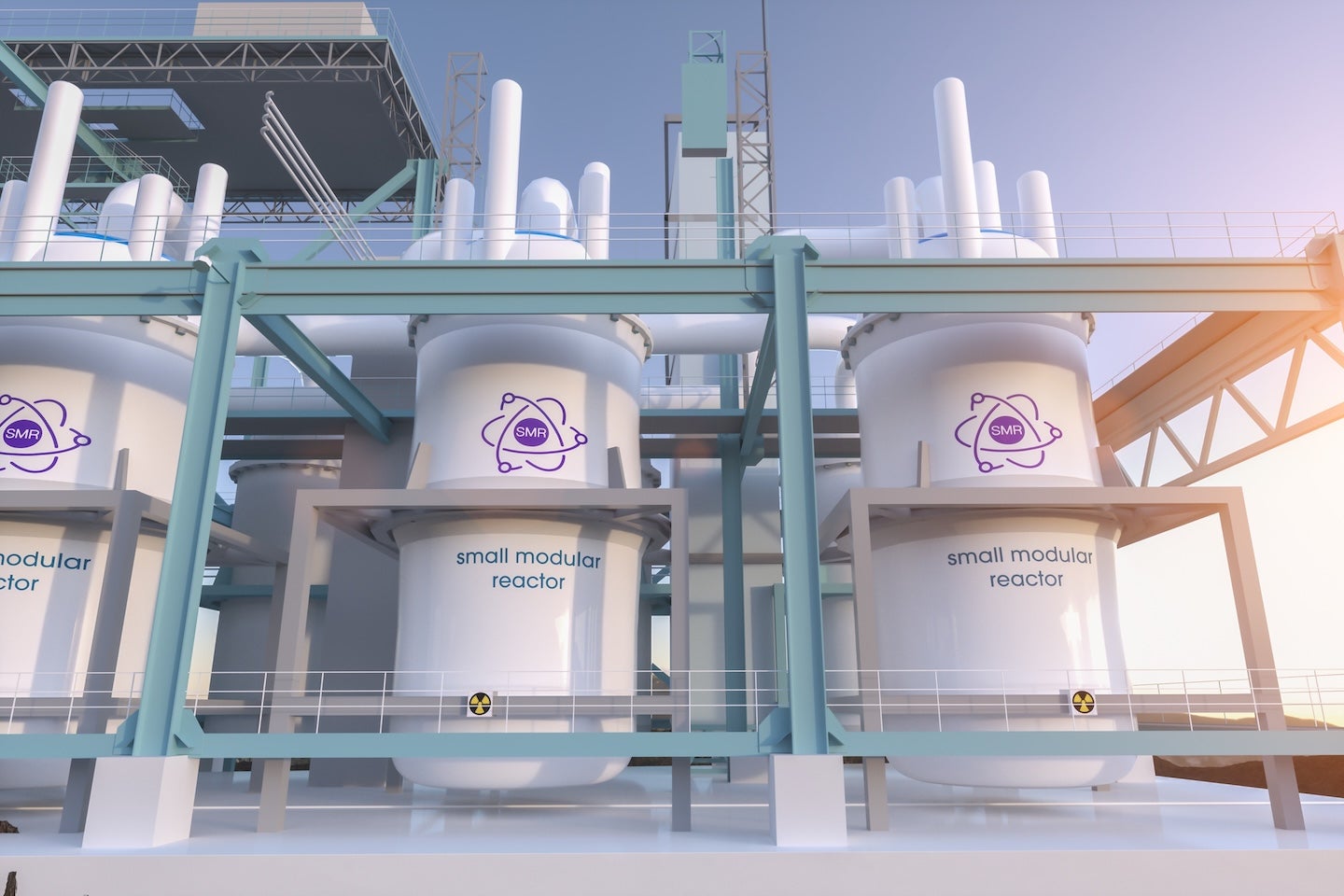
Small modular reactors (SMRs), factory-built compact nuclear reactors, are reviving nuclear power by shifting the industry from the one-off construction projects that characterised legacy nuclear power plants to repeatable manufacturing. GlobalData argues that SMRs can be more cost-effective and easier to develop than traditional reactors and identifies around 100 planned SMR reactors at various stages of development. As this pipeline grows, the limiting factors are industrial delivery, fuel, skills, and regulatory acceptance. These constraints are driving supply chain consolidation by companies and coordination by governments.
Go deeper with GlobalData

Access deeper industry intelligence
Experience unmatched clarity with a single platform that combines unique data, AI, and human expertise.
For advanced nuclear, including SMRs, the UK Government’s Advanced Nuclear Framework describes a move from “construction-led development”—traditional site-heavy civil engineering where plants are built piece by piece on location—to “manufacturing-led development”, which is, namely, standardised factory production and off-site production where smaller reactors are built before final site integration. In the SMR model, plants are designed around standard factory-produced modules and assembled on site. GlobalData’s view that SMRs are more cost-effective rests on this standardisation, expecting costs to fall as identical units are built. Supply chains are no longer just operational details. If SMRs are to be deployed in meaningful numbers, manufacturers and governments must treat supply chains as part of the technology.
Why manufacturing-led SMRs push supply chains toward integration
A modular strategy only works if the surrounding industrial system operates at tempo. GlobalData’s note of around 100 planned SMR reactors implies repeat orders in multiple locations drawing on the same pool of nuclear-qualified suppliers. When a technology relies on repeated use of the same design, three supply chain realities come to the fore.
First, reliability of delivery is essential. A late component can delay a project by months. In nuclear energy, time delays quickly translate into cost increases because financing costs accumulate and construction schedules are tightly regulated.
Second, nuclear quality requirements favour fewer, more capable parts. The issue is whether a part can meet quality standards and produce documentation that regulators accept without dispute. Fragmented supply chains require coordination across multiple handovers. Integration reduces handovers, minimising points where errors and rework appear.

Third, economies of scale are crucial. GlobalData’s analysis that SMRs are easier to develop is tied to repeatability. External commentary notes that SMRs can benefit from manufacturing learning curves and economies of scale once production becomes consistent. Manufacturing only gets cheaper if factories produce modules regularly. If orders come in stops and starts, production lines sit idle, and costs rise. SMR supply chains need a steady pipeline of projects, not occasional one-off builds.
The SMR pipeline makes industrial readiness a hard constraint. This is driving supply chains to become more integrated through private consolidation and public coordination.
Company response: consolidation of critical component capability
No nuclear developer can eliminate risk when parts are sourced externally, but companies can reduce it by bringing capabilities closer to the program’s center. The sector is seeing consolidation around specialized components, particularly in safety-related categories where delays or defects halt a build.
For example, in June 2026, Framatome announced acquisitions in the valve segment in France, strengthening its position in the safety valve supply chain. The strategic logic is clear: when a component class is essential and difficult to substitute, tighter control improves predictability and reduces delivery risk.
Government response: turning projects into programmes
Private consolidation strengthens individual supply chains, but it cannot create the steady demand and cross-border consistency that a manufacturing-led approach needs. Governments are addressing that gap.
On the demand side, GlobalData points to India’s “Nuclear Energy Mission”, and its Rs20,000 crore (about $2.3bn) allocation for SMR research and development, aiming for indigenous SMR deployment. This detail is important because it signals intent to move beyond pilots toward a programme. Programs justify supplier investment in capacity, skills, and tooling.
In Europe, the European Commission’s EU SMR Strategy (COM/2026/117), launched in March 2026, aims to reduce fragmentation and promote a more integrated, “Made in Europe” supply chain. The goal is to align industrial capabilities so that suppliers can scale and standard designs can be deployed widely.
Finance policy is also unlocking manufacturing investment earlier than the private market allows. In April 2026, the UK’s National Wealth Fund committed up to £599m ($8.03bn) to Rolls-Royce SMR. This backing helps vendors and suppliers invest in manufacturing readiness before acquiring a full order log.
Conclusion: supply chains must scale in practice
SMRs promise a repeatable path to nuclear deployment. GlobalData’s assessment and its identification of around 100 planned SMR reactors point to a market moving from design competition to delivery competition.
This competition will be decided by supply chain integration: the ability to secure nuclear-qualified components, build consistent manufacturing capacity, ensure fuel availability, and maintain cross-border standardisation. The most useful question is not only which SMR designs lead, but also which programmes can build, certify, and deliver at scale.

