

As the oldest form of renewable energy, hydropower has long been hailed as a promising green alternative to fossil fuels. Where site conditions allow, it also offers an edge over its clean energy counterparts, pumping firm, dispatchable power that intermittent wind and solar cannot guarantee.
Water access and topography, however, are not the only geographical challenges that complicate its development. Despite sweeping climate and energy security benefits, hydropower projects on transboundary rivers have emerged as points of geopolitical tension and socio-environmental concern.
Go deeper with GlobalData


Discover B2B Marketing That Performs
Combine business intelligence and editorial excellence to reach engaged professionals across 36 leading media platforms.
Nowhere is this more evident than with China’s recently proposed mega dam on the Yarlung Tsangpo River in Tibet (also known as the Brahmaputra River). While China celebrates its plans to build the world’s largest hydropower facility, its neighbours downstream, as well as Tibetans themselves, fear the potential consequences.
China’s mega dam: a microcosm of hydropower’s hidden costs
Behind hydropower’s stature as a beacon of sustainability lie sustainability risks. Large dams and reservoirs fundamentally alter land and water dynamics. If not managed responsibly, the same projects that can reduce carbon emissions can also exacerbate environmental degradation, such as disruption of ecosystems and deforestation. Displacement of local populations and cultural erosion may also ensue, adding a human rights dimension to the risks.
More commonly, hydropower developers take preventative measures to avert such disasters and proceed with the belief that the risk-reward ratio is favourable. But the potential consequences warrant greater concern when factoring in the uneven distribution of costs and benefits.
“Those upstream, especially urban elites, tend to benefit most from hydroelectricity, while the costs are borne by others,” says Susanne Schmeier, head of the water governance department at IHE Delft Institute for Water Education.
Developing projects on cross-border river basins then heightens risk. “Environmental and social assessments typically only focus on the domestic impacts in the host country,” Schmeier explains. In many cases, host governments are not legally required to take into account consequences beyond borders. “This leaves other stakeholders with little information, sparking mistrust, misinformation and misunderstanding.”
With China’s mega dam, Tibet’s colonial status aggravates matters. “There is no prior informed consent. Tibetans under Chinese occupation face barriers to decision-making over their land,” says John Jones, advocacy manager at non-profit Free Tibet. “With expression of any grievance, Tibetans risk getting detained, imprisoned or worse,” adds Tibet Watch senior researcher Tenzin Choekyi.
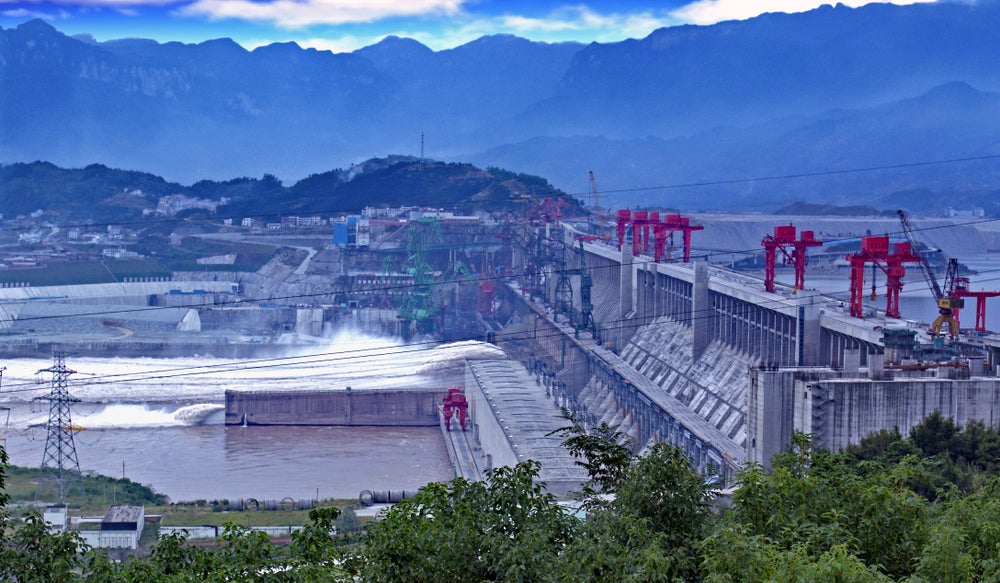
Meanwhile, downstream nations India and Bangladesh have agonised about the mega dam’s potential impacts on their geology, ecology, and food and water security.
According to Schmeier, “the conflict over water is embedded in a bigger picture of border disputes between China and its neighbouring countries”, with the mega dam serving as a flashpoint. Existing geopolitical tensions further increase the risks, as “with no prior agreement or fraternity”, upstream nations are more willing to prioritise their own interests over any costs beyond borders.
While it is possible that China intends to build the mega dam responsibly, “it is the very fact that it has not shared information that triggers alarmist reactions and escalates tensions”, she notes, pointing to transboundary projects in other basins where “transparency and cooperation prevented conflict from escalating”.
“Cooperation is more common than conflict with transboundary hydropower projects, but conflict arises when there are no or weak mechanisms in place.”
Leaks in existing transboundary water governance
International legal frameworks such as the UN Watercourses Convention help regulate shared water usage, including due diligence obligations to not cause significant harm to neighbouring states. Basin-level treaties and organisations serve the same purpose, while soft laws, such as the International Hydropower Association’s industry guidelines, provide additional guidance. If all else fails, intergovernmental institutions like the International Court of Justice aid in dispute resolution.
These mechanisms have seen a myriad of success stories; however, they are by no means perfect.
For one, adoption is far from universal. As participation is voluntary, many countries opt out – as has China – leaving signatories with little recourse.
Even when all relevant countries have signed on, power imbalances can corrupt decision-making. Upstream nations have historically held more political leverage, Schmeier remarks, with downstream nations left with limited negotiation power.
Local communities may be entirely excluded from the decision-making process. Though governance mechanisms often provide opportunities for involvement, Choekyi says barriers to participation remain: “Before inaccessibility to decision-making, there is inaccessibility to knowledge and means. Not everyone knows the languages used in these discussions. Not everyone could afford the travel or fees that may be required.”
International instruments could also fail to account for the unique geopolitical and ecological complexities of different regions, especially in the absence of basin-specific mechanisms. “International law application is simpler for smaller basins with two, maybe three, countries involved,” notes Ana Maria Daza Vargas, senior lecturer in international water law at the University of Edinburgh Law School.
Shortcomings in transboundary mechanisms extend beyond water governance alone. In some instances, the investors and developers driving the projects have no ties to the countries involved. They may consult downstream nations and local communities in good faith, yet there is little to no obligation, Daza Vargas says, due to the fragmented international legal sphere. These foreign entities are generally only required to meet international investment laws and the host countries’ domestic laws, bypassing transboundary water governance, as well as international human rights and environmental protection regulations.
With so many actors involved, who should be held accountable? “To a great extent, foreign investors are dependent on the information they receive from the host country,” says Daza Vargas. Developers are in the same boat. “For domestic projects, developers may handle checks. But for transboundary projects, the host country often does, and that’s where responsibility primarily lies.”
Dam the tensions: preventing and minimising risk
Although moving past sovereignty will be a difficult shift, particularly as “political thinking worldwide has gotten increasingly unilateral and short-term”, Schmeier invites host nations to look ahead. “The benefits generated from cooperation early on far outweigh conflict. In fact, open dialogue is not just beneficial but necessary to avoid problems down the line.”
The Grand Ethiopian Renaissance Dam (GERD), for example, saw opposition from Egypt, Sudan and Somalia – sparked by a lack of communication during planning – eventually blowing back on Ethiopia’s economy and political stability.
Taking preventative measures, such as providing prior notification and conducting transboundary impact assessments, “reduces the surprise effect, which conflict research has proven to reduce mistrust and conflict”. Legal frameworks tailored to specific river basins can optimise solutions, while stronger oversight from international bodies and greater crossover among international legal spheres could strengthen accountability.
Schmeier stresses that international institutions and frameworks won’t be a cure-all. “With projects on the Mekong, downstream countries accused the Mekong River Commission (MRC) of being too pro-upstream, and upstream countries argued vice versa.
“Nevertheless, there was a platform for countries to collaborate and exchange information. That itself made a huge difference, compared with conflicts that emerged with the GERD or Tajikistan’s Rogun Dam, where there were no platforms at all.”
Jones adds that regional alliances could help empower downstream nations, “allowing them to exert joint control to push back against more powerful upstream nations”.
At the local level, Schmeier recommends mandating stakeholder consultation forums to incorporate community voices, as is the case in Europe under the Water Framework Directive. The MRC also required member countries to engage with civil society actors, “albeit to different degrees, depending on each country’s political system”.
Yet she caveats: “We must keep in mind that basin organisations are interstate organisations. So, if a member state doesn’t want communities to have a say, there is little organisations can do.”
Charting the course
“We are yet to see how China’s mega dam project unfolds, but I’m optimistic about the prospects for increased cooperation,” says a transboundary water law professor at a Chinese university, who spoke on the condition of anonymity for fear of retaliation. He cites recent cases in which China cooperated with Kazakhstan and the MRC on shared water resources, which were “a bit different [in geopolitical contexts] but indicate positive movement”.
Especially with recent warming relations between China and India, he believes the countries can come to an agreement on information sharing, prior notification and consultation, and “in the best-case scenario, although unlikely, a joint management and benefit framework”.
As for Tibetans, the outlook feels bleaker. With many Tibetans stateless and the government in exile, Choekyi believes they will continue struggling for inclusion in decision-making processes and requests support from outside.
“International organisations stepping in can be a double-edged sword,” Schmeier responds. “While they have a role to play in empowering civil society engagement in non-democratic states, there is a safety concern. Past protests by Tibetan communities against dams have been met with violent crackdowns by the Chinese government, and outside intervention may fuel these types of events.”
The rapid expansion of renewable energy is an undeniable step in the right direction. However, the risks of transboundary hydropower reveal the conflicts inherent in the pursuit of a cleaner energy future.
“Just because hydropower contributes to the world’s pivot to clean energy, doesn’t mean we should just ignore its potential costs,” Daza Vargas concludes.
The energy transition must be tempered by considerations for a just transition, ensuring that protective and inclusive mechanisms develop synchronously with green ambitions. Although there may not be perfect answers, as existing mechanisms have shown, having an imperfect solution is better than an absence of one altogether.


