

The Dorjilung Hydropower Project (DHPP) is a 1.13GW run-of-river scheme in the Kingdom of Bhutan, being developed by the Royal Government of Bhutan.
The project is being delivered through a special purpose vehicle (SPV), Dorjilung Hydro Power (DHPL), in which Bhutan-based hydropower company Druk Green Power Corporation (DGPC) holds a 60% interest and India-based power company Tata Power holds a 40% interest.
Recommended Buyers Guides

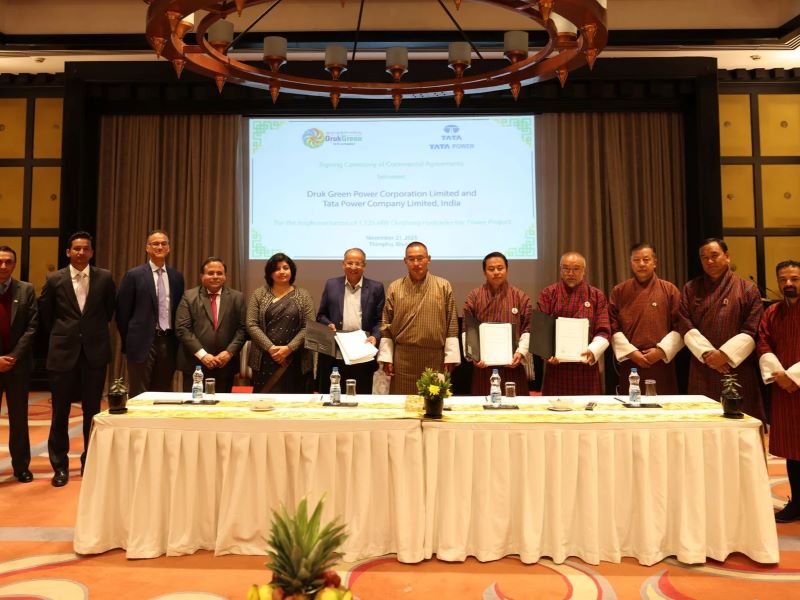
In November 2025, Tata Power signed commercial agreements with DGPC for the development of the project. The initial construction works also commenced during the same year.
The project is estimated to require an investment of approximately $1.7bn and is scheduled for commissioning in September 2031.
The DHPP is expected to have only modest environmental and social impacts and is considered to have a relatively small footprint when compared with other schemes of a similar size.
Once operational, the plant is expected to produce more than 4.5TW-hours of electricity each year, increasing Bhutan’s energy production by 40% and energy exports by 42%.
The additional output is intended to reduce Bhutan’s seasonal supply shortfall, lowering reliance on winter imports and creating surplus generation in the summer and monsoon periods for export to India.
The development is also expected to support 4,000–5,000 direct and indirect jobs annually.
DHPP location
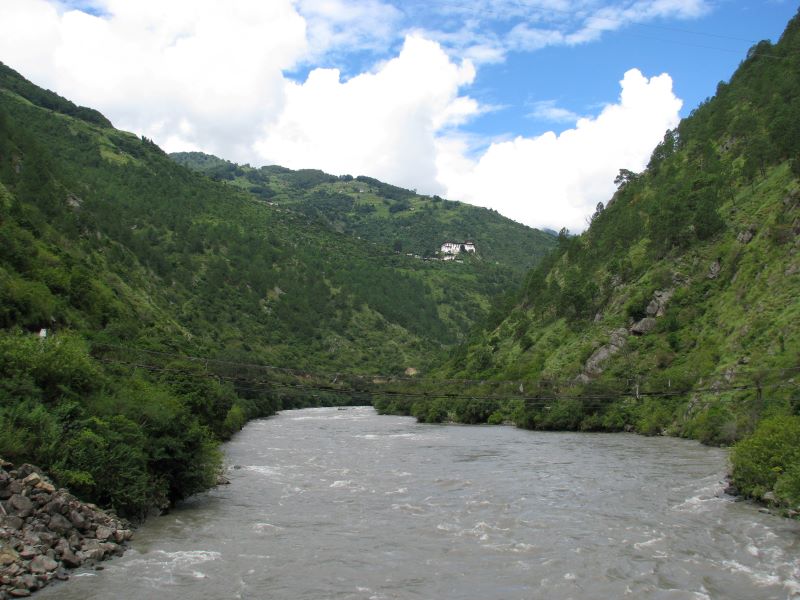
The DHPP is situated on the right bank of the Kurichhu River, which rises in the Tibet Autonomous Region of China, enters Bhutan roughly 70km north of the project area and then flows south to join the Manas River in Southern Bhutan.
The majority of the project footprint is located in Mongar Dzongkhag, while part of the reservoir extends into Lhuentse Dzongkhag. The dam site is around 1km upstream of Rewan village and the powerhouse is planned near Lingmithang village, both in Mongar.
DHPP details
The DHPP will comprise a 139.5m (457.67ft)-high concrete gravity dam, forming a reservoir with an overall storage volume of 44.17 million cubic metres (mcm) and a surface area of approximately 145.82 hectares (360.33 acres) at full supply level. The reservoir will hold water sufficient to provide around three to eight hours of peak electricity generation per day.
The dam is designed as a rockfill structure with an impermeable core, with the downstream face protected by roller-compacted concrete cladding. It will have a 241m crest and six spillway gates measuring 9m × 15.1m, designed for a discharge capacity of 451m³/s. The scheme is planned to operate at a gross head of 300.45m.
The project will include upstream and downstream cofferdams to divert flows through two diversion tunnels, each 11m in diameter, with lengths of 929.33m and 821.66m.
The headrace tunnel to the powerhouse is planned to run 14.97km with a diameter of 11m.
The powerhouse will be located underground, 16km downstream from the dam near the Lingmethang township. It will measure 210m in length, 23m in width and 60.5m in height and will be equipped with six Francis turbine units rated at 187.5MW each.
Water will be returned to the Kurichhu River via two 8m-diameter tailrace tunnels, 350m and 360m long, discharging around 3.5km upstream of the existing Kurichhu Hydropower Plant.
Power evacuation
Electricity produced from the DHPP will be evacuated via a 400kV transmission line to the Durungri substation around 40km south of the powerhouse.
Two route options have been identified, with the final alignment to be confirmed through detailed surveys. Up to 80% of the power output is expected to be supplied to India.
Construction details
New access roads totalling 24.068km will be built across ten locations to connect with the main project areas such as the dam works, adit entrances, headrace tunnel, surge shaft and powerhouse. These routes will enable the delivery of construction materials and the movement of plant and equipment.
The project is expected to require 405,000t of cement over the construction period, along with 65,000t of steel, 1.46mcm of aggregates and 300,000m³ of sand.
DHPP financing
The project is being funded through 70% debt and 30% equity.
In January 2026, the World Bank Group approved a financial package including support for the Government of Bhutan via the International Development Association.
The financing includes a $200m enclave loan from the International Bank for Reconstruction and Development (IBRD) and a $300m A loan from the International Finance Corporation (IFC). Furthermore, acting as the lead arranger, IFC will secure $700m in commitments from co-lenders providing parallel financing.
The remaining $500m equity financing is split between DGPC ($300m) and Tata Power ($200m).
The financing from DGPC includes a $150m grant and a $150m credit from the IBRD, which is also providing a $15m enclave loan to the Royal Government of Bhutan.
Contractors involved
In April 2026, DHPL signed two contracts for the pre-construction works of the project.
Patel Engineering, a construction services company based in India, secured the Package I pre-construction works contract covering the civil and hydromechanical scope, including the excavation and construction of two diversion tunnels fitted with hydromechanical gates, as well as the building of a road tunnel for the highway.
Rigsar Construction based in Bhutan was awarded Package II of the project. Package II covers vital infrastructure required for the project, including the construction of Adit-4 for the head race tunnel, as well as a cable access tunnel and associated access to the pre-support tunnels at the powerhouse.
The contracts for the construction of access roads and bridges were awarded to two Bhutan-based companies – KD Builders and Chimmi RD Construction.
The project’s environment and social impact assessment was compiled by Artelia, a France-based consulting, engineering and project management company, and Phuensum Consultancy Services, a Bhutan-based consulting company. These companies were engaged by DGPC to act as the project’s environmental and social consultants.
Studio Pietrangeli, an Italy-based engineering services company, assessed the preliminary design and studies along with the baseline studies. It also prepared the full project design in line with World Bank requirements and relevant Bhutanese regulations.
