

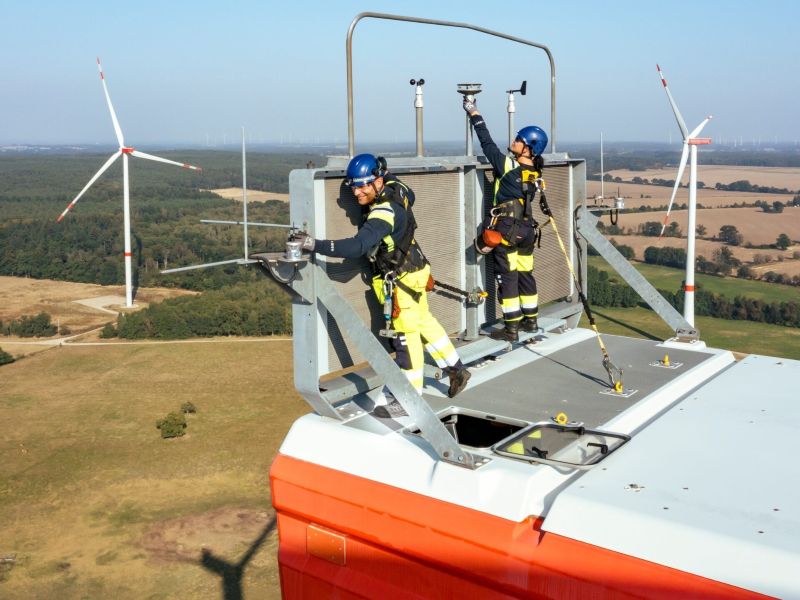

The Puke Kapo Hau wind farm is an onshore wind farm with an installed capacity of 192MW being developed in Otago on New Zealand’s South Island.
Tararua Wind Power, a subsidiary of Mercury NZ, is developing the project with an estimated investment of NZ$506m ($284m).
Recommended White Papers

Recommended Buyers Guides

The project represents the second stage of the existing 36MW Mahinerangi wind project. Together, the two phases are projected to have a combined installed capacity of 228MW, forming New Zealand’s largest wind farm.
The Puke Kapo Hau wind farm secured planning consent from the Clutha District Council and the New Zealand Government under the Fast-track Approvals Act in July 2026, making it both Mercury’s first project approved via this pathway and the first wind development constructed under the legislation.
Company board approval and final investment decision (FID) followed in August 2026, with the notice to proceed issued after the completion of grid connection studies with Transpower in October 2026.
Preliminary construction is scheduled to commence in November 2026, with turbine installation expected to begin in early 2028. The on-site workforce requirements for the project are projected to reach up to 200 personnel daily during peak construction activity.
Commissioning of the first generating unit is anticipated in mid-2028. Once fully operational, Puke Kapo Hau is projected to generate approximately 535GWh of electricity a year to help meet growing national electricity demand.
Location of the Puke Kapo Hau wind farm
The Puke Kapo Hau development and the Mahinerangi project together span approximately 1,700ha (4,201 acres) across the eastern foothills of the Lammermoor Range.
The site lies approximately 5km north of Lake Mahinerangi and 50km west of Dunedin. Average wind speeds across the site exceed 8m/s.
Puke Kapo Hau wind farm details
The Puke Kapo Hau wind farm encompasses the installation of 40 Nordex Delta4000 series N133/4.8 turbines, mounted on 90m (295ft) tubular steel towers.
Each turbine unit has a rated capacity of 4.8MW with a cut-in wind speed of 3m/s and a cut-out threshold of 28m/s. The three-bladed rotor spans 133.2m in diameter, has a 13,935m² (149,995ft²) swept area, with a hub height of 90m and a maximum tip height of 156m.
The model features a high-speed gearbox alongside a liquid- and air-cooled doubly fed induction generator compatible with 50Hz/60Hz grid frequencies.
The project will also include an on-site substation and a 60MW battery energy storage system (BESS) designed to provide two hours of dispatch during peak demand intervals.
The proposed substation will occupy an enclosed, hardstand footprint of approximately 3,850m². The fenced compound will house ground-mounted 33kV/110kV step-up transformers, gantries, electrical bus-work, and associated balance-of-plant equipment.
The BESS will be enclosed within a sealed 4,200m² hardstand platform measuring roughly 70m × 60m. This secured area will accommodate 32 modular battery enclosures placed on concrete foundations, each comparable in footprint to a standard shipping container and standing up to approximately 3m tall.
A new dedicated double-circuit 110kV transmission line will deliver the electricity generated by the wind farm to the national grid.
Mahinerangi wind farm details
The NZ$70m 12-turbine s
tage one Mahinerangi wind farm was commissioned in 2011.
Once both stages are complete, the wind farm will comprise 52 wind turbines. The combined annual generation from the Mahinerangi and Puke Kapo Hau projects is projected at approximately 646GWh, equivalent to the electricity consumption of around 92,000 homes.
The project contributes to Mercury’s target of adding 3.5TWh of new generation by 2030, equivalent to supplying electricity to an additional 500,000 homes.
Contractors involved
German turbine manufacturer Nordex Group received its first New Zealand order in October 2026 to supply turbines for the Puke Kapo Hau wind farm. The associated supply and support agreement covers a 30-year period.
The project’s principal development partners are civil construction services provider Higgins and electrical design and specialist services provider Electronet Group.
The environmental construction management plan for the project was prepared by Riley Consultants, an engineering consultancy.
