

The OranjeWind Offshore Wind Farm (formerly Hollandse Kust West VII) is being developed offshore the Netherlands, through a 50:50 partnership between Germany’s RWE and France’s TotalEnergies.
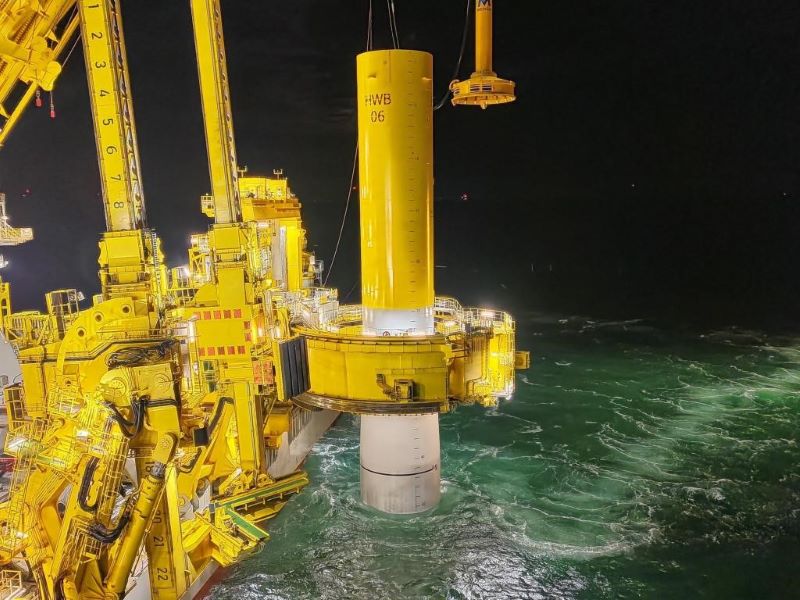
The wind farm will have a maximum capacity of 795MW. Offshore construction began in September 2026 with the installation of the first monopile. The installation of all 53 monopiles is due to finish in early 2027.
Recommended White Papers

Recommended Buyers Guides

Once operational in 2028, the wind farm is expected to generate around 3TW-hours a year, enough electricity for one million Dutch households.
OranjeWind is designed to align renewable electricity production with consumption as closely as possible. The developers plan to manage the variability of offshore wind output by combining it with a portfolio of flexible, innovative demand-side resources including battery storage, electric boilers and electrolysers. The project is expected to serve as a model for the next generation of offshore wind developments.
OranjeWind offshore wind farm location
The OranjeWind project site lies around 53km off the Dutch coast in the North Sea. It sits within the wider Hollandse Kust west zone, which also includes Hollandse Kust VI, known as Ecowende.
The overall surface area of the sites in the zone, including maintenance and safety zones, is around 176km².
Development background
RWE entered the Hollandse Kust West tender in May 2022, bidding for sites VI and VII. In November 2022, the company won the subsidy-free tender and received the permit to develop Hollandse Kust West VII.
In September 2023, TenneT and RWE signed the Connection and Transmission Agreement and the Realisation Agreement. The deals covered the grid connection and the transmission of electricity generated by the wind farm via TenneT’s platform.
In July 2024, TotalEnergies agreed to acquire a 50% stake in OranjeWind. The company plans to assign its share of the renewable electricity to 350MW electrolyser projects, which are expected to produce approximately 40,000t per year of green hydrogen for refinery decarbonisation in Northern Europe.
In December 2024, the partners selected the port of Den Helder in North Holland as the base for the project. The Blue Port Centre, a former fish auction building, will serve as the onshore hub for operations and maintenance under a lease agreement with the cooperative association that owns the facility.
OranjeWind project details
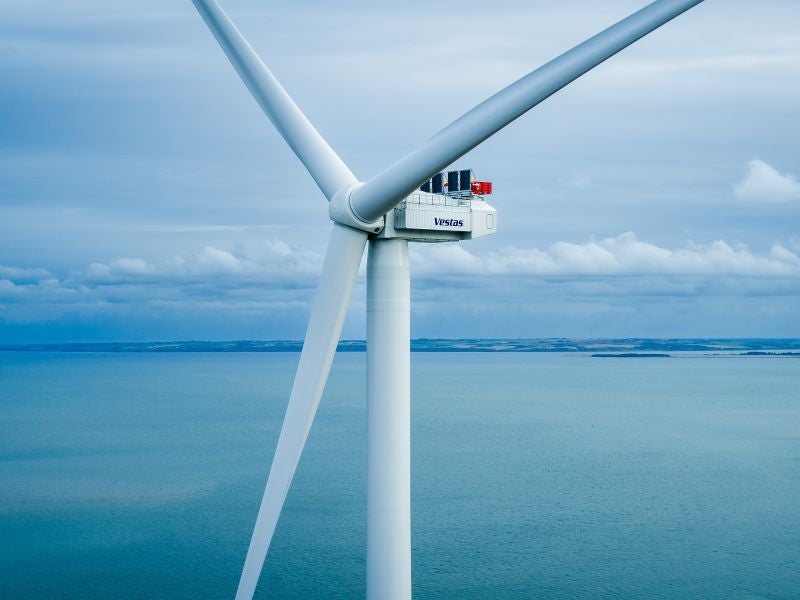
OranjeWind will use 53 V236-15MW wind turbines, featuring 115.5m (379ft) long blades, a 236m rotor diameter and a swept area of 43,742m².
Designed for a capacity factor of more than 60%, the turbines include an aerodynamic braking system based on full feathering of all three blades. Rated power is 15,000kW, with a cut-in wind speed of 3m/s and a cut-out wind speed of 31m/s.
The turbines will be mounted on monopiles without transition pieces in water depths of 26–33m. Each monopile will measure 7.5m in diameter at the tower interface and 8.6m at the seabed. The structures will reach up to 91m and weigh just under 1,600t.
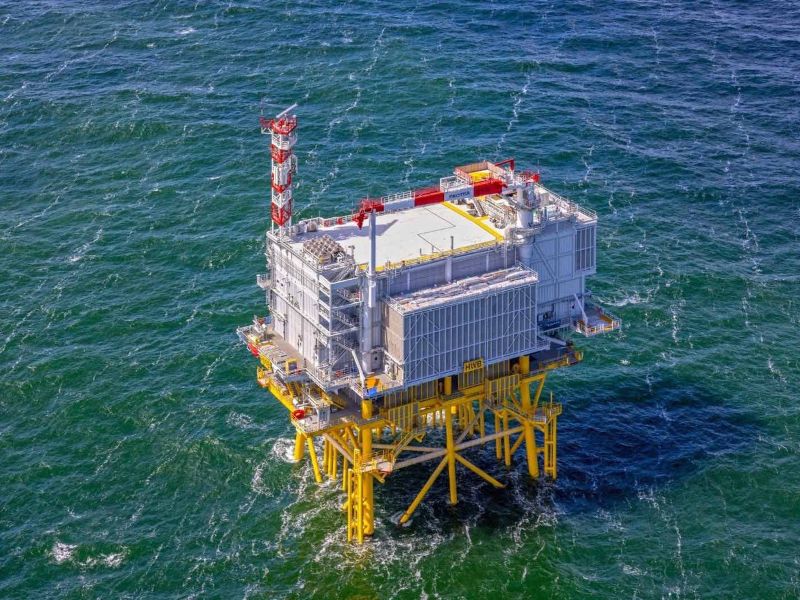
Electricity produced by the wind turbines will be exported to the 700MW Hollandse Kust West Beta offshore substation being developed by TenneT using inter array cables totally 114km in length.
The offshore substation includes topside and jacket structures. The jacket was installed in May 2024, while the topside was installed a year later. A grid readiness certificate for the substation was awarded in October 2025.
Grid connection
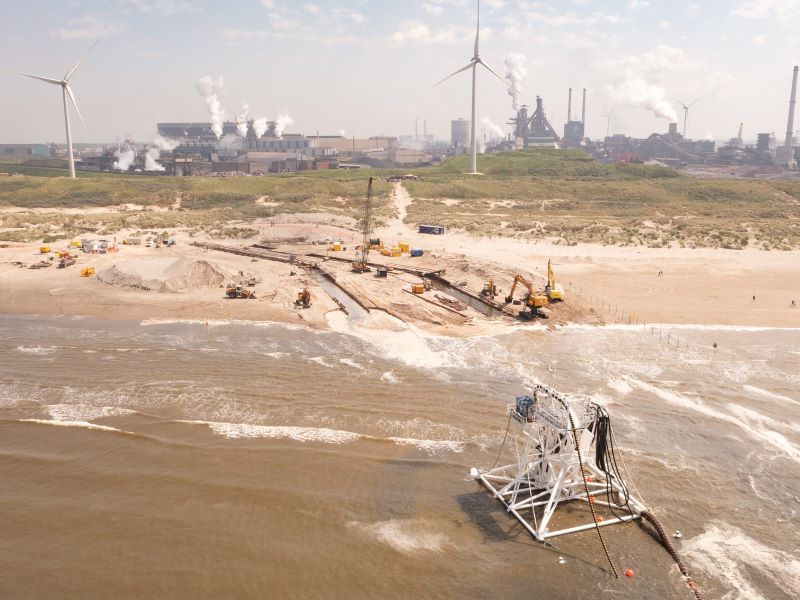
Two 65km, 220kV alternating current export cables will carry the electricity from the offshore substation to a landfall point on Velsen beach, from where high-voltage underground cables traversing 2.5km will transfer the electricity to the existing onshore high-voltage substation at Wijk aan Zee.
Construction details
In March 2026, the filter layer phase of the project commenced and involved the installation of the initial scour protection layer to stabilise the seabed and reduce erosion risks. The campaign signalled the start of on-site preparations for the offshore phase and was finalised in May.
The project will use monopile foundations that do not require transition pieces. In this arrangement, each turbine is secured straight onto the monopile’s top flange, rather than via a separate transition section. This approach materially cuts overall steel consumption.
Secondary steel, including the boat landing, main access platform and internal cassette, will be installed offshore in a separate campaign after the monopiles are in place.
To reduce the impact of piling noise on marine life, the project is deploying a bubble curtain. Compressed air is pumped through a hose to create a ring of bubbles around the piling area, which helps absorb and deflect sound. Noise will also be monitored outside the bubble curtain to ensure levels remain within the required limits.
Contractors involved
JBO, a structural and civil engineering company, completed the basic and detailed design for the substructure, covering the monopile and transition piece. It also prepared technical specifications, carried out ice and collision studies, managed weight control, and assessed pile fatigue after driving.
In March 2022, Boskalis, working in a consortium with Orient Cables, secured TenneT’s Hollandse Kust West Beta export cable contract.
In April 2022, TenneT selected the NRG contractor combination, Denys, Alsema and Van Vulpen, to deliver the connection between the offshore cables and the onshore transformer station in Wijk aan Zee.
Vestas won the contract to supply, deliver and commission the turbines in July 2024. The scope included a five-year service agreement, followed by a long-term operational support agreement. Sif Holding was awarded a contract to supply 53 monopile foundations in the same month.
Jan De Nul was appointed to transport and install the foundations and turbines. The work will use floating heavy lift vessel the Les Alizés and jack-up installation vessel the Voltaire.
The Smulders-EQUANS consortium built the Hollandse Kust (west Beta) offshore substation, delivering both the topside and the jacket. Smulders is also responsible for the fabrication of the secondary steel.
OES Group secured a contract with Smulders to deliver and fit both external and internal impressed current cathodic protection systems for 53 monopiles and associated boat landings.
Scanel International’s subsidiary Scanel Green Energy signed an agreement with Smulders to deliver the electrical installation and testing works, encompassing the full electrical package for 53 internal cassettes and the main access platforms.
Ligum was awarded a contract to provide coating solutions for the steel components.
Dutch cable supplier Twentsche Kabelfabriek will provide the inter-array cables and accessories linking the 53 turbines to the offshore substation, while DEME will transport and install the cables and secondary steel structures. A five-year charter agreement was signed with Purus for the Purus Power, a construction and service operation vessel, to support both scheduled and unscheduled maintenance activities across the wind farm. The contract runs for five years and includes an option for an extension.
